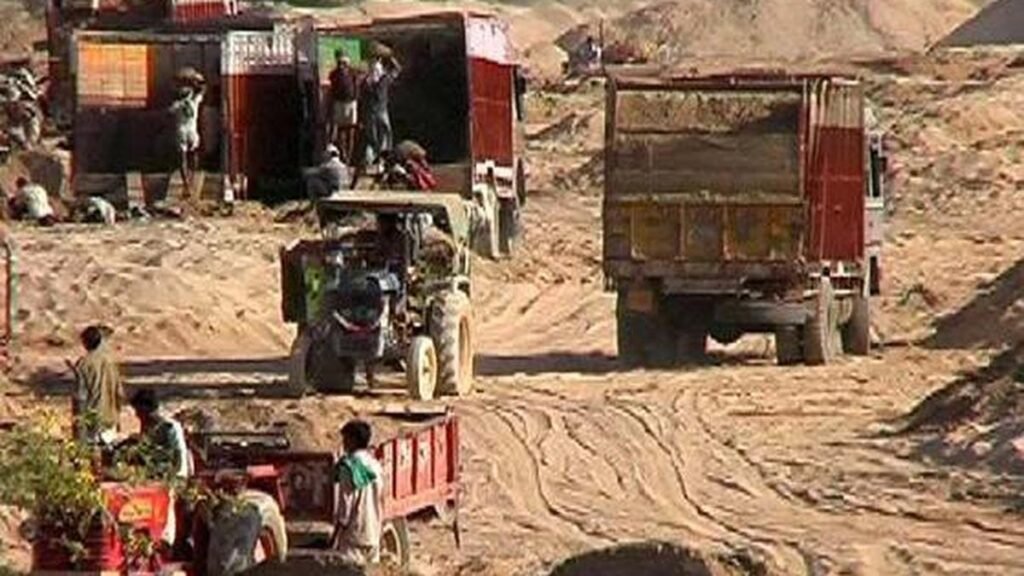
The Supreme Court-appointed Central Empowered Committee (CEC) has recommended a time-bound roadmap to phase out unsustainable sand extraction from active river channels over the next three years. The recommendations are part of its report in a case on illegal sand mining in the National Chambal Sanctuary.
Background:
The CEC says unscientific sand extraction causes riverbed degradation, threatens bridges and other infrastructure, depletes groundwater, destroys aquatic and riverbank habitats, and changes river flow. It notes there is no reliable national database on the volume or value of illegally extracted river sand.
Prelims pointers
The CEC suggested alternatives such as scientific desilting of dams and reservoirs and recycling construction and demolition (C&D) waste into sand and aggregates.
It recommended scientific identification of mineable stretches, regular replenishment studies and stronger monitoring.
The CEC was formed in 2002 on the Supreme Court's order and has been a statutory body since 2023.
Sand is a minor mineral. States make rules for minor minerals under the Mines and Minerals (Development and Regulation) Act, 1957.
The Environment Ministry issued Sustainable Sand Mining Management Guidelines in 2016 and Enforcement and Monitoring Guidelines for Sand Mining in 2020.
The National Chambal Sanctuary, spread across Rajasthan, Madhya Pradesh and Uttar Pradesh, is a key habitat of the critically endangered gharial.
Mains angle
Sand is the most extracted material after water, and booming construction has fuelled illegal mining, often by organised groups. Over-extraction damages rivers, groundwater and wildlife, and puts bridges at risk. A shift to manufactured sand, C&D waste recycling and reservoir desilting, along with transparent tracking, can reduce pressure on rivers.
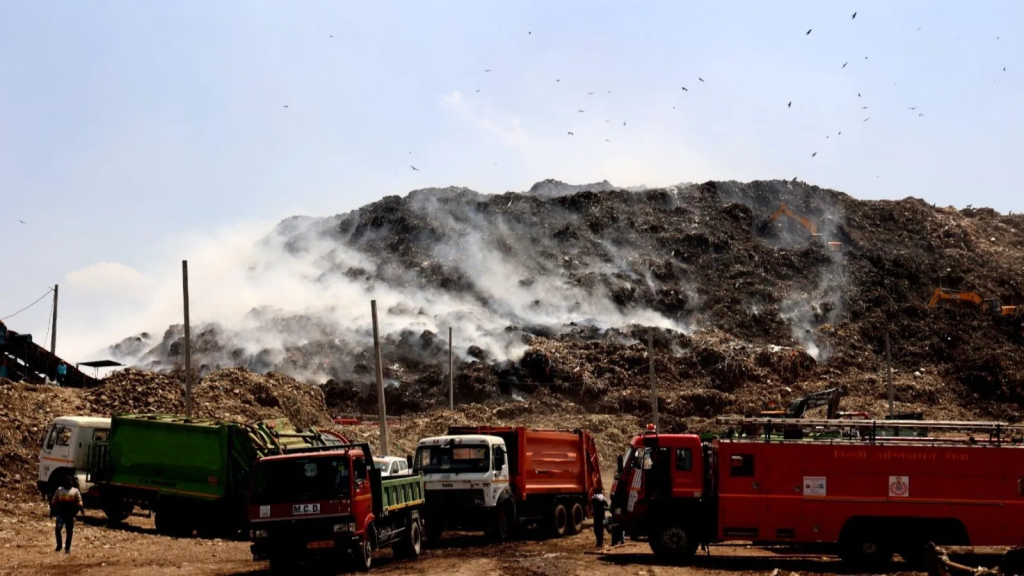
The Centre's target for clearing all legacy dumpsites in cities has been pushed to December 2027, the Indian Express has learnt. About 1,139 lakh tonnes of waste over 4,632 acres is yet to be remediated.
Background:
Under the Swachh Bharat Mission-Urban 2.0, launched in 2021 and originally due to end on 1 October 2026, all legacy dumpsites were to be cleared within five years. The Mission has been extended to March 2027. According to the SBM dashboard, 1,402 of 2,607 dumpsites have been fully remediated, work is ongoing at 1,057, and 148 have seen no progress.
Prelims pointers
Of 3,135 lakh tonnes of legacy waste over 15,545 acres, 64% of the waste has been remediated and 70% of the land reclaimed.
Urban Affairs Minister Manohar Lal said Delhi's Bhalswa site would be completed by 31 December, Okhla is almost clear, and Ghazipur will take one more year. Chennai and Mumbai remain difficult.
Mumbai has begun trials at Deonar, one of the oldest and largest legacy landfills in Asia.
The Dumpsite Remediation Accelerator Programme was launched last year to speed up work at 214 large sites.
Legacy waste is old, mixed waste accumulated in dumpsites over years. It is usually cleared through biomining and bioremediation.
Landfills release methane, a potent greenhouse gas, and are prone to fires and groundwater contamination.
Mains angle
Legacy landfills are a public health, climate and land-use problem in Indian cities. Clearing old waste is not enough if fresh waste keeps arriving unsegregated, as the Minister acknowledged. Lasting solutions need segregation at source, decentralised processing, composting, recycling and waste-to-energy that meets environmental standards.
The two-day Leaders' Summit of COP31 opens today, 11 November 2026, at the Antalya Expo Center, Türkiye. The host country is seeking support for a proposal to raise electricity's share of global energy use to 35% by 2035. President Erdoğan and UN Secretary-General António Guterres are scheduled to address the opening session.
Background:
COP31 began on 9 November and runs until 20 November. Unlike most COPs, the leaders' segment is being held in the middle of the conference rather than at the start. Leaders who do not speak during the summit can deliver national statements on 17 and 18 November. Negotiators are also seeking progress on the transition away from fossil fuels.
Prelims pointers
Electrification means replacing fuels used directly in transport, buildings and industry with electricity, for example electric vehicles and heat pumps.
Electrification is most useful for climate goals when the electricity comes from clean sources such as solar, wind, hydro and nuclear.
Daily themes: 11 November zero waste, 12 November climate resilience for cities and buildings, 13 November finance and trade.
Expected speakers include Brazil's President Lula, European Commission President Ursula von der Leyen and Chinese Vice-President Han Zheng.
Türkiye holds the COP31 presidency, while Australia's Chris Bowen leads the negotiations.
India's opening statement at COP31, delivered by Environment Secretary Narendra Bhooshan, called for a fair outcome based on CBDR-RC and stressed public finance from developed countries.
Mains angle
Electrification is one of the fastest ways to cut emissions, as power grids get cleaner. For India, the push fits with its EV, rooftop solar and green hydrogen plans. But a global electrification target raises questions of grid capacity, storage, critical minerals and finance for developing countries, where demand for power is still growing fast.
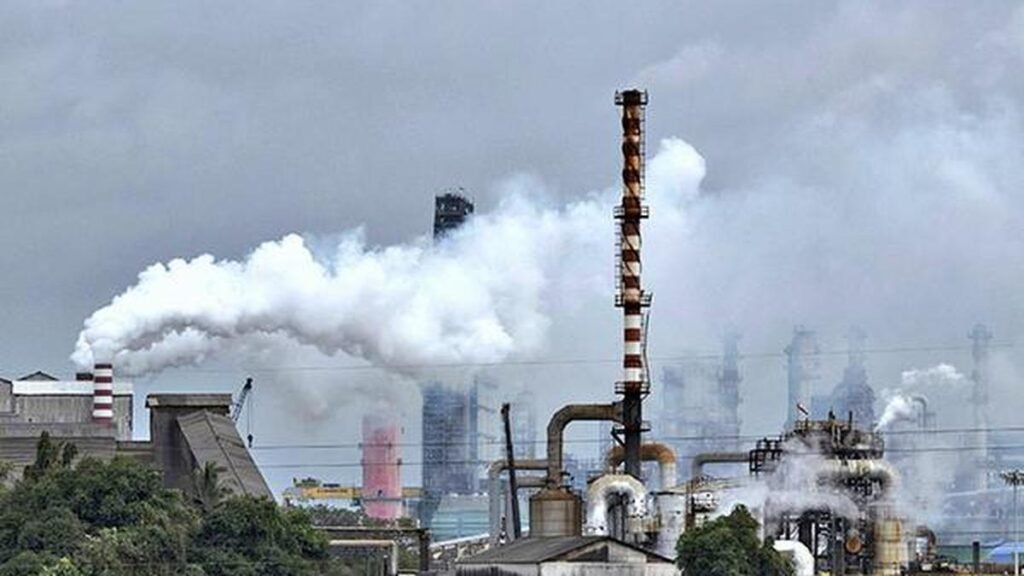
The Global Carbon Project estimates that the world emitted 42.2 billion tonnes of carbon dioxide from fossil fuels in 2026, a 0.4% fall from last year. Scientists attribute the drop mainly to oil shocks from the Iran war and the effective closure of the Strait of Hormuz, rather than to climate policy. The figures were presented at COP31 in Antalya.
Background:
Oil emissions fell nearly 2% and natural gas emissions fell 0.3%, while coal emissions rose 0.6%. Overall CO2 emissions, including land use, rose about 1% because deforestation and peat fires increased. China, the US, Europe and Japan each showed about a 1% decline, while India's fossil fuel emissions rose 4.4%.
Prelims pointers
This is the third fall in global fossil CO2 emissions this century, after the 2009 global recession and the 2020 COVID-19 pandemic.
The 42 billion tonnes amount to about 1,335 tonnes of CO2 entering the atmosphere every second.
The Global Carbon Project involves more than 140 scientists and publishes its estimates in Earth System Science Data.
Some experts see China's decline as a sign its emissions may have peaked, driven by rapid growth in solar, wind and electric vehicles.
The Strait of Hormuz connects the Persian Gulf with the Gulf of Oman and is a key route for global oil and LNG shipments.
Mains angle
A fall in emissions driven by a supply shock is not a structural transition, and emissions often rebound after such shocks. For India, rising emissions reflect growth and development needs, strengthening its case for equity and finance in climate talks. At the same time, the energy shock highlights the strategic value of reducing oil import dependence through renewables and electrification.
The UN Environment Programme released its Adaptation Gap Report 2026 on 4 November, ahead of COP31 in Antalya. It says developing countries need about $305 billion a year by 2035 to adapt to climate change, while international public adaptation finance was only $28.2 to $31.7 billion in 2024.
Background:
The report finds that adaptation finance is growing very slowly, by only about $1 billion over the previous year. Even if flows triple, they would cover at most about 29% of needs. UNEP Executive Director Inger Andersen said the world is not ready to adapt to current climate conditions, let alone an overshoot of 1.5°C.
Prelims pointers
Adaptation finance needs of developing countries: about $305 billion a year by 2035. The true need could be roughly double if private sector needs are included.
International public adaptation finance in 2024: $28.2 to $31.7 billion.
The Glasgow Climate Pact (COP26, 2021) urged developed countries to double adaptation finance from 2019 levels to about $40 billion by 2025.
The report backs the COP30 call to triple adaptation finance by 2035.
UNEP was set up in 1972 after the Stockholm Conference on the Human Environment and is headquartered in Nairobi, Kenya.
Adaptation means adjusting to climate impacts (sea walls, drought-resistant crops). Mitigation means cutting emissions.
Under the Paris Agreement, the Global Goal on Adaptation is set out in Article 7.
Mains angle
The report strengthens the case India is making at COP31: finance from developed countries is far below need, and most of it goes to mitigation rather than adaptation. For India, which faces heatwaves, floods, cyclones and glacial melt, adaptation is a development priority. The gap means countries must also mobilise domestic and private finance and build stronger institutions.
The Union Cabinet on 4 November approved ₹14,500 crore of viability gap funding (VGF) for developing 92 GWh of grid-scale energy storage between FY 2026-27 and 2030-31.
Background:
Solar plants generate nothing at night, so transmission lines built for them stay idle for part of the day. Briefing the media, the I&B Minister said storage will allow India to use its existing transmission capacity many times more effectively and integrate more renewable power into the grid.
Prelims pointers
The 92 GWh is split into Battery Energy Storage Systems (30 GWh), Pumped Storage Projects (60 GWh) and emerging storage technologies (2 GWh).
Pumped storage uses surplus power to pump water to an upper reservoir and releases it downhill to generate electricity when needed.
GWh (gigawatt-hour) measures energy stored. GW (gigawatt) measures power output at an instant.
Viability Gap Funding is a one-time capital grant that makes a project financially viable when tariffs alone cannot recover its cost.
In September 2023, the Cabinet approved the first VGF scheme for BESS, targeting 4,000 MWh of projects by 2030-31, with support of up to 40% of capital cost.
India's target is 500 GW of non-fossil installed capacity by 2030.
Mains angle
India's renewable push now faces an integration problem: surplus solar at noon, peak demand in the evening, and curtailment of clean power. Storage converts variable power into firm, dispatchable power. Pumped storage is cheap over a long life but needs suitable sites and raises ecological concerns, while batteries are quick to build but depend on imported cells and critical minerals.
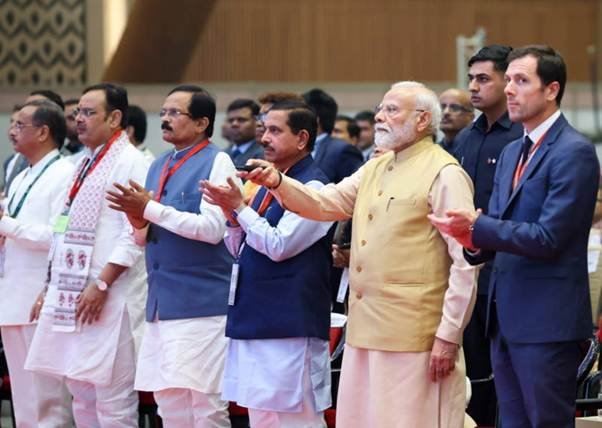
Prime Minister Narendra Modi inaugurated the Bharat Renewable Energy Summit & Expo 2026 at Bharat Mandapam, New Delhi, on 2 November, saying energy security and economic security are now directly linked. The Ministry of New and Renewable Energy said India's non-fossil installed capacity has grown from 80.3 GW twelve years ago to over 310 GW.
Background:
The summit, organised by MNRE, is being held alongside the Ninth Assembly of the International Solar Alliance and the Fourth Conference on Green Hydrogen. The PM urged startups and IITs to develop round-the-clock household solar solutions, such as rooftop solar cooking and home EV charging.
Prelims pointers
Solar capacity has risen from 2.8 GW to 171 GW and wind capacity from 21 GW to 60 GW over twelve years. Non-fossil capacity crossed 200 GW in September 2024.
Solar module manufacturing capacity has grown from 2 GW to 225 GW, and solar cell capacity from zero to 45 GW.
Solar tariffs have fallen from ₹10-11 per unit (2011-12) to ₹2.15 per unit (2024-25).
PM Surya Ghar: Muft Bijli Yojana, launched in 2024 for rooftop solar in one crore households, has crossed 65 lakh installations.
The ministry cited green hydrogen at ₹279 per kg and green ammonia at ₹49.75 per kg, the lowest prices discovered globally. The National Green Hydrogen Mission (2023) targets 5 million tonnes of production a year by 2030.
India's target is 500 GW of non-fossil capacity by 2030. Its updated NDC also commits to 50% of installed power capacity from non-fossil sources by 2030.
The International Solar Alliance was launched by India and France at COP21 in Paris (2015) and is headquartered in Gurugram.
The ministry mentioned the Pradhan Mantri Surya Sarovar Yojana (₹5,000 crore for 5,000 MW of floating solar) and Green Energy Corridor Phase-III (₹1.86 lakh crore for transmission).
Mains angle
Clean energy has become a matter of strategic autonomy: it cuts import bills and exposure to fossil fuel shocks, while building a domestic manufacturing base. The next challenges are storage, grid integration of intermittent power, and reducing dependence on imported polysilicon, wafers and critical minerals.
At the 17th Conference of the Parties (COP-17) to the Convention on Biological Diversity in Yerevan, Armenia, Union Environment Minister Bhupender Yadav on 27 October set out India's progress under its updated National Biodiversity Strategy and Action Plan (NBSAP). He also backed full operationalisation of the Cali Fund, which channels benefits from the use of Digital Sequence Information (DSI) back to biodiversity-rich countries and communities.
COP-17 is the first major review of how countries are implementing the Kunming-Montreal Global Biodiversity Framework (KMGBF), adopted at COP-15 in December 2022. Every party had to update its NBSAP to match the framework's targets.
Prelims pointers
The CBD was opened for signature at the Rio Earth Summit (1992) and entered into force in December 1993. Its secretariat is in Montreal, Canada.
The CBD has three objectives: conservation of biodiversity, sustainable use of its components, and fair and equitable sharing of benefits from genetic resources.
The KMGBF has 4 goals for 2050 and 23 targets for 2030. Target 3, popularly called "30x30", aims to conserve 30% of land and 30% of oceans by 2030.
India's updated NBSAP mirrors the KMGBF with 23 national targets tracked through 142 indicators.
The Cali Fund was created at COP-16 in Cali, Colombia (2024). Large companies using DSI are expected to contribute 1% of profits or 0.1% of revenue.
India's figures cited at COP-17: 1,134 protected areas, 103 Ramsar sites, 57 Biodiversity Heritage Sites and 18 Biosphere Reserves, of which 13 are in UNESCO's Man and the Biosphere (MAB) network.
Two protocols operate under the CBD: the Cartagena Protocol on Biosafety (2000), on living modified organisms, and the Nagoya Protocol (2010), on access and benefit-sharing.
India implements the CBD through the Biological Diversity Act, 2002 (amended in 2023), with the National Biodiversity Authority (NBA) headquartered in Chennai.
Mains angle
India is pairing a large protected-area network with a benefit-sharing demand on DSI. Developing countries want companies that profit from genetic data to share those gains. Implementation will depend on steady finance, community rights under the Biological Diversity Act, and working Biodiversity Management Committees and People's Biodiversity Registers at the local level.
The Ministry of Road Transport and Highways has amended the Central Motor Vehicles Rules, 1989 to recognise E100 (100% ethanol) as a fuel for flex-fuel vehicles. The notification, G.S.R. 911(E), was issued on 23 October and published in the Gazette on 26 October, coming into force on publication. It follows draft rules issued on 27 April 2026.
What changed:
In Rule 115 (vehicle emission standards), references to "E85" now read "E85 or E100".
E85 or E100 may be used only in vehicles designed by the manufacturer (OEM) as flex-fuel vehicles.
Ordinary petrol vehicles are not permitted to run on E100.
The gross vehicle weight threshold in one emission table was raised to 3,500 kg from 3,000 kg.
The notification gives no timeline for nationwide commercial availability of E100.
Why it matters:
It creates a legal framework for testing and certifying vehicles that run on near-pure ethanol.
Higher ethanol use can cut crude oil imports and support farm incomes.
Prelims pointers
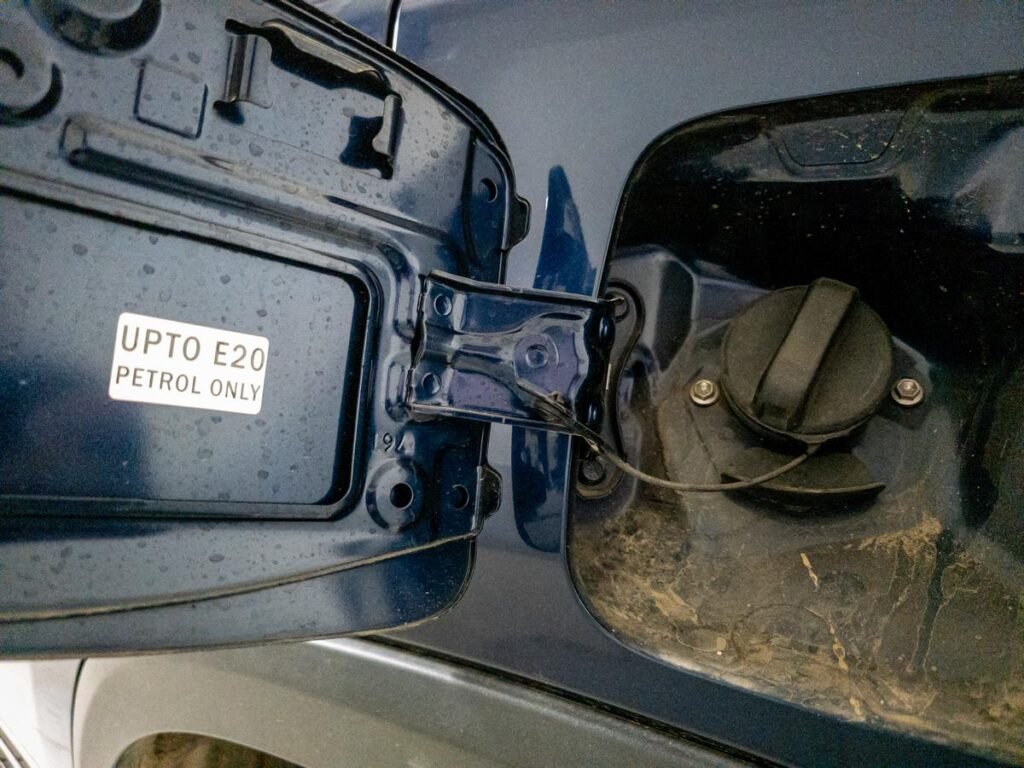
E100 = 100% ethanol. E85 = 85% ethanol and 15% petrol. E20 = 20% ethanol in petrol.
A flex-fuel vehicle can run on petrol or on any blend of petrol and ethanol up to its rated limit.
The Central Motor Vehicles Rules, 1989 are framed under the Motor Vehicles Act, 1988 by MoRTH.
The Ministry of Petroleum and Natural Gas is the nodal ministry for the Ethanol Blended Petrol programme. The National Policy on Biofuels, 2018 was amended in 2022 to advance the E20 target.
Ethanol in India is produced from sugarcane molasses, cane juice and grains such as maize and surplus rice.
Brazil is the global pioneer of flex-fuel vehicles and high ethanol use.
Mains angle
E100 can strengthen energy security and give farmers a new market, but it carries trade-offs:
Food versus fuel: diverting grain and sugar to ethanol can raise food prices.
Water stress: sugarcane is highly water-intensive.
Lower mileage, since ethanol has less energy per litre than petrol.
Need for flex-fuel vehicles, pumps and storage across the country.