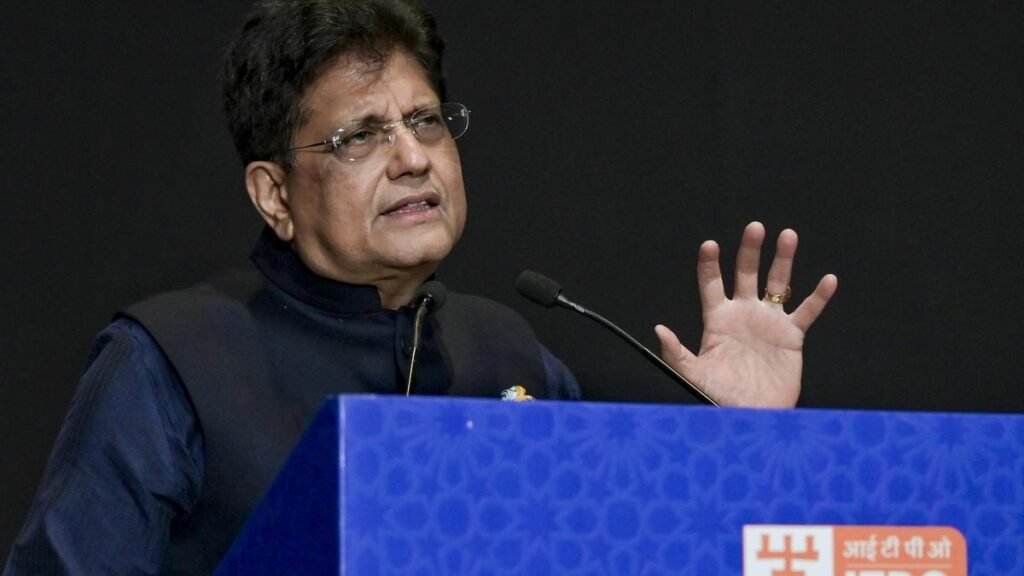
Commerce and Industry Minister Piyush Goyal will begin a two-day visit to Egypt on 15 November 2026. Talks will focus on trade and investment, and cooperation in the Suez Canal Economic Zone, manufacturing, infrastructure, ports and logistics.
Background:
A business delegation of over 140 CEOs and senior industry representatives will attend the India-Egypt Joint Business Council. Goyal and Egypt's Minister of Investment and Foreign Trade, Mohamed Farid Saleh, will co-chair the seventh session of the Joint Trade Committee on 15 November.
Prelims pointers
Egypt's location gives Indian businesses access to markets in Africa, the Middle East and Europe.
Topics include market access, non-tariff barriers, trade remedies, food and agricultural products, pharmaceuticals, engineering goods, chemicals, fertilisers, textiles and customs cooperation.
The Suez Canal Economic Zone (SCZONE) is a special economic zone along the Suez Canal, offering incentives for industry and logistics.
India and Egypt upgraded their ties to a Strategic Partnership in 2023, when President Abdel Fattah el-Sisi was chief guest at India's Republic Day.
The Suez Canal links the Mediterranean Sea and the Red Sea, and is a key route for India's trade with Europe.
Mains angle
Egypt can be a gateway for Indian goods and investment into Africa and Europe, and a partner in food and fertiliser security. With Red Sea shipping disrupted by regional conflicts, a presence in the Suez Canal zone could also make India's supply chains more resilient.
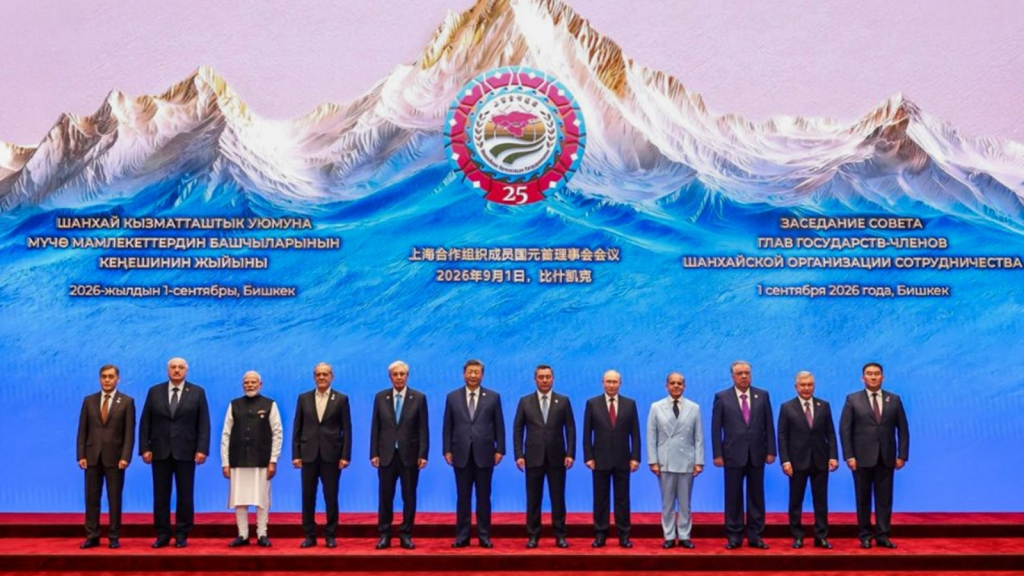
India will host the inaugural SCO Civilisational Dialogue Forum at Purana Qila, New Delhi, from 20 to 22 November 2026. PM Narendra Modi will inaugurate it. Culture Minister Gajendra Singh Shekhawat said 15 of 25 invited countries, including China, Iran, Saudi Arabia and Türkiye, have confirmed participation.
Background:
The forum is organised by the Ministries of Culture and External Affairs. India has invited Pakistan's Culture Minister, the first such invitation to a senior Pakistani minister since the hostilities after Operation Sindoor in May 2025. Pakistan has not yet confirmed. Delegates will be shown the excavated site at Purana Qila, which reveals layers of Delhi's history.
Prelims pointers
All SCO member, partner and observer countries have been invited.
Countries that have confirmed include China, Kazakhstan, Iran, Tajikistan, Uzbekistan, Belarus, Azerbaijan, Armenia, Bahrain, Nepal, Saudi Arabia, Türkiye and Sri Lanka.
Shekhawat said India wants the SCO to be a forum for shared civilisational heritage, not only a geopolitical and economic platform.
The SCO was founded in 2001. India and Pakistan became full members in 2017, Iran in 2023 and Belarus in 2024.
Purana Qila in Delhi is linked with Humayun and Sher Shah Suri. Excavations have found remains from many historical periods.
India has placed the Indus Waters Treaty with Pakistan in abeyance since April 2025.
Mains angle
Cultural diplomacy can build trust among SCO countries with very different political systems. By highlighting its civilisational continuity, India is using soft power within a forum often seen as dominated by China and Russia. The invitation to Pakistan shows India keeping a cultural channel open despite tense political relations.
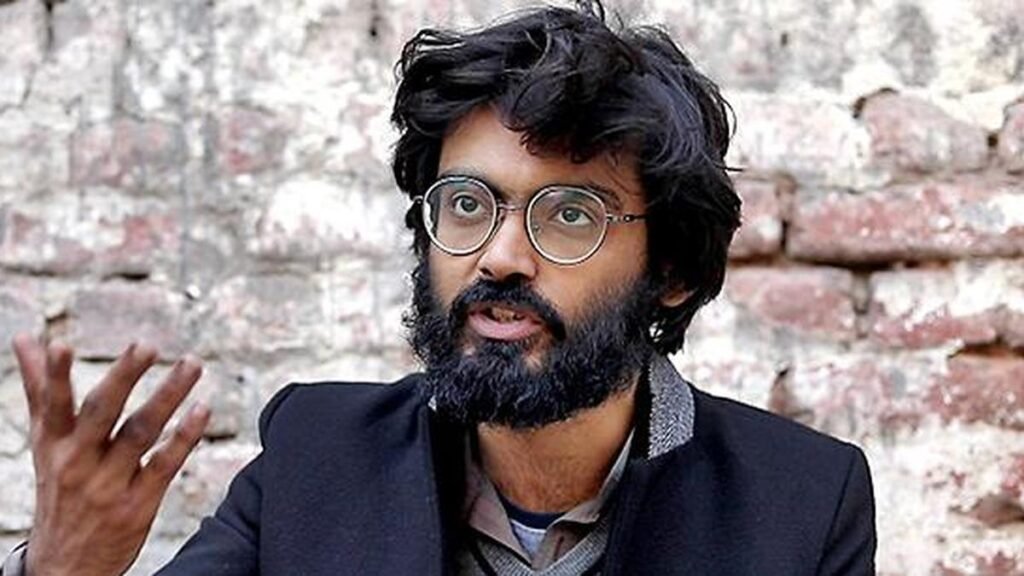
Indian Ambassador to the US Vinay Mohan Kwatra said on 13 November that the US Commission on International Religious Freedom (USCIRF) has "no locus standi" to judge the constitutional rights of Indian citizens, and asked it to "introspect on its own prejudices". This followed USCIRF's post describing Sharjeel Imam as detained for his religious freedom advocacy.
Background:
Sharjeel Imam has been booked under the Unlawful Activities (Prevention) Act on allegations of being among the conspirators of the February 2020 Delhi riots, in which 53 people died. India has long described USCIRF as biased and lacking credibility.
Prelims pointers
USCIRF is a bipartisan US federal advisory body set up under the International Religious Freedom Act, 1998.
It recommends countries for designation as "Countries of Particular Concern" to the US State Department, but its recommendations are not binding.
Articles 25 to 28 of the Indian Constitution guarantee freedom of religion.
The Unlawful Activities (Prevention) Act, 1967 is India's main anti-terror law. Its bail provisions are stricter than ordinary criminal law.
Kwatra said USCIRF's "partisan, ill-informed" assessments cannot diminish India's constitutional commitment to religious freedom.
Mains angle
India treats external commentary on its internal and judicial matters as interference in sovereignty, especially from bodies it considers biased. At the same time, democratic credibility rests on robust domestic safeguards such as judicial review, speedy trials and fair bail processes. Strong institutions are the best answer to outside criticism.
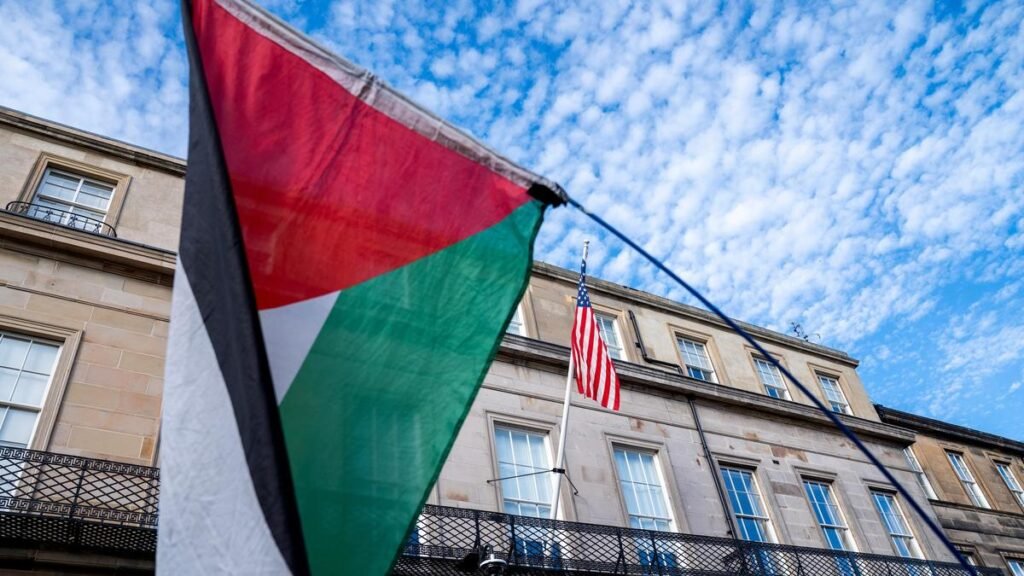
India voted in favour of a UN General Assembly resolution reaffirming the rights of the Palestinian people, and of the population of the occupied Syrian Golan, over their natural resources. The resolution, proposed by Uruguay, was adopted on 11 November 2026 with 151 votes in favour, 7 against and 11 abstentions.
Background:
The resolution, titled "Permanent sovereignty of the Palestinian people in the Occupied Palestinian Territory, including East Jerusalem, and of the Arab population in the occupied Syrian Golan over their natural resources", demands that Israel stop exploiting and damaging these resources. Israel and the US were among the seven countries that voted against it.
Prelims pointers
The resolution covers land, water and energy resources.
It says the wall and settlements built by Israel in the Occupied Palestinian Territory are contrary to international law.
It calls for compliance with the July 2004 advisory opinion of the International Court of Justice on the wall.
The principle of permanent sovereignty over natural resources was set out in UN General Assembly Resolution 1803 (1962).
Israel has occupied the West Bank, East Jerusalem, Gaza and the Golan Heights since the 1967 war.
India supports a negotiated two-state solution, with a sovereign, independent and viable State of Palestine living side by side with Israel.
UNGA resolutions are generally recommendatory and not legally binding, unlike some UN Security Council resolutions.
Mains angle
India's vote reflects its long-standing support for Palestinian rights, while it also maintains a strong strategic partnership with Israel. This balanced approach, often called de-hyphenation, lets India engage both sides and the Arab world. Its position is guided by international law, its energy and diaspora interests in West Asia, and its role as a voice of the Global South.
Prime Minister Narendra Modi will visit Manila, Philippines, on 16 and 17 November 2026 at the invitation of President Ferdinand R. Marcos Jr. He will attend the 23rd ASEAN-India Summit and the 21st East Asia Summit on 17 November.
Background:
The PMO release calls India-ASEAN ties a central pillar of India's Act East Policy and Indo-Pacific vision. 2026 is the ASEAN-India Year of Maritime Cooperation, and leaders will review the ASEAN-India Plan of Action 2026-2030. Earlier, MEA Secretary (East) Rudrendra Tandon said India-ASEAN trade is about $122 billion.
Prelims pointers
ASEAN was founded in 1967. Timor-Leste became its 11th member in 2025.
The Philippines holds the ASEAN chairmanship in 2026.
2027 will mark 35 years of ASEAN-India Dialogue Relations and five years of the Comprehensive Strategic Partnership.
India's Look East Policy (1991) was upgraded to the Act East Policy in 2014.
India and ASEAN upgraded ties to a Comprehensive Strategic Partnership in 2022.
The ASEAN-India Trade in Goods Agreement (AITIGA) is under review to address India's trade deficit with ASEAN.
The East Asia Summit began in 2005, with India as a founding participant. It includes ASEAN members plus Australia, China, India, Japan, New Zealand, South Korea, Russia and the US.
Mains angle
ASEAN is central to India's Indo-Pacific vision and its connectivity with Southeast Asia. Key issues include reviewing AITIGA, maritime security in the South China Sea, connectivity projects such as the India-Myanmar-Thailand Trilateral Highway, and digital and supply chain cooperation. The summit also allows bilateral meetings with major Indo-Pacific leaders.
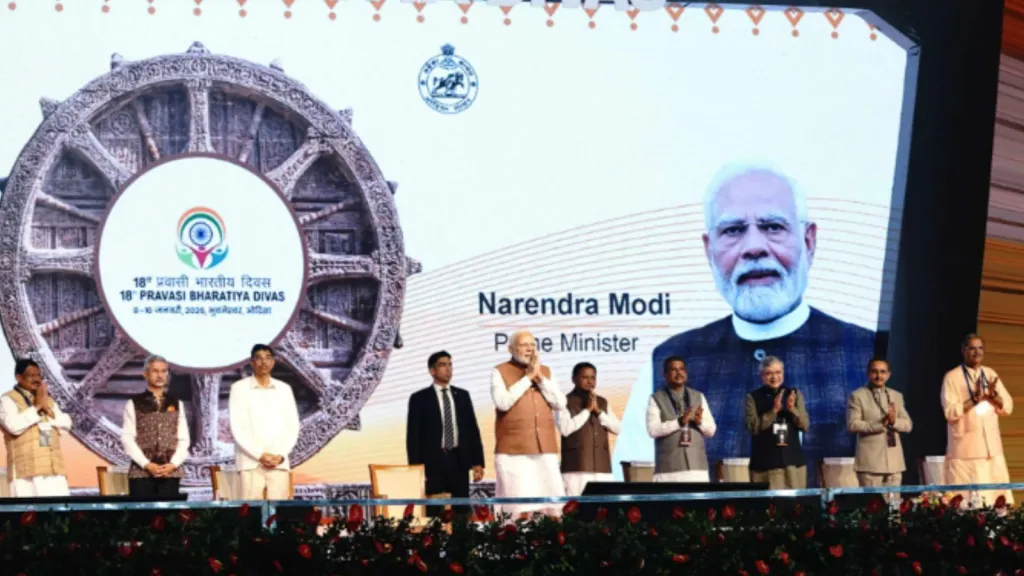
The Ministry of External Affairs announced on 11 November that the 19th Pravasi Bharatiya Divas (PBD) Convention will be held in Kolkata from 7 to 9 January 2027. Its theme is "Return to Roots: Reigniting the Diaspora Connect with Bharat".
Background:
The convention website was launched by External Affairs Minister S. Jaishankar and West Bengal Chief Minister Suvendu Adhikari. PM Modi will inaugurate the convention, and President Droupadi Murmu will preside over the valedictory session and present the Pravasi Bharatiya Samman Awards.
Prelims pointers
PBD is observed on 9 January to mark Mahatma Gandhi's return from South Africa in 1915.
The first day of the convention will be observed as Youth Pravasi Bharatiya Divas.
The Pravasi Bharatiya Samman Award is the highest honour for members of the Indian diaspora.
A PBD Special Bharat Ko Janiye Quiz runs from 11 November to 20 December 2026. Winners among NRIs, PIOs and foreigners get a 10-day tour of India.
The first PBD was held in 2003. The 18th edition was held in Bhubaneswar in January 2025.
Mains angle
India has the world's largest diaspora, which contributes through remittances, investment, knowledge and soft power. PBD helps institutionalise engagement with NRIs and PIOs. Effective diaspora policy also needs protection of workers abroad, easier investment channels and engagement with younger generations.
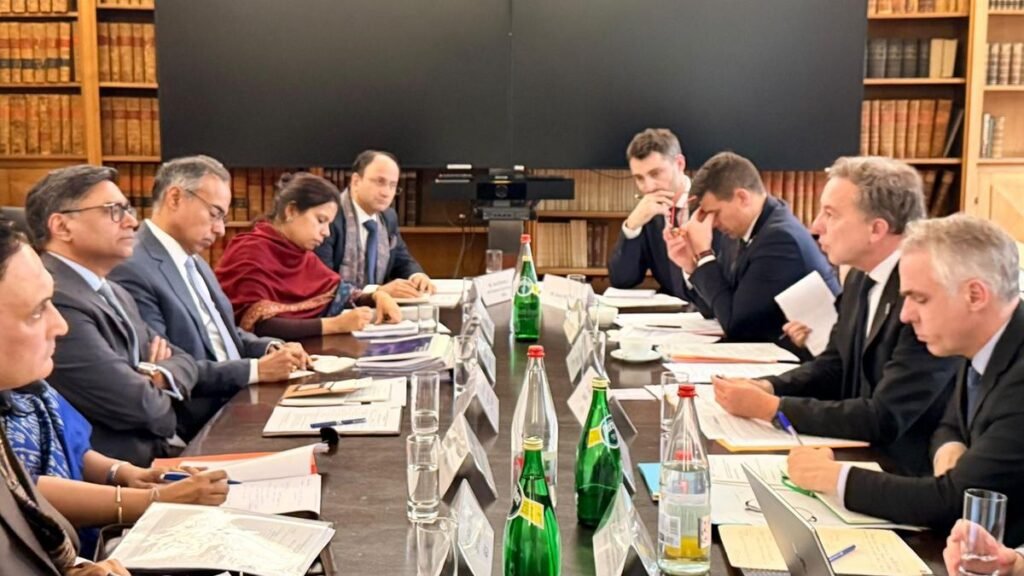
India and France held dialogues on space, critical technologies and economic security in Paris on 9 and 10 November, with Foreign Secretary Vikram Misri leading the Indian side, the MEA said. This was the inaugural meeting of the India-France Economic Security and Critical Technologies Dialogue.
Background:
The dialogue was established in June 2026 during PM Modi's visit to France. The two sides discussed supply chain vulnerabilities, critical technologies, cybersecurity and safeguarding strategic supplies.
Prelims pointers
India and France have had a strategic partnership since 1998, India's first with any country.
The Horizon 2047 roadmap (2023) sets out cooperation in defence, space, nuclear energy, climate and people-to-people ties.
Defence cooperation includes Rafale fighter jets and Scorpène-class submarines built in India.
Space cooperation between ISRO and CNES includes joint satellite missions such as Megha-Tropiques and SARAL, and TRISHNA in development.
Economic security covers supply chain resilience, protecting critical infrastructure and preventing coercion through trade and technology.
Mains angle
Economic security has become a pillar of foreign policy as countries try to reduce dependence on a few suppliers for critical inputs such as chips, minerals and batteries. France is one of India's most reliable partners in defence, space and nuclear energy. Joint work on critical technologies can support Aatmanirbhar Bharat and Europe's search for trusted partners.
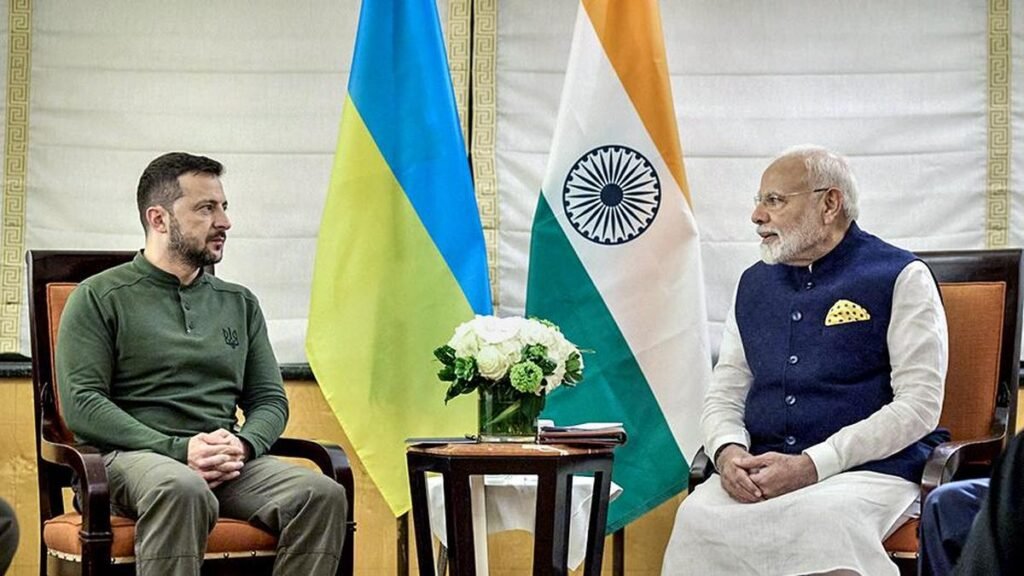
Prime Minister Narendra Modi spoke to Ukrainian President Volodymyr Zelenskyy on 9 November, a day before Russia-Ukraine peace talks resume in Abu Dhabi. Zelenskyy said India is ready to mediate between Russia and Ukraine to set up "food corridors". External Affairs Minister S. Jaishankar then spoke to Russian Foreign Minister Sergey Lavrov.
Background:
According to PIB, PM Modi reiterated India's human-centric approach, said the conflict should be resolved only through dialogue and diplomacy, and said India is ready to contribute to all efforts for a peaceful settlement. The Hindu calls the back-to-back calls the clearest sign yet of New Delhi's mediatory role. US negotiators, including Jared Kushner and Steve Witkoff, are restarting talks with both sides after three months, to discuss security guarantees for a possible ceasefire.
Prelims pointers
The calls come a week before PM Modi and President Trump are expected to meet on the sidelines of ASEAN-linked summits in Manila.
President Trump and President Putin are expected at the APEC summit in Shenzhen, China, later this month.
The two leaders also discussed strengthening India-Ukraine cooperation in various sectors.
A food corridor is an agreed safe route for exporting grain and food. The Black Sea Grain Initiative (2022) was an earlier UN and Türkiye-brokered arrangement for Ukrainian grain exports; Russia withdrew from it in 2023.
In August 2024, Narendra Modi became the first Indian Prime Minister to visit Ukraine.
India has consistently called for dialogue and diplomacy, and has generally abstained on UN resolutions condemning Russia.
Mains angle
India's ties with both Russia and the West, and its credibility with the Global South, give it room to act as a bridge in the conflict. Food corridors matter for India's partners in Africa and Asia, which depend on Black Sea grain. The challenge is to stay credible with both sides, protect strategic autonomy and avoid being seen as taking sides.
Indian Navy frigate INS Sahyadri arrived at Yokosuka, Japan, to take part in Exercise Malabar 2026 with the navies of Japan, the United States and Australia. The exercise runs from 5 to 12 November in the area south of Kanto.
Background:
The exercise has a harbour phase of professional interactions and planning, followed by a sea phase. Anti-submarine and anti-surface warfare are the lead focus areas. Japan has fielded the helicopter destroyer JS Ise, a frigate, a submarine and a P-1 aircraft. The US and Australia have deployed ships and P-8A maritime patrol aircraft.
Prelims pointers
Malabar began in 1992 as a bilateral India-US exercise.
Japan became a permanent participant in 2015 and Australia joined in 2020, making it an exercise of all four Quad countries.
INS Sahyadri is an indigenous guided-missile stealth frigate of the Shivalik class, built by Mazagon Dock Shipbuilders and commissioned in 2012. It belongs to the Eastern Fleet.
Malabar 2025 was held off Guam, and INS Sahyadri represented India there too.
Other India-Japan naval exercise: JIMEX. India-Australia: AUSINDEX.
Mains angle
Malabar is the most visible military dimension of the Quad, strengthening interoperability in anti-submarine and maritime domain awareness in the Indo-Pacific. For India, it supports a free and open Indo-Pacific and counters growing Chinese naval activity, while India maintains that the Quad is not a military alliance.
The Indo-Pacific Regional Dialogue (IPRD) 2026, the Indian Navy's apex annual international strategic dialogue, began in New Delhi on 3 November for three days. Its theme is "Science, Technology and Academic Cooperation in the Indo-Pacific".
Background:
The National Maritime Foundation is the Navy's knowledge partner for the dialogue. Day one had sessions on academic networks and human capital, and on maritime situational awareness and protection of critical maritime infrastructure, with speakers from France, Indonesia, Japan and the Maldives. A monograph, "Sea Blindness and Maritime Heritage in India", was released.
Prelims pointers
IPRD is organised by the Indian Navy with the National Maritime Foundation (NMF) as knowledge partner.
An ambassadorial interaction, "Sahyog Ka Samvaad", included envoys of Sri Lanka, the Philippines and Norway. The Indian Ocean Commission also took part.
The theme mirrors one of the seven pillars of India's Indo-Pacific Oceans Initiative (IPOI), announced at the East Asia Summit in Bangkok in 2019.
IPOI pillars: maritime security; maritime ecology; maritime resources; capacity building and resource sharing; disaster risk reduction and management; science, technology and academic cooperation; and trade connectivity and maritime transport.
"Sea blindness" refers to a lack of public and policy awareness of the importance of the sea to national security and prosperity.
SAGAR (Security and Growth for All in the Region), announced in 2015, was expanded into MAHASAGAR in 2025.
Mains angle
The dialogue reflects India's effort to lead on ideas in the Indo-Pacific, not only on naval presence. Cooperation in ocean science, undersea cable protection and maritime domain awareness builds trust with partners and counters the strategic use of research vessels by other powers. It also helps address India's own "sea blindness".