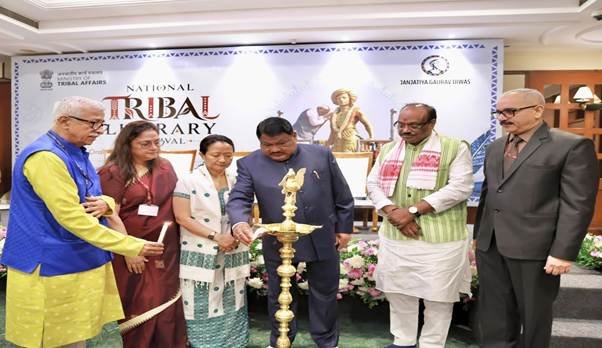
The second edition of the National Tribal Literature Festival began at India Habitat Centre, New Delhi, on 12 November 2026. Organised by the Ministry of Tribal Affairs on the theme "From Oral Tradition to Contemporary Tribal Literature", it is part of the Janjatiya Gaurav Divas fortnight.
Background:
The festival was inaugurated by Union Tribal Affairs Minister Jual Oram and Minister of State Durgadas Uike. Tribal writers, poets, researchers and language experts from across India are taking part. The Ministry said the festival will now be held every year.
Prelims pointers
Janjatiya Gaurav Divas is observed on 15 November, the birth anniversary of Bhagwan Birsa Munda.
Sessions cover tribal literature, poetry in tribal languages, folk tales, oral epics and heroic ballads, and oral traditions in multilingual education.
Priorities include documenting heritage with community consent, digitising archives and preserving tribal languages.
The Minister said the lack of a script should not block preservation, and that the ministry will work with the Sahitya Akademi.
Birsa Munda led the Ulgulan (Great Tumult) against British rule and exploitation in the Chotanagpur region in the 1890s.
Santali and Bodo are tribal languages included in the Eighth Schedule of the Constitution.
Mains angle
Many tribal languages are oral and endangered, and with them go knowledge of forests, medicine and history. Recording and publishing tribal literature, with community consent, protects this heritage and gives tribal voices a place in national culture. Mother-tongue education under NEP 2020 can help keep these languages alive.
The Ministry of Information and Broadcasting said the 57th International Film Festival of India (IFFI) will be held in Goa from 20 to 28 November 2026, on the theme "Stories Without Borders". A curtain-raiser press conference is being held in Goa today, 13 November, with Chief Minister Pramod Sawant.
Background:
The festival aims to present cinema as a medium that crosses geographic and cultural boundaries. Ashutosh Gowariker is the Festival Director.
Prelims pointers
IFFI was first held in 1952 in Mumbai.
Goa has been the permanent venue of IFFI since 2004.
IFFI is organised by the Ministry of Information and Broadcasting through the National Film Development Corporation (NFDC), with the Entertainment Society of Goa.
The festival's top award for the best film in the international competition is the Golden Peacock.
The Satyajit Ray Lifetime Achievement Award is presented at IFFI.
Mains angle
Film festivals are tools of cultural diplomacy, bringing global cinema to India and Indian cinema to the world. IFFI also supports film markets, co-productions and young filmmakers. India's goal to be a global content hub depends on such platforms, along with incentives for film production and protection of creative rights.
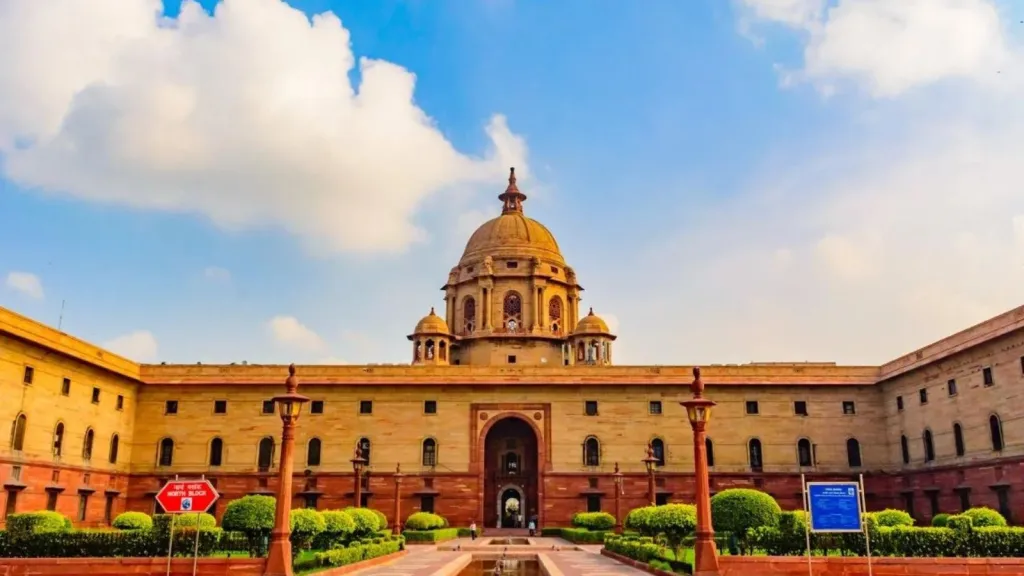
The Cabinet Committee on Economic Affairs, chaired by PM Narendra Modi, on 11 November approved ₹3,230 crore to transform the 100-year-old North and South Block buildings into the Yuge Yugeen Bharat Museum. The project will be completed in phases by 2030-31, and the first gallery, titled "Adornment", is expected to open in about a year.
Background:
The project was announced by PM Modi on 18 May 2023. The Culture Ministry says the museum will have the largest display area in the world. Around 1.8 million objects have been identified from the National Museum, other Culture Ministry museums, 52 ASI site museums and State and private collections.
Prelims pointers
The museum will reuse the historic North and South Block buildings, spread over 1.78 lakh sq m, while preserving their heritage character.
Planned galleries include Architecture and Cityscapes, Mathematics and Astronomy, Languages and Scripts, Faith and Spirituality, and Bharat Connects: Trade and Ideas.
Los Angeles-based architect Kulapat Yantrasast has been signed as principal architect.
The project was appraised by the Public Investment Board in July 2026.
North and South Block were designed by Herbert Baker as part of Lutyens' Delhi and housed key ministries, including the PMO, Defence, Finance, Home and External Affairs.
Mains angle
Converting colonial-era seats of power into a museum of India's civilisational history is both symbolic and practical, as ministries move to new buildings under the Central Vista project. A world-class museum can boost cultural tourism and soft power. Its success will depend on scholarly curation, conservation standards and public access.
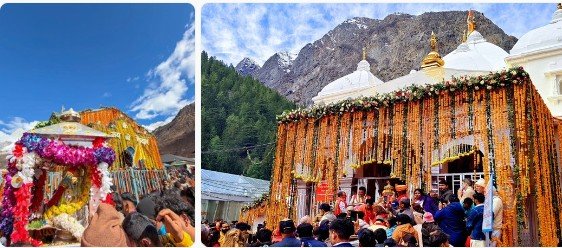
The portals of Shri Kedarnath Dham in Uttarakhand closed for winter at about 8:30 AM on 11 November 2026, on Bhai Dooj, after the Mahabhishek and prayers. The ceremonial doli (palanquin) of the deity has left for the Omkareshwar Temple in Ukhimath, the winter seat, where worship will continue.
Background:
According to the Badrinath-Kedarnath Temple Committee (BKTC), more than 19.20 lakh devotees visited the shrine this year. The temple stays closed for about six months and reopens around Akshaya Tritiya.
Prelims pointers
Kedarnath is one of the 12 Jyotirlingas of Shiva and part of the Char Dham Yatra in Uttarakhand, along with Badrinath, Gangotri and Yamunotri.
It lies in Rudraprayag district near the source of the Mandakini river, a tributary of the Alaknanda.
Kedarnath is also part of the Panch Kedar group of Shiva temples in the Garhwal Himalayas.
The shrine was badly affected by the 2013 Kedarnath flash floods caused by a cloudburst and the collapse of the Chorabari lake.
The Badrinath-Kedarnath Temple Committee manages the shrines.
Mains angle
Rising pilgrim numbers bring income to the hills, but also strain fragile Himalayan ecosystems through overcrowding, construction and waste. The 2013 disaster showed the risks of unplanned development in high-risk zones. Carrying-capacity limits, disaster preparedness and sustainable infrastructure are essential for pilgrimage tourism.
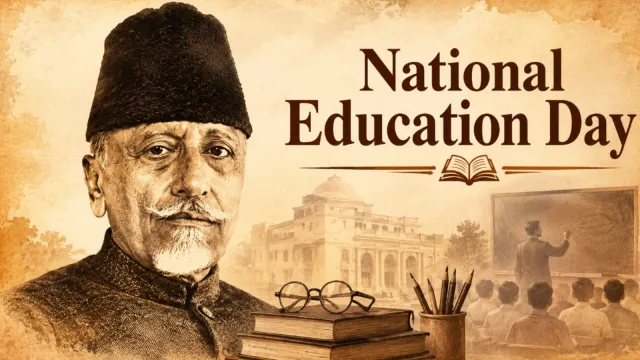
India observes National Education Day on 11 November every year to mark the birth anniversary of Maulana Abul Kalam Azad, independent India's first Education Minister.
Background:
The Government declared 11 November as National Education Day in 2008 to recognise Azad's contribution to building India's education system. He served as Education Minister from 1947 to 1958.
Prelims pointers
Azad was a freedom fighter and the youngest person to serve as President of the Indian National Congress (1923). He was Congress President again from 1940 to 1946.
He started the Urdu weekly Al-Hilal in 1912 to spread nationalist ideas.
The University Grants Commission was set up in 1953 during his tenure, and became a statutory body in 1956.
He founded the Indian Council for Cultural Relations (ICCR) in 1950.
He was posthumously awarded the Bharat Ratna in 1992.
His autobiographical work is "India Wins Freedom".
Mains angle
Azad saw education as the foundation of a free, secular and scientific nation, supporting free primary education, adult literacy and higher and technical education. His vision remains relevant as India implements NEP 2020, with its focus on access, quality and multilingual learning.
The holy Piprahwa relics of the Buddha from the National Museum, New Delhi, were received at Tawang Monastery on 31 October by Arunachal Pradesh Chief Minister Pema Khandu, with Union Culture Minister Gajendra Singh Shekhawat. The exposition will move from Tawang (1-7 November) to Bomdila (8-13 November) and Namsai (14-20 November), before the relics return to Delhi on 21 November.
Background:
The exposition is organised by the Ministry of Culture, the Arunachal Pradesh government, the International Buddhist Confederation and the National Museum. It coincides with Lhabab Duchen, a Tibetan Buddhist festival marking the Buddha's descent from heaven, and is accompanied by an exhibition on the discovery and repatriation of the relics.
Prelims pointers
Piprahwa is in Siddharthnagar district of Uttar Pradesh and is linked with ancient Kapilavastu, the capital of the Shakya clan into which the Buddha was born.
In 1898, William Claxton Peppé excavated a stupa at Piprahwa and found an inscribed casket identifying the relics as those of the Buddha of the Shakya clan.
In 2025, gems from the Piprahwa find held by Peppé's descendants were withdrawn from auction after India objected and were brought back to India, more than a century after they left the country.
Tawang Monastery, or Gaden Namgyal Lhatse, was founded in 1680-81 by Merak Lama Lodre Gyatso and belongs to the Gelugpa school of Tibetan Buddhism. It is the largest monastery in India.
The relics will also be displayed at the TGL Monastery (Lower Gompa) in Bomdila and the Golden Pagoda in Namsai.
The International Buddhist Confederation, headquartered in New Delhi, is holding a conference on "Buddhism: Dissemination in the Himalayan Region and Beyond" in Tawang on 2 November.
In recent years, Buddha relics from India have been taken for exposition to countries such as Mongolia (2022), Thailand (2024) and Vietnam (2025).
Mains angle
Buddhist heritage is a key tool of India's soft power and of its Act East and Neighbourhood First policies. Holding the exposition in Tawang also underlines Arunachal Pradesh's place in India's Buddhist and cultural map. The repatriation of the Piprahwa gems shows the growing push to bring back India's cultural property and to treat sacred relics as heritage, not as commodities for auction.