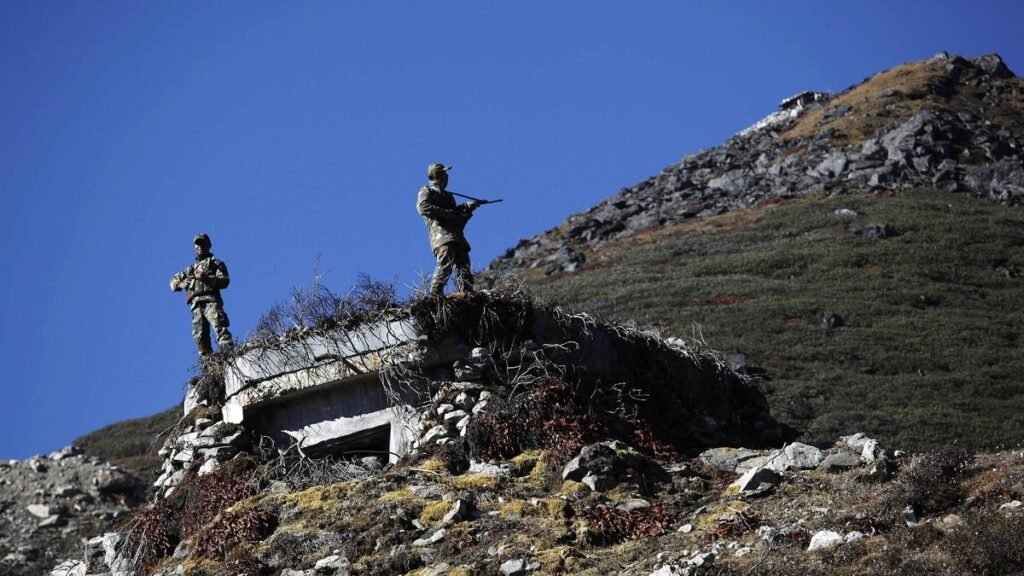
With face-offs with the Chinese Army continuing along the Line of Actual Control (LAC) in Arunachal Pradesh since late July, the Indo-Tibetan Border Police (ITBP) has sanctioned construction of new border infrastructure in the State, The Hindu reports.
Background:
In February 2026, the Cabinet Committee on Security, led by PM Narendra Modi, cleared the third phase of the Indo-China Border Roads project (ICBR-III). Under it, 26 roads are to be built along the LAC in Arunachal Pradesh, according to government officials.
Prelims pointers
The ICBR project is a Ministry of Home Affairs scheme to build strategic roads for the ITBP along the India-China border.
The ITBP is a Central Armed Police Force under the MHA that guards the India-China border.
The India-China border is about 3,488 km long and is divided into western, middle and eastern sectors. Arunachal Pradesh lies in the eastern sector.
In the eastern sector, India regards the McMahon Line, drawn in 1914, as the boundary. China does not accept it.
The Vibrant Villages Programme develops border villages to improve infrastructure and check out-migration.
The Border Roads Organisation (BRO) builds roads in border areas, mainly for the Army.
Mains angle
Border infrastructure is essential for quick troop movement, logistics and surveillance, and for keeping border villages populated. China has built extensive roads, rail and dual-use villages on its side, so India has been catching up. Building in fragile Himalayan terrain needs careful engineering and environmental safeguards.
The Defence Research and Development Organisation (DRDO) successfully flight-tested the Pralay missile from Dr. A.P.J. Abdul Kalam Island off the Odisha coast on 5 November as part of user evaluation trials. The Defence Ministry said it met all mission objectives and indicated that induction is imminent.
Background:
Pralay is an indigenous surface-to-surface quasi-ballistic missile for conventional precision strikes. Its performance was tracked by instruments of the Integrated Test Range, Chandipur. In late 2025, DRDO had carried out a salvo launch of two Pralay missiles from the same launcher.
Prelims pointers
Pralay was developed by DRDO's Research Centre Imarat (RCI), Hyderabad, with Bharat Dynamics Limited as a development and production partner.
It has a reported range of about 150 to 500 km and uses solid propellant.
A quasi-ballistic missile follows a low, flattened trajectory and can manoeuvre in flight, making it harder to intercept than a pure ballistic missile.
It is meant to carry conventional warheads, giving the forces a tactical strike option below the nuclear threshold.
Dr. A.P.J. Abdul Kalam Island (formerly Wheeler Island) is off the coast of Odisha.
Mains angle
Pralay strengthens India's conventional deterrence by allowing precision strikes on high-value targets such as airbases and command centres without crossing the nuclear threshold. It fills a gap in tactical missile forces, especially along the northern and western borders, and reflects growing self-reliance in missile technology.
The Ministry of Home Affairs has amended the Immigration and Foreigners (Exemption) Order, 2025. Hindus, Sikhs, Buddhists, Jains, Parsis and Christians from Afghanistan, Bangladesh and Pakistan who entered India without valid documents on or before 31 December 2024 must now obtain an appropriate visa to continue staying in India.
Background:
These groups remain exempt from needing a passport and visa to enter, but now need a visa for continued stay, including where their documents have expired. The amendment also sets identity document rules for travel between India, Nepal and Bhutan and continues exemptions for registered Tibetans and Sri Lankan Tamils.
Prelims pointers
The Immigration and Foreigners Act, 2025 replaced the Foreigners Act, 1946, the Passport (Entry into India) Act, 1920, the Registration of Foreigners Act, 1939 and the Immigration (Carriers' Liability) Act, 2000.
The Citizenship (Amendment) Act, 2019 offers a faster path to citizenship for these six communities, but only for those who entered on or before 31 December 2014. Its rules were notified in March 2024.
Indians do not need a passport to travel to Nepal or Bhutan, but must carry identity documents listed in the new Visa Manual. Passports are needed if travelling on to a third country.
Nepali and Bhutanese citizens do not need a passport to enter India, except when travelling via China, Hong Kong, Macau or Pakistan.
Tibetans who entered between 1959 and May 2003 remain exempt but must obtain a registration certificate. Registered Sri Lankan Tamils who came before 9 January 2015 also remain exempt.
Mains angle
The change brings people who arrived between 2015 and 2024, who fall outside the CAA cut-off, into a formal legal status through visas. It improves record-keeping and security, but also raises questions about the documentation burden on persecuted migrants and India's lack of a national refugee law. India is not a party to the 1951 Refugee Convention.
The Union Cabinet approved a revision of the Agnipath scheme, announced by Chief of Defence Staff General N.S. Raja Subramani. Agniveers who are not retained after four years will be offered a two-year extension with higher pay, after which willing personnel can be enrolled as regular soldiers, subject to objective selection criteria.
Background:
Agnipath was introduced on 14 June 2022. Agniveers serve four years, after which about 25% are retained in regular service on merit and the rest exit. The first batch of about 18,000 Agniveers was due to complete its four-year term within weeks. The Defence Forces recommended the change after reviewing the first batch's performance through a centralised tri-service database.
Prelims pointers
Under the revised model, the top 25% on merit get regular service at the end of Year 4 (Tier 1).
The remaining Agniveers can opt for a two-year engagement in Years 5 and 6 (Tier 2), with higher emoluments and an enhanced Seva Nidhi package.
After Year 6, willing personnel can be enrolled as regular soldiers, subject to selection criteria.
The original scheme set the entry age at 17.5 to 21 years. The upper limit was raised to 23 years for the first recruitment year.
Seva Nidhi is a lump-sum exit package built from the Agniveer's monthly contribution plus a matching government contribution, and is exempt from income tax.
The MHA reserved 10% of vacancies in the CAPFs and Assam Rifles for former Agniveers.
Mains angle
The revision addresses the biggest criticism of Agnipath: that 75% of trained soldiers would leave after four years with uncertain careers. A longer tenure improves operational experience and unit cohesion, and gives Agniveers more security. The trade-off is that it partly reduces the original goals of a younger profile and lower pension liabilities, so the selection and cost design will matter.
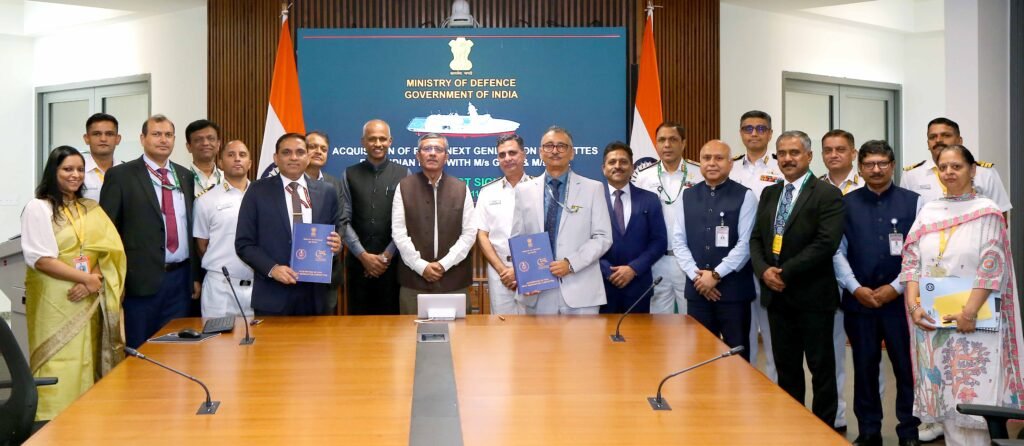
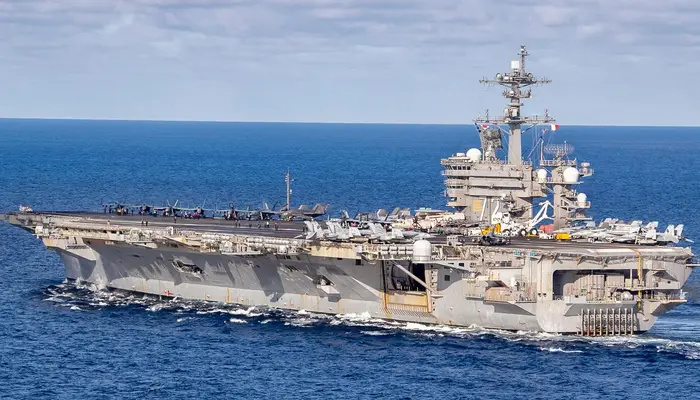
Ministry of Defence signed contracts worth ₹53,866.50 crore with Garden Reach Shipbuilders & Engineers (GRSE) and Goa Shipyard Limited (GSL) for eight Next Generation Corvettes (NGCs) for the Indian Navy. GRSE will build five and GSL three.
Background:
The corvettes have been designed indigenously by the Indian Navy and will be built by Defence Public Sector Undertakings chosen through competitive bidding. The ministry described it as the first project of its kind for indigenous warship design and construction.
Prelims pointers
The NGCs will carry out anti-surface and anti-submarine warfare, protect maritime trade routes, and support coastal defence, littoral combat, maritime presence and surveillance.
They will be fitted with advanced missiles, weapons and sensor suites.
The project is expected to generate about 72 lakh person-days of employment in shipyards and about 460 lakh person-days in ancillary industries and MSMEs over the next ten years.
GRSE is located in Kolkata and GSL in Goa. Both are Defence PSUs under the Ministry of Defence.
A corvette is a small, fast warship. In typical size, warships rise from corvette to frigate to destroyer.
Warship designs for the Indian Navy are prepared in-house by its Directorate of Naval Design (Warship Design Bureau).
Capital procurement follows the Defence Acquisition Procedure, 2020, which gives the highest priority to the Buy (Indian-IDDM) category.
Mains angle
Indigenous design and construction of frontline warships cuts import dependence and builds a domestic shipbuilding base, with large spillovers for MSMEs and jobs. The challenge is timely delivery, since Indian shipyards have a history of delays, and indigenising critical systems such as engines, sensors and weapons.
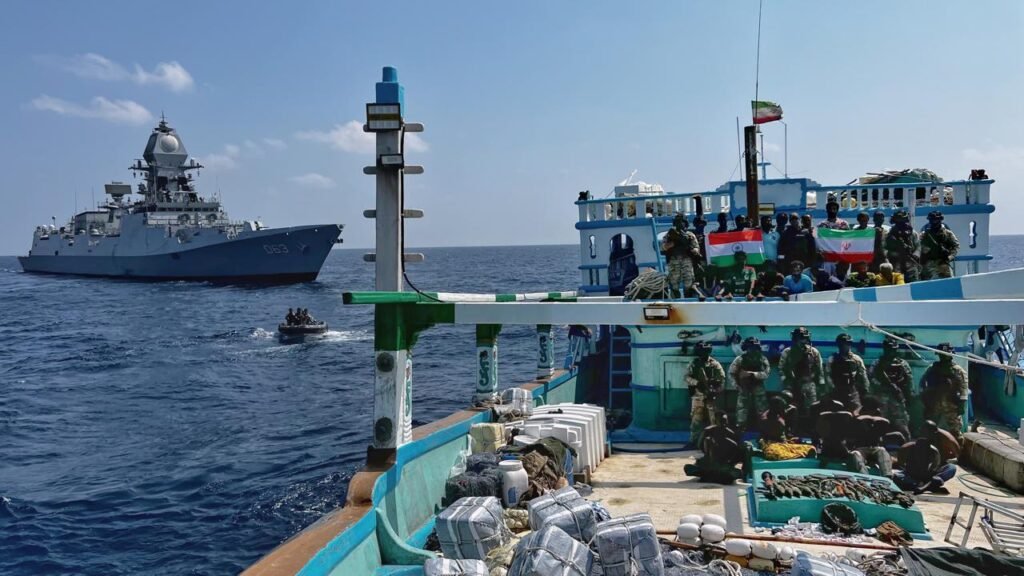
The Indian Navy said on 3 November that it had rescued the hijacked fishing vessel Azini off the coast of Somalia in an operation lasting over 48 hours. All 20 crew members were freed unharmed after Marine Commandos, airdropped by an Indian Air Force C-17, secured the vessel.
Background:
Azini was hijacked off the north-eastern coast of Somalia last month. A mission-deployed warship and a maritime reconnaissance aircraft tracked it and used calibrated non-kinetic measures to stop it escaping, since there were fears it could be used as a "mother ship" for further pirate attacks on merchant ships.
Prelims pointers
MARCOS (Marine Commandos) is the special forces unit of the Indian Navy, raised in 1987.
A "mother ship" is a larger vessel that carries pirates and skiffs far out to sea, letting them attack ships well beyond the coast.
In March 2024, the Navy rescued the hijacked bulk carrier MV Ruen in a similar operation, with MARCOS airdropped by a C-17. The pirates captured were brought to India for trial.
Article 101 of UNCLOS defines piracy as illegal acts of violence or detention on the high seas or outside the jurisdiction of any State. Under Article 105, any State may seize a pirate ship on the high seas.
India's Maritime Anti-Piracy Act, 2022 gives Indian courts power to try piracy committed on the high seas.
The Indian Navy has carried out anti-piracy patrols in the Gulf of Aden since 2008.
The Information Fusion Centre - Indian Ocean Region (IFC-IOR), set up in Gurugram in 2018, shares maritime security information with partner countries.
Mains angle
The rescue shows India's growing role as a first responder and net security provider in the western Indian Ocean, a region vital for its trade and energy imports. Joint use of Navy ships, surveillance aircraft and IAF airlift points to better tri-service integration, while non-kinetic tactics protect hostages and limit escalation.
The Cabinet Committee on Security (CCS), chaired by Prime Minister Narendra Modi, has cleared a project worth over ₹40,000 crore to build eight Next-Generation Corvettes (NGCs) for the Indian Navy. The approval was reported on 30 October 2026.
About the ships:
• Type: Next-Generation Corvettes, high-speed surface combatants of about 2,000 tonnes.
• Speed: about 30 knots.
• Design: an entirely new stealth design developed in-house by the Indian Navy.
• Roles: anti-surface, anti-submarine and anti-air warfare, with advanced weapons and modern sensors.
• Builders: Garden Reach Shipbuilders and Engineers (GRSE), Kolkata, and Goa Shipyard Limited (GSL).
• Indigenous content: over 70%, under Atmanirbhar Bharat.
• Timeline: contracts expected soon; work on the first ship to start within a year; delivery targeted for 2030.
Prelims pointers
The CCS is chaired by the Prime Minister. Its members are the Ministers of Defence, Home Affairs, Finance and External Affairs.
Warship classes by size (smallest to largest): corvette, frigate, destroyer.
GRSE and GSL are Defence Public Sector Undertakings under the Ministry of Defence.
The Defence Acquisition Procedure (DAP) 2020 gives top priority to the "Buy (Indian-IDDM)" category: Indigenously Designed, Developed and Manufactured.
The Navy's Warship Design Bureau designs India's indigenous warships.
Mains angle
Corvettes are the workhorses of coastal and littoral defence. Eight new stealth ships will help the Navy cover a wider Indian Ocean, where Chinese naval activity is rising. Building them in Indian yards with over 70% local content supports shipbuilding jobs and supply chains. The main risks are delays and cost overruns, which have affected past warship projects, so timely contracts and yard capacity will decide whether the 2030 target holds.
On 31 October, Prime Minister Narendra Modi paid floral tributes to Sardar Vallabhbhai Patel at the Statue of Unity in Ekta Nagar, Gujarat, on his 151st birth anniversary, observed as Rashtriya Ekta Diwas (National Unity Day). This year's celebrations are centred on the government's achievement of its target to end armed Left-Wing Extremism (LWE).
Background:
According to PIB, the celebrations coincide with the achievement of the target to make the country free from LWE, commonly called Naxalism, by 31 March 2026.
What is happening at Ekta Nagar:
• The Ekta Parade features around 10,000 police and paramilitary personnel and nearly 4,700 artists. For the first time, it is held in the evening.
• The National School of Drama presents a programme on "Naxal Mukt Bharat" with about 2,000 artists from 126 districts once affected by armed Naxalism. Around 5,000 people from these districts have been invited.
• The cultural theme is "Vande Mataram", marking 150 years of the song. The NSD production draws on Bankim Chandra Chattopadhyay's novel Anandamath, in which the song appears.
• The PM is to inaugurate and lay foundation stones for projects worth over ₹400 crore at Ekta Nagar. Fifteen tableaux, including a people's tableau shown for the first time, are part of the parade.
• "Run for Unity" events were held across the country. Bharat Parv, a cultural festival at Ekta Nagar, follows from 1 to 15 November.
Prelims pointers
Sardar Vallabhbhai Patel was born on 31 October 1875 in Nadiad, Gujarat. He was India's first Deputy Prime Minister and Home Minister.
He led the Kheda Satyagraha (1918) with Gandhi and the Bardoli Satyagraha (1928). The title "Sardar" came from Bardoli.
With V.P. Menon and the States Department, he integrated over 560 princely states. Hyderabad was integrated through police action (Operation Polo, 1948).
He was awarded the Bharat Ratna posthumously in 1991.
Rashtriya Ekta Diwas has been observed on 31 October since 2014. The Statue of Unity (182 m) was dedicated on 31 October 2018.
Police and public order are State subjects (Seventh Schedule, List II). The Centre supports States against LWE through CAPFs, the SAMADHAN strategy and the National Policy and Action Plan (2015).
Mains angle
The end of armed Naxalism, if it holds, closes one of India's longest internal security challenges. The approach combined security operations, roads and mobile towers in remote areas, and welfare delivery. The harder task now is to make sure grievances over land, forests and governance in tribal areas do not revive the movement. Linking the milestone to Patel's legacy of integration presents internal security as part of nation-building.
On 26 October, the Defence Acquisition Council (DAC), chaired by Defence Minister Rajnath Singh, granted Acceptance of Necessity (AoN) to capital acquisition proposals worth about ₹2.12 lakh crore for the Army, Navy and Air Force. Around 82% of the value is to be sourced from Indian industry.
Indian Army:
Self-propelled tracked gun systems for mobile artillery.
High Mobility Vehicles for logistics in difficult terrain.
Very Short-Range Air Defence Systems (VSHORADS) and Counter-Unmanned Aerial Systems (C-UAS) against drones and low-flying threats.
Surveillance UAVs, integrated surveillance-and-strike systems and long-range kamikaze (loitering) drones.
Gun Shot Response System for real-time situational awareness.
Indian Navy:
Active Offboard Decoy System (AODS) to divert incoming anti-ship missiles.
Indigenously designed and built naval platforms.
Indian Air Force:
Light multi-role and special utility helicopters.
Air defence systems and weapons.
Mobile X-band Doppler weather radars for forward areas.
Prelims pointers
The DAC is chaired by the Defence Minister. It was set up in 2001 after the Group of Ministers' report on national security following the Kargil war.
Capital procurement follows the Defence Acquisition Procedure (DAP) 2020.
AoN is only in-principle approval. It is followed by the Request for Proposal, trials, contract negotiation and signing.
Buy (Indian-IDDM), meaning Indigenously Designed, Developed and Manufactured, is the highest-priority procurement category under DAP 2020.
A kamikaze or loitering drone carries a warhead and destroys itself on impact with the target.
Mains angle
The list reflects lessons from recent conflicts: drones, counter-drone systems, air defence and precision strike now matter as much as tanks and guns. The 82% domestic share supports Atmanirbhar Bharat, but real indigenisation depends on:
Domestic value addition, not just final assembly in India.
Faster trials and contract signing after AoN.
Indigenous engines, sensors and semiconductors.
Budget space for committed future payments.
The Union Home Ministry said on 25 October that "Operation Trident" busted a narco-hawala network running drugs from Myanmar into the Northeast. The Narcotics Control Bureau (NCB) led raids at 38 locations in Assam, Mizoram and Manipur with State police and the Enforcement Directorate (ED). Eighteen people were arrested and about ₹100 crore of hawala transactions were detected.
What was seized:
1,424 bank accounts frozen.
Assets worth about ₹17.82 crore attached.
500 detonators and ₹12 lakh cash seized.
Where the raids took place:
Mizoram: Aizawl, Champhai and Zokhawthar (a border town facing Myanmar).
Manipur: Churachandpur.
Assam: the Cachar transit corridor.
How the money moved:
Myanmar-based organisers hired local carriers to move drugs across the India–Myanmar–Bangladesh border belt, which the ED called the "Death Triangle Corridor".
Drug cash was pushed into banks through mini-ATM and customer service point (CSP) counters.
One counter, code-named "Nuniang", made 2,947 transfers worth ₹175.03 crore between 2024 and June 2026.
Home Minister Amit Shah set a target of ending every drug network by 31 December 2029.
Prelims pointers
The NCB was set up in 1986 under the NDPS Act, 1985 and works under the Ministry of Home Affairs.
The ED enforces the Prevention of Money Laundering Act (PMLA), 2002 and FEMA, 1999. It works under the Department of Revenue, Ministry of Finance.
Golden Triangle = Myanmar, Laos and Thailand (opium/heroin, methamphetamine). Golden Crescent = Afghanistan, Iran and Pakistan.
India shares a 1,643 km border with Myanmar, touching Arunachal Pradesh, Nagaland, Manipur and Mizoram.
Hawala is an informal money-transfer system that moves value without moving money through banks.
Mains angle
The case shows that following the money hurts cartels more than seizing a consignment. It also exposes a weak point in financial inclusion: agent-banking counters built for the poor can be misused for laundering. Lasting results need:
Tighter anti-money-laundering checks at mini-ATM and CSP points.
Border fencing and intelligence-sharing with Myanmar.
Coordination among NCB, ED, Assam Rifles and State police.
De-addiction and rehabilitation in border districts.