The Ministry of Road Transport and Highways has proposed reforms to the rules for renting out cabs. They would lower entry barriers for operators, simplify licensing and strengthen passenger safety and driver welfare.
Background:
The ministry said the reforms would create business opportunities, especially for small operators, and improve services for renters. They would be supported by electronic licensing and VAHAN vehicle records, with monitoring by States and UTs.
Prelims pointers
Operators may offer cabs with or without a driver.
Minimum fleet size would fall from 50 to 5, with at least two cabs at each operating location. The requirement to have branches in five tourist cities would be removed.
A single electronic licence, valid across a State or UT at a uniform fee, would replace separate main and branch licences. Operating locations could include airports, railway stations and bus terminals.
Licences would be issued or renewed within 60 days, with 30-day deemed approval for adding or removing cabs and locations.
Live location tracking and a first-aid kit would be mandatory. Operators must offer 24-hour grievance support, emergency repairs and towing.
Police verification would be mandatory for operator-appointed drivers, who would get welfare benefits under the Code on Social Security, 2020.
Transport is in the Concurrent List. The Motor Vehicles Act, 1988 is the central law, while States implement permits and licensing.
Mains angle
Easier entry and digital licensing can expand self-drive and rental services, support tourism and create jobs for small entrepreneurs. Linking driver welfare to the Social Security Code recognises gig and platform-style work. Effective enforcement of safety rules and coordination between the Centre and States will decide outcomes.
Union Jal Shakti Minister C. R. Patil addressed the first regional conference on Jal Jeevan Mission (JJM) 2.0 in Tiruchirappalli, Tamil Nadu, on 12 November. He said about 16 crore rural households now have tap water connections, and asked States to complete remaining work before the mission deadline of December 2028, ideally by December 2027.
Background:
JJM 2.0 focuses on keeping rural water systems working over the long term, through operation and maintenance (O&M), source sustainability and Gram Panchayat-led management. The Centre will provide financial support for eligible works if States meet the reform conditions.
Prelims pointers
Seven States and UTs took part: Tamil Nadu, Karnataka, Kerala, Andhra Pradesh, Telangana, Puducherry and Lakshadweep. This was the first of five regional conferences.
Priorities include groundwater recharge, rainwater harvesting and regular assessment of water sources.
O&M is to be funded through Finance Commission grants and panchayats' own revenue, with water needs included in Gram Panchayat Development Plans.
Digital tools include the Sujalam Bharat platform, geo-tagging of water assets, and Jal Arpan and Har Ghar Jal certifications.
JJM was launched on 15 August 2019 to provide functional household tap connections to every rural home.
It is implemented by the Department of Drinking Water and Sanitation, Ministry of Jal Shakti.
Mains angle
Having a tap is not the same as having water. Many schemes face dry sources, broken pipes and poor water quality. JJM 2.0's focus on maintenance, source protection and local ownership addresses the sustainability gap, but needs trained local staff, user fees and strong water quality testing.
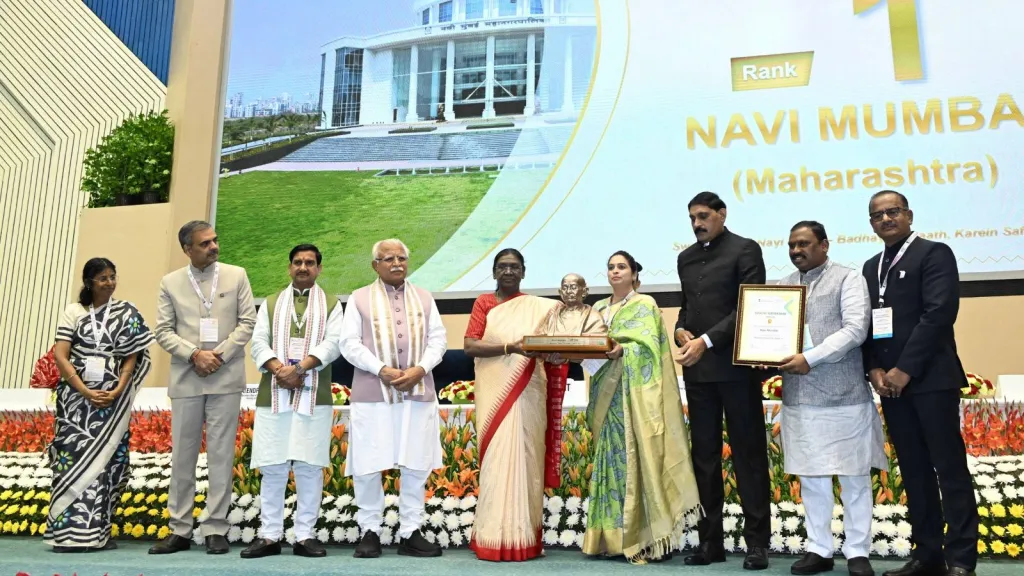
President Droupadi Murmu presented the 10th Swachh Survekshan Awards on 11 November. Visakhapatnam was ranked the cleanest city among those with over 10 lakh population, followed by Jabalpur and Lucknow. In the Super Swachh League for earlier winners, Navi Mumbai came first, followed by Surat and Vijayawada.
Background:
The survey is conducted by the Ministry of Housing and Urban Affairs under the Swachh Bharat Mission-Urban 2.0. This year, new categories were added for the cleanest riverfront town, coastal town and Himalayan city. Indore, ranked cleanest for eight straight years, now competes in the Super Swachh League.
Prelims pointers
3 lakh to 10 lakh population: Ujjain first, followed by Chandigarh and Guntur.
50,000 to 3 lakh population: Dewas first, followed by New Delhi Municipal Council and Sagar.
Cleanest riverfront town: Rewa. Cleanest coastal town: Puri. Cleanest Himalayan city: Rudrapur, followed by Jammu and Shopian.
Swachh Shahar Jodi (mentor-mentee pairs): Ahmedabad and Sanand first; Indore and Depalpur second; Tirupati and Kuppam third.
The President called for teaching topics such as plastic waste management in school curricula.
Mains angle
Swachh Survekshan has made cleanliness a matter of city pride and competition. The Super Swachh League keeps top performers improving while giving others a fair chance, and the mentoring pairs spread good practices. The bigger test is processing waste scientifically and clearing legacy dumpsites (see the next story).
The Ministry of Home Affairs said that India has cut its main visa categories from 13 to nine and sub-categories from 49 to 23, and reduced the information sought in application forms by 65-70%. The Tourist Visa has been renamed the "Visitor Visa" to cover a wider range of purposes. Visas under the new framework will be issued from the end of the year.
Background:
This follows an earlier rationalisation in October 2025, when main categories were cut from 22 to 13. The MHA said it studied the visa systems of developed countries and global standards, aiming for a regime that is "more compact, coherent and responsive" to foreign visitors. The e-Visa facility currently covers nationals of 172 countries.
Prelims pointers
Visitor Visa V-1: multiple entries over 30 days for business meetings, medical consultations, wellness retreats, short treatment and short courses in Indian languages, music, art and craft.
Visitor Visa V-2: validity of one, five or ten years. Mountaineers get a six-month multiple-entry visa.
Medical visas: M-1 for non-AYUSH treatment and M-3 for AYUSH treatment, ordinarily for one year with multiple entries. Attendants get M-2 and M-4.
Student visas: S-1 for school, UG and PG studies; S-2 for research, PhD, visiting faculty, internships and exchanges. Students through the Study in India portal can get multiple-entry e-S1 visas for up to five years.
Business visas: B-1 for long-term, licence-based activities such as setting up ventures; B-2 for short-term, contract-based activities.
Entry, stay and visas of foreigners are now governed by the Immigration and Foreigners Act, 2025.
Mains angle
A simpler visa system supports tourism, medical value travel, international education and investment, all of which India is actively promoting. Fewer and clearer categories reduce confusion and discretion. The reform must be matched by efficient processing, security screening and better infrastructure at entry points.
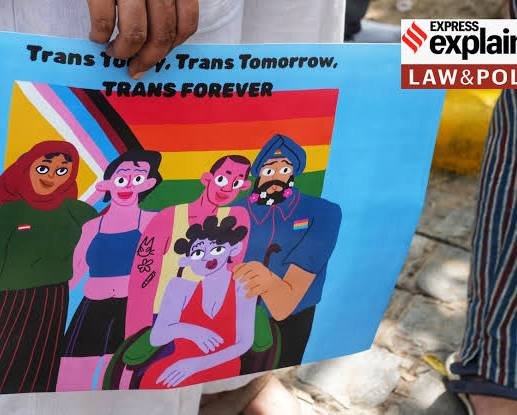
The India chapter of Women's Declaration International (WDI) has filed a plea in the Supreme Court challenging Section 7 of the Transgender Persons (Protection of Rights) Act, 2019 and Rule 7 of the Transgender Rules. These allow a person to get official documents recognising a gender different from the one assigned at birth. The petitioner argues this could affect protections meant for women.
Background:
WDI is a UK-based group that campaigns to keep sex-based protections for women. The plea also seeks a reconsideration of the NALSA (2014) judgment, which recognised a transgender person's right to determine their own gender identity. Senior Advocate Jayna Kothari told the Indian Express that the plea tries to reopen a question the Court has already settled.
Prelims pointers
In NALSA v. Union of India (2014), the Supreme Court distinguished biological sex from gender identity and held that a person's own understanding of their gender should be given primacy.
NALSA held that discrimination on the ground of "sex" under Articles 15 and 16 includes discrimination based on gender identity, and located the right in Article 21 (dignity and personal liberty).
NALSA also held that no one can be forced to undergo surgery, sterilisation or hormone therapy to get legal recognition of their gender.
Under the 2019 Act, a transgender person can get a certificate of identity from the District Magistrate. Section 7 allows a revised certificate after gender-affirming surgery.
NALSA recognised transgender persons as a "third gender" and directed reservations as socially and educationally backward classes.
In Navtej Singh Johar v. Union of India (2018), the Supreme Court decriminalised consensual same-sex relations by reading down Section 377 of the IPC.
Mains angle
The plea reflects a wider global debate between gender identity rights and sex-based protections for women, for example in sports, shelters and reservations. In India, the NALSA judgment and the 2019 Act lean towards self-identification, though the Act's surgery requirement under Section 7 has itself been criticised for going against NALSA. Any reconsideration will need to balance dignity, equality and the specific protections that women need.
The Election Commission of India has ordered a Special Summary Revision (SSR) of electoral rolls in Arunachal Pradesh, Mizoram, Odisha, Sikkim, Chandigarh, and Dadra and Nagar Haveli and Daman and Diu, with 1 January 2027 as the qualifying date. The final rolls will be published on 21 January 2027.
Background:
These are areas where the Special Intensive Revision (SIR) of rolls has been completed. The SSR is a routine annual update aimed at adding young and first-time voters and correcting entries, unlike the SIR, which required every elector to fill an enumeration form.
Prelims pointers
Schedule: rationalisation of polling stations by 20 November 2026, draft rolls on 30 November, claims and objections from 30 November to 30 December, and final rolls on 21 January 2027.
The revision is conducted under Section 21 of the Representation of the People Act, 1950.
Citizens who turn 18 on 1 April, 1 July or 1 October 2027 can apply in advance. Four qualifying dates a year were introduced by the Election Laws (Amendment) Act, 2021.
SSR uses the last final roll as its base. The SIR used the 2002-04 rolls as its base and placed the burden of proof on electors.
Article 324 gives the ECI control over preparation of electoral rolls. Article 326 provides for elections on the basis of adult suffrage.
The 61st Constitutional Amendment Act, 1988 lowered the voting age from 21 to 18.
Mains angle
Clean, inclusive electoral rolls are the foundation of free and fair elections. Regular summary revisions help enrol first-time voters and remove duplicate and dead entries. The contrast with the more demanding SIR process has raised debate on balancing roll accuracy with the risk of excluding genuine voters, especially migrants and the poor.
On 5 November, a Supreme Court bench of Justices Ujjal Bhuyan and Atul S. Chandurkar held that the 24-hour period under Article 22(2) for producing an arrested person before a magistrate begins the moment the person's liberty is curtailed, not from the time a formal arrest is recorded. Anyone held beyond 24 hours without production must be released forthwith.
Background:
In Sujit Das v. Union of India, four people were detained at 2 PM on 29 September 2025 during an NDPS search, but their formal arrest was shown at 11 AM the next day. The Tripura High Court had denied them bail. The Supreme Court called the distinction between "arrest" and "detention" constitutionally unsustainable and ordered their immediate release.
Prelims pointers
Article 22(2): every person arrested and detained in custody must be produced before the nearest magistrate within 24 hours, excluding the time needed for the journey.
The Court read "arrested and detained in custody" as conjunctive, so the clock starts with actual detention.
Magistrates must record the actual date and time of detention and check compliance from that point. Even within 24 hours, a magistrate may refuse remand if the detention was unreasonably long.
The Bharatiya Nagarik Suraksha Sanhita (BNSS), 2023, which replaced the CrPC, also bars detention beyond 24 hours without a magistrate's order.
Article 22(3): the safeguards of Article 22(1) and (2) do not apply to enemy aliens or to persons held under preventive detention laws.
D.K. Basu v. State of West Bengal (1997) laid down detailed guidelines on arrest and custody.
Mains angle
The ruling closes a common loophole: police holding people informally for hours, or even days, before recording an arrest. It strengthens Article 21 and Article 22 safeguards, reduces the risk of custodial abuse and makes judicial oversight real. Effective compliance will need accurate records of detention, CCTV in police stations and alert magistrates.
The Union Health Ministry has proposed amendments to the Drugs Rules, 1945 requiring drug manufacturers to formally designate a qualified and experienced person to authorise the release of each batch, and to keep prescribed records for every batch.
Background:
Existing manufacturing licences list technical staff for manufacturing and testing, but do not name the person authorised to release a batch to the market. The amendments aim to fix clear responsibility, ensure traceability of release decisions and strengthen Good Manufacturing Practice (GMP) compliance.
Prelims pointers
Applicants for manufacturing licences will also have to name the person authorised for batch release.
A prescribed format for a Batch Release Certificate is proposed.
Objections and suggestions can be sent to the Under Secretary (Drugs Regulation), Ministry of Health and Family Welfare.
The Drugs Rules, 1945 are framed under the Drugs and Cosmetics Act, 1940.
The Central Drugs Standard Control Organisation (CDSCO), headed by the Drugs Controller General of India (DCGI), is the national drug regulator.
Schedule M of the Drugs Rules lays down Good Manufacturing Practices. A revised Schedule M was notified in December 2023.
Licensing of most drug manufacturing units is done by State drug controllers.
Mains angle
India supplies a large share of the world's generic medicines, so quality failures damage both public health and the country's reputation as the "pharmacy of the world". Naming a responsible person for each batch introduces accountability, similar to the "Qualified Person" system in the European Union. Its success depends on inspection capacity in States and on smaller manufacturers upgrading their quality systems.
On 4 November, a Supreme Court bench of Justices P.S. Narasimha and Alok Aradhe said laws disqualifying people with more than two children from contesting local body elections have lost relevance as India's fertility has fallen. It referred the 2003 Javed v. State of Haryana judgment to a larger bench for reconsideration.
Background:
The case, Mangala Bhimrao Ingle v. Additional Commissioner, Amravati Division, involves a sarpanch disqualified under the two-child rule. The Court stayed the Bombay High Court order against her, allowing her to continue as sarpanch of Kakoda Gram Panchayat until the appeal is decided.
Prelims pointers
In Javed v. State of Haryana (2003), the Supreme Court upheld the Haryana Panchayati Raj Act, 1994 provision disqualifying persons with more than two living children from panchayat posts, citing population control.
The bench noted that India's Total Fertility Rate (TFR) has fallen from 3.02 in 2003 to 1.9, below the replacement level of 2.1.
The bench linked reproductive choices to personal liberty under Article 21.
Under Article 243F, a State legislature can lay down disqualifications for membership of panchayats by law.
According to the amicus curiae's compilation, seven States have repealed the two-child norm and 15 never had one. Assam, Goa, Gujarat, Maharashtra, Odisha and Uttarakhand still retain restrictions.
Replacement-level fertility (TFR of about 2.1) is the level at which a population replaces itself from one generation to the next.
The Registry has been directed to place the matter before the Chief Justice of India to constitute a larger bench.
Mains angle
The two-child norm was framed in an era of rapid population growth. With TFR now below replacement level, the policy rationale has weakened, while the costs remain: it restricts the right to contest elections, and studies have linked it to sex-selective practices, desertion of wives and under-reporting of births. The reference also raises a larger question about whether population policy should rely on incentives and awareness rather than penalties.
The Centre is examining whether to remove blanket safe harbour protection under Section 79 of the Information Technology Act, 2000 for social media platforms that use algorithms to rank, promote or suppress user content. Peer-to-peer messaging services that do not interfere with users' messages may be exempted.
Background:
Officials argue that a platform which curates content through algorithms is no longer a passive pipeline and plays an active role in what users see, so blanket immunity needs a relook. The proposal is at a preliminary stage, would need an amendment to the IT Act, and stakeholder consultation is planned. A separate proposal would let users ask platforms directly to remove deepfakes and non-consensual images about them.
Prelims pointers
Section 79 of the IT Act gives intermediaries conditional immunity from liability for third-party content.
The protection is lost if the intermediary initiates the transmission, selects the receiver, or modifies the information, or fails to follow due diligence.
In Shreya Singhal v. Union of India (2015), the Supreme Court struck down Section 66A and read down Section 79 so that intermediaries must act on a court order or government notification.
The IT (Intermediary Guidelines and Digital Media Ethics Code) Rules, 2021 set due diligence duties, including grievance officers. Significant social media intermediaries have extra obligations.
Critics warn that removing immunity for algorithmic curation could push platforms to over-censor content through shadow-banning or reduced reach.
Mains angle
Algorithms decide what billions of people see, so treating platforms as neutral carriers is increasingly hard to justify, especially for deepfakes, child safety and misinformation. But excessive liability can make platforms remove lawful speech to avoid risk, chilling free expression under Article 19(1)(a). A graded, risk-based framework with clear standards and judicial oversight would balance accountability and free speech better than a blanket withdrawal.