Prime Minister Narendra Modi inaugurated the COSMOS-Mysuru Planetarium, India's first LED dome planetarium, in Mysuru, Karnataka, on 13 November 2026. He credited the Indian Institute of Astrophysics, Mysuru University and government departments for building it.
Background:
The PM said India's spiritual and scientific traditions have always advanced together, citing ancient astronomers such as Aryabhata, Varahamihira, Bhaskaracharya and Nilakantha Somayaji. He urged the planetarium to invite school and college students regularly.
Prelims pointers
An LED dome uses LED panels instead of projectors, giving brighter, sharper images of the sky.
The PM cited Chandrayaan-3, Aditya-L1 and India becoming the fourth country to demonstrate space docking.
He mentioned more than 10,000 Atal Tinkering Labs, the One Nation One Subscription scheme, the Anusandhan National Research Foundation and a ₹1 lakh crore research, development and innovation scheme.
Indian students won four gold medals and one silver at the International Olympiad on Astronomy and Astrophysics in Vietnam.
Aryabhata (5th century CE) wrote the Aryabhatiya and proposed that the Earth rotates on its axis.
Nilakantha Somayaji belonged to the Kerala school of astronomy and mathematics.
Mains angle
Science communication spaces such as planetariums spark curiosity and help build scientific temper, a fundamental duty under Article 51A(h). Linking them with schools and research institutions can encourage students towards careers in space and science, where India is expanding rapidly.
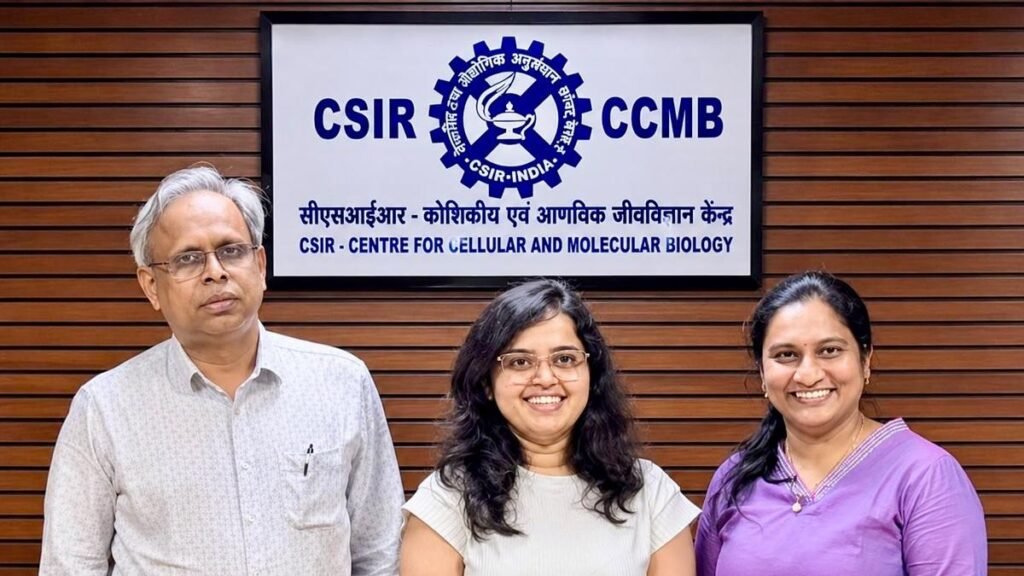
Scientists at the CSIR-Centre for Cellular and Molecular Biology (CCMB), Hyderabad, have identified critical weaknesses in Mycobacterium tuberculosis, the bacterium that causes TB. The finding could help develop new treatments.
Background:
According to the WHO Global TB Report 2025, India accounts for nearly a quarter of global TB cases and about a third of drug-resistant infections. Drug-resistant TB needs a combination of antibiotics over several months and is becoming harder to treat as resistant strains emerge.
Prelims pointers
TB is caused by the bacterium Mycobacterium tuberculosis and mainly affects the lungs. It spreads through the air.
Multi-drug resistant TB (MDR-TB) does not respond to the two most powerful first-line drugs, isoniazid and rifampicin.
India's National TB Elimination Programme aims to end TB ahead of the SDG target of 2030.
Ni-kshay Poshan Yojana provides nutritional support to TB patients through direct benefit transfer.
CCMB is a laboratory of the Council of Scientific and Industrial Research (CSIR) in Hyderabad.
Mains angle
New drug targets are vital because resistance is outpacing the current pipeline of TB medicines. For India, which carries the world's largest TB burden, domestic research can lower costs and speed up access to new treatments. Science must be matched by early diagnosis, nutrition support and treatment adherence to end TB.
The Indian Computer Emergency Response Team (CERT-In) released AI Security Auditing Guidelines on 4 November. They set out how organisations should audit AI systems, including agentic AI, which must be tested for unsafe tool use, excessive autonomy and privilege misuse.
Background:
The guidelines apply to organisations that develop, buy, deploy or operate AI systems in India, and to AI systems that process Indian data or serve Indian users. They come amid incidents where AI agents accessed live systems of Indian organisations.
Prelims pointers
Nine audit domains cover the AI lifecycle, including governance, data and privacy, model risk, bias and fairness, explainability, security, monitoring, human oversight and supply-chain assurance.
AI systems are classified into four risk tiers: Low, Moderate, High and Critical. The tier decides how deep, how frequent and how independent the audit must be.
Moderate-risk systems need annual independent audits by CERT-In-empanelled auditors. Critical systems need the highest scrutiny and continuous monitoring.
Three human oversight models are defined: human-in-the-loop, human-on-the-loop and human-over-the-loop.
AI security incidents must be reported to CERT-In within six hours, and logs must be kept for 180 days.
Agentic AI refers to AI systems that can plan and take actions on their own, such as using software tools, with limited human input.
CERT-In is the national agency for cyber incident response under Section 70B of the IT Act, 2000.
Mains angle
As AI agents begin to act inside real systems, the risks move from wrong answers to wrong actions, such as data leaks or unauthorised changes. A risk-based audit framework is a practical step for AI governance in India. Its success depends on auditor capacity, compliance costs for smaller firms and clarity on how it fits with the IT Act and the DPDP Act.
Union Minister Dr. Jitendra Singh virtually inaugurated "Base 1", a facility of Hyderabad-based startup Cosmoserve Space that works on active space debris removal and in-orbit servicing. He said India is emerging as one of the early global pioneers in debris removal and is targeting debris-free space by 2030.
Background:
Base 1, spread over about 14,800 sq ft, is described as India's first private facility of its kind, with microgravity simulation to design and test space robots and run mission control. The company said it will help keep orbits usable for Gaganyaan and the Bharatiya Antariksh Station.
Prelims pointers
Space debris includes defunct satellites, spent rocket stages and fragments from collisions, mostly in low Earth orbit.
Kessler Syndrome is a scenario where collisions create more debris, setting off a chain reaction that makes some orbits unusable.
ISRO's Debris Free Space Missions (DFSM) initiative aims for debris-free Indian space missions by 2030.
Project NETRA (Network for space object Tracking and Analysis) is ISRO's system for tracking space objects and debris.
ISRO's SPADEX mission (December 2024) demonstrated in-space docking, a key technology for servicing and debris removal.
The minister said India's space economy is about $9 billion, and the number of space startups has grown to nearly 450.
IN-SPACe authorises and promotes private space activities, and NewSpace India Limited (NSIL) is ISRO's commercial arm.
Mains angle
As India launches more satellites and plans a space station, orbital congestion becomes a direct threat to its assets. Active debris removal and in-orbit servicing are emerging global markets where Indian startups can lead. The challenges include high costs, the lack of international liability rules for removing others' debris, and the dual-use nature of servicing technology.
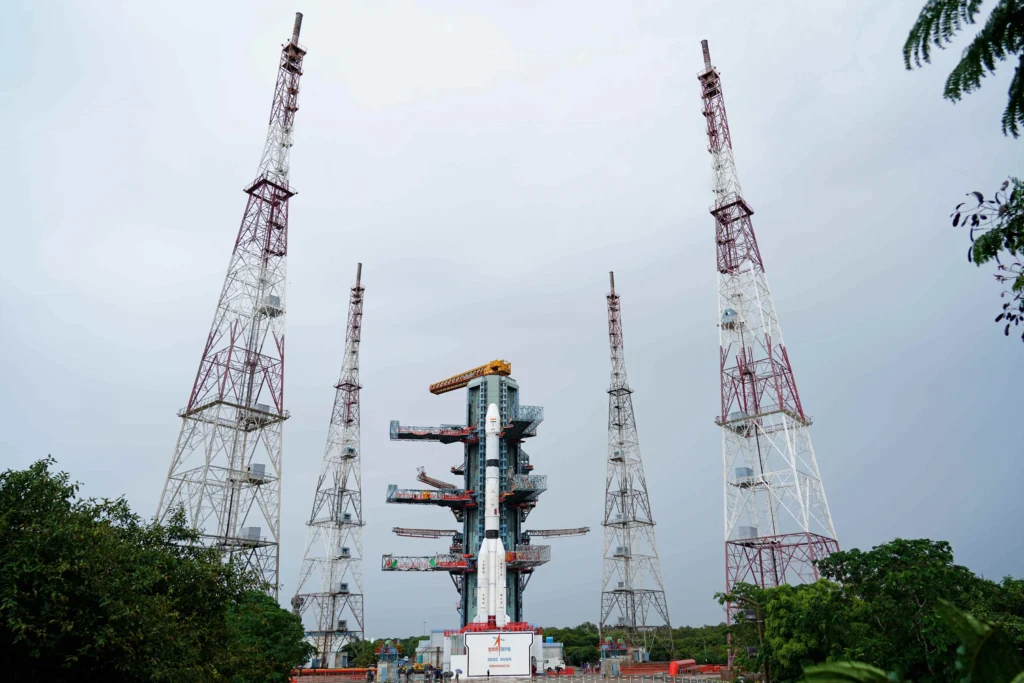
ISRO's GSLV-F18 lifted off at 11:51 pm IST on 30 October 2026 from the Second Launch Pad at Satish Dhawan Space Centre, Sriharikota, and placed the navigation satellite NVS-03 in its intended Geosynchronous Transfer Orbit. ISRO declared the mission a success. The launch is reported in today's papers (The Hindu, Page 12; Indian Express, Page 10).
Background:
NavIC's standalone positioning had weakened because of ageing first-generation satellites and the failure of NVS-02 (January 2025) to reach its intended orbit. ISRO flew NVS-03 with its pyro valves already open, a design change meant to avoid the fault that stranded NVS-02.
Mission details:
• GSLV-F18 is the 20th flight of the Geosynchronous Satellite Launch Vehicle.
• The satellite is now in a Geosynchronous Transfer Orbit (GTO). Its own motor will raise it to its final geosynchronous slot.
• ISRO Chairman V. Narayanan said the vehicle injected the satellite precisely, and that the 56-day gap after GSLV-F17/EOS-05 (early September 2026) was the shortest turnaround between two GSLV flights.
• NVS-03 carries the L1 signal in addition to L5 and S, with coverage over India and a region about 1,500 km beyond its boundary.
• Before launch, ISRO said NVS-03 would give NavIC its fourth working satellite, the minimum needed to run on its own.
What is still pending:
NVS-03 is not operational yet. Orbit raising, in-orbit tests and commissioning still have to be completed. This is the stage at which NVS-02 failed in 2025.
Prelims pointers
A receiver needs signals from at least four satellites: three to fix position in three dimensions and one to correct its own clock error.
NVS series: five second-generation satellites (NVS-01 to NVS-05). NVS-01 was launched on GSLV-F12 on 29 May 2023 and carried the first indigenous atomic clock on a NavIC satellite.
GTO is an elliptical orbit. The satellite uses its own liquid apogee motor to climb to geosynchronous altitude (about 36,000 km).
GSLV Mk II has three stages: a solid core with four liquid strap-ons, a liquid second stage and the indigenous Cryogenic Upper Stage (CUS).
Mains angle
A successful launch is only half the job. NVS-02 failed after a perfect launch, during orbit raising, and NVS-03 still has to complete that same step. If it does, NavIC can again offer reliable standalone positioning for defence, aviation, shipping and disaster response. The quick 56-day turnaround also shows better launch cadence, which is essential for keeping a constellation healthy.
Major browser companies have blocked certificates linked to Bengaluru-based eMudhra. Eight of its intermediate certificate-authority keys were generated with too little randomness, which made them potentially recoverable by attackers. CERT-In issued an advisory on 21 October.
Websites prove their identity through digital certificates issued by certification authorities, in a hierarchy of root, intermediate and end-user certificates.
A weak key at an intermediate level could let attackers issue fake certificates, impersonate websites or sign malware.
Prelims pointers
Of the eight affected certificates, six were for authenticating websites (TLS) and two were for signing software. The flaw was reported to browser companies on 17 October by an independent researcher.
eMudhra traces the flaw to a key-generation exercise on 30 April 2025. It says only one affected authority was in production, and none had issued end-user certificates.
Google said no website certificates chaining to the affected authorities appeared in Certificate Transparency logs before it blocked them.
In India, certifying authorities that issue digital signature certificates are licensed by the Controller of Certifying Authorities (CCA) under the IT Act, 2000. Other licensed authorities include Safescrypt, Capricorn and nCode.
eMudhra is India's largest certifying authority, with about 38% of the digital signature market by value. It says its Indian digital signature and eSign businesses run on separate infrastructure and were not affected.
Mains angle
Internet security rests on trust in a few certification authorities. One lapse can undermine HTTPS, so key management needs strict audits and fast revocation.
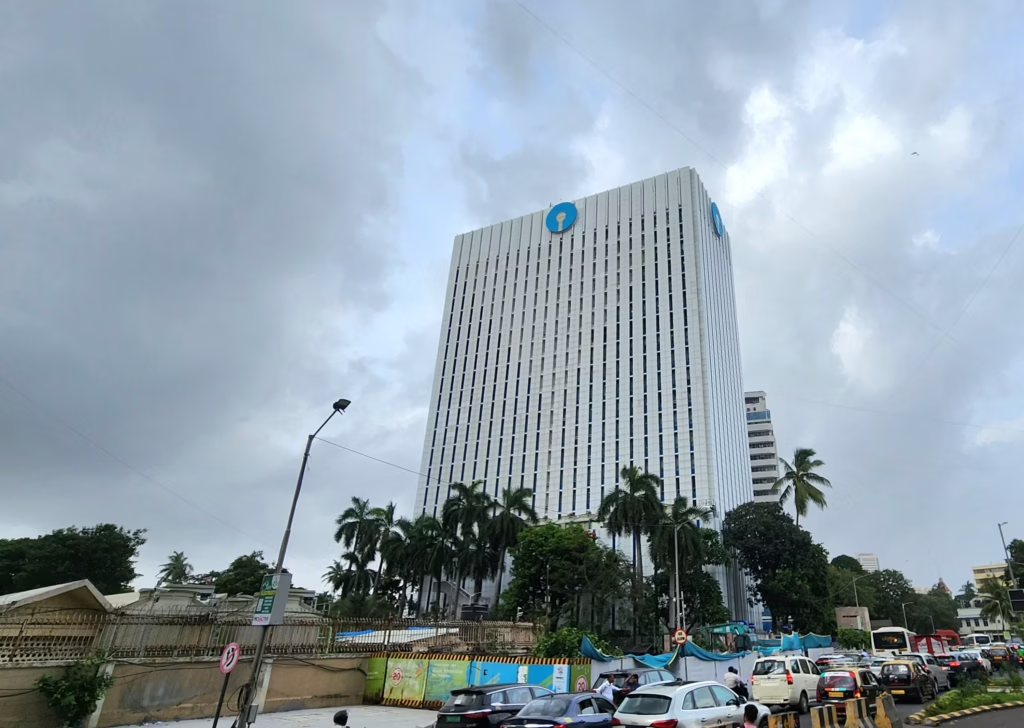
The State Bank of India disclosed in a stock-exchange filing on 21 October that personal data of some customers was exposed on the dark web. This followed alerts it received on 16 October, including from CERT-In. A preliminary review of about 3.75 lakh leaked records found 3,897 containing personally identifiable information.
A threat actor had claimed on a dark-web forum to hold about 3.75 lakh rows of SBI-linked data and 2,722 PDF files, mostly loan-related.
SBI has appointed a CERT-In-empanelled agency to establish the source and authenticity of the data.
Prelims pointers
Exposed fields include mobile numbers, dates of birth, names, email and home addresses, Customer Information File (CIF) identifiers and loan-lead metadata.
CERT-In works under MeitY and is the national nodal agency for cyber incidents under Section 70B of the IT Act, 2000.
CERT-In's 2022 directions require cyber incidents to be reported within six hours of noticing them.
The Digital Personal Data Protection Act, 2023 requires data fiduciaries to report personal-data breaches to the Data Protection Board and to affected individuals.
Under the DPDP Act, failure to take reasonable security safeguards can attract a penalty of up to ₹250 crore.
The right to privacy is part of Article 21 (K.S. Puttaswamy, 2017).
Mains angle
Banks hold some of the most sensitive data in the economy. Leaks of loan and KYC data feed phishing and identity fraud, and test how quickly data-protection law is enforced.
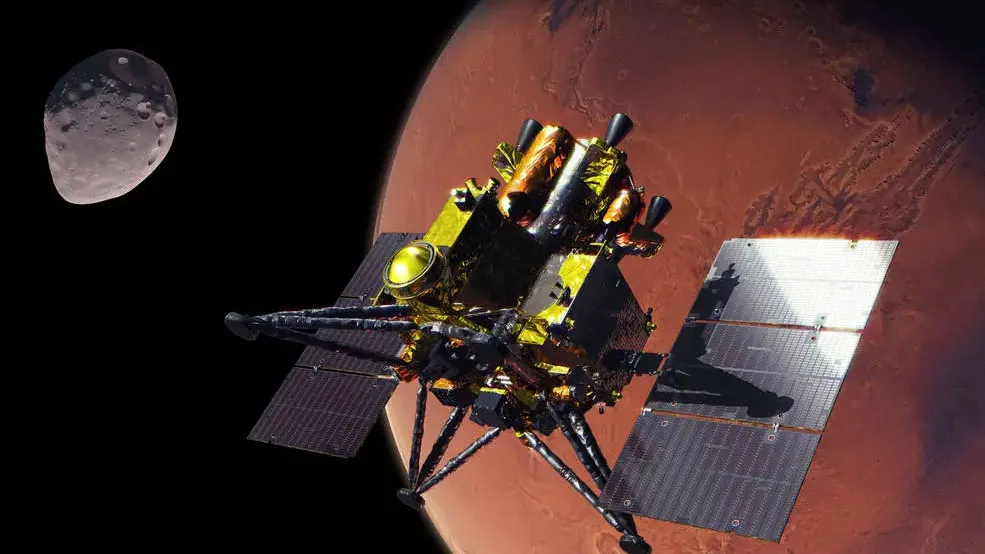
JAXA launched the Martian Moons eXploration (MMX) probe on an H3 rocket from Tanegashima Space Center on 20 October. It aims to return at least 10 grams of Phobos to Earth in 2031.
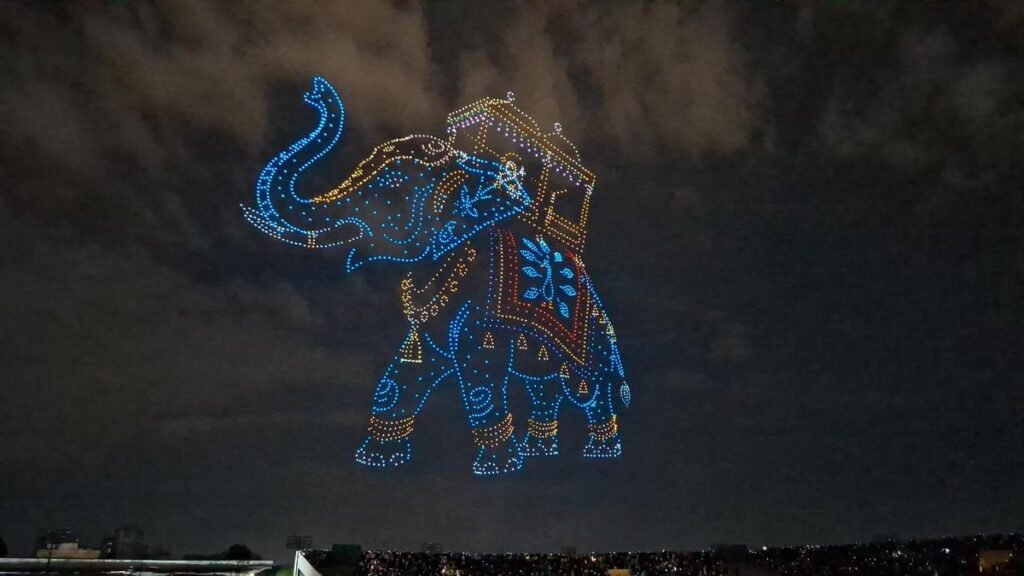
The drone show, which added a touch of modern technology to the Dasara celebration, began with a visual depicting Chief Minister D.K. Shivakumar welcoming people to the Dasara festivities