ISRO’s GSLV-F18 successfully places NVS-03 in orbit; NavIC moves closer to standalone positioning
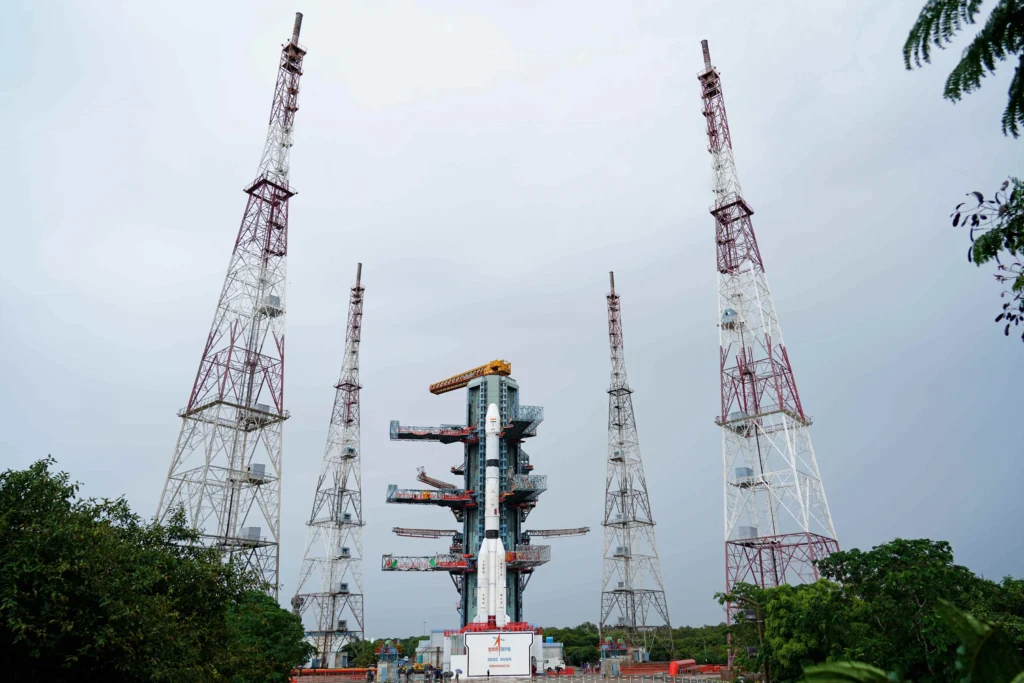
ISRO's GSLV-F18 lifted off at 11:51 pm IST on 30 October 2026 from the Second Launch Pad at Satish Dhawan Space Centre, Sriharikota, and placed the navigation satellite NVS-03 in its intended Geosynchronous Transfer Orbit. ISRO declared the mission a success. The launch is reported in today's papers (The Hindu, Page 12; Indian Express, Page 10).
Why in news
Background: NavIC's standalone positioning had weakened because of ageing first-generation satellites and the failure of NVS-02 (January 2025) to reach its intended orbit. ISRO flew NVS-03 with its pyro valves already open, a design change meant to avoid the fault that stranded NVS-02. Mission details: • GSLV-F18 is the 20th flight of the Geosynchronous Satellite Launch Vehicle. • The satellite is now in a Geosynchronous Transfer Orbit (GTO). Its own motor will raise it to its final geosynchronous slot. • ISRO Chairman V. Narayanan said the vehicle injected the satellite precisely, and that the 56-day gap after GSLV-F17/EOS-05 (early September 2026) was the shortest turnaround between two GSLV flights. • NVS-03 carries the L1 signal in addition to L5 and S, with coverage over India and a region about 1,500 km beyond its boundary. • Before launch, ISRO said NVS-03 would give NavIC its fourth working satellite, the minimum needed to run on its own. What is still pending: NVS-03 is not operational yet. Orbit raising, in-orbit tests and commissioning still have to be completed. This is the stage at which NVS-02 failed in 2025.
Prelims pointers
- A receiver needs signals from at least four satellites: three to fix position in three dimensions and one to correct its own clock error.
- NVS series: five second-generation satellites (NVS-01 to NVS-05). NVS-01 was launched on GSLV-F12 on 29 May 2023 and carried the first indigenous atomic clock on a NavIC satellite.
- GTO is an elliptical orbit. The satellite uses its own liquid apogee motor to climb to geosynchronous altitude (about 36,000 km).
- GSLV Mk II has three stages: a solid core with four liquid strap-ons, a liquid second stage and the indigenous Cryogenic Upper Stage (CUS).
Mains angle
A successful launch is only half the job. NVS-02 failed after a perfect launch, during orbit raising, and NVS-03 still has to complete that same step. If it does, NavIC can again offer reliable standalone positioning for defence, aviation, shipping and disaster response. The quick 56-day turnaround also shows better launch cadence, which is essential for keeping a constellation healthy.