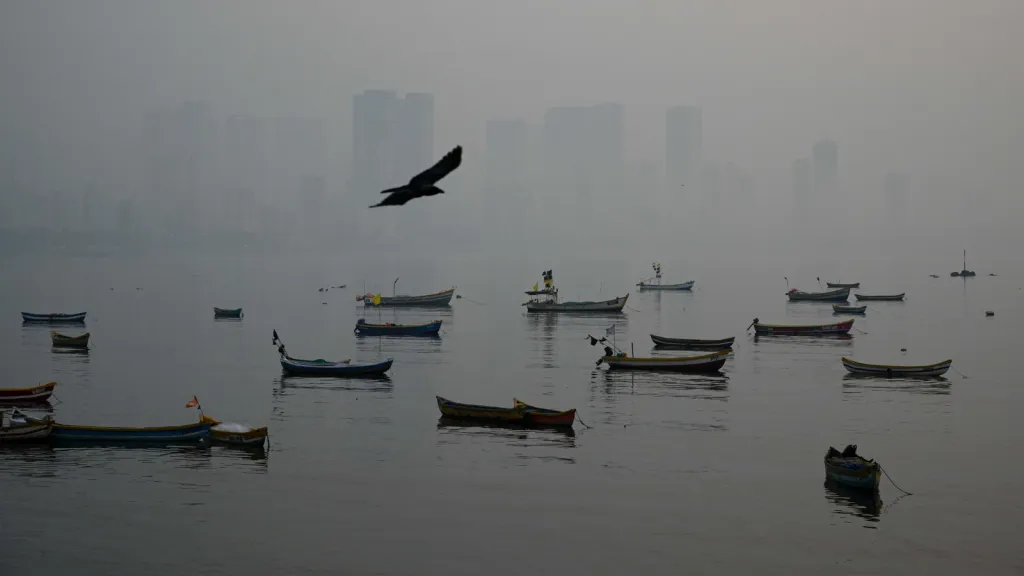
The US National Oceanic and Atmospheric Administration (NOAA) said on 12 November that the current El Niño will remain "strong" to "very strong" during the first quarter of 2027. It estimates about a 60% chance that this will become the strongest El Niño since records began in 1950.
Background:
Since October, sea surface temperatures in the equatorial Pacific have risen more than 4°C above normal in parts, the first such reading since the 1950s. The World Meteorological Organization had warned in October of record temperature anomalies.
Prelims pointers
El Niño is the warm phase of the El Niño Southern Oscillation (ENSO). The other phases are La Niña (cool) and ENSO-neutral.
An El Niño is declared when sea surface temperature anomalies in the Niño 3.4 region of the Pacific exceed 0.5°C, averaged over three months.
A historic event would mean an anomaly of +2.5°C or more.
El Niño changes rainfall patterns, raises global temperatures and increases the risk of droughts, floods and wildfires.
In India, El Niño years are often linked to weaker south-west monsoon rainfall, though the Indian Ocean Dipole can offset this.
NOAA is a US government agency.
Mains angle
A record El Niño could push global temperatures to new highs and threaten India's 2027 monsoon, with risks for crops, food inflation, water and power supply. Preparedness means drought contingency plans, crop diversification, water storage and early warnings, as well as monitoring the Indian Ocean Dipole.
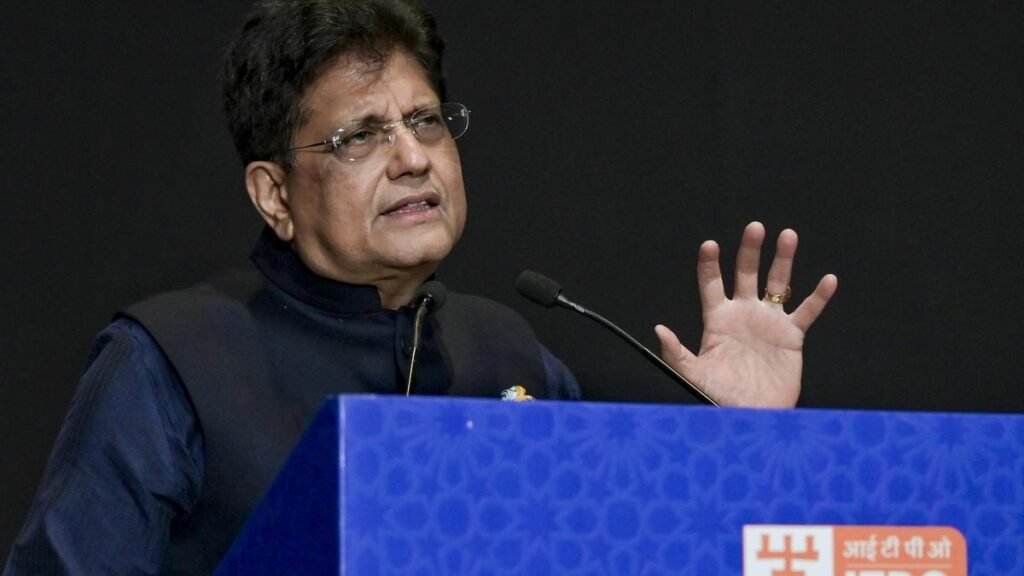
Commerce and Industry Minister Piyush Goyal will begin a two-day visit to Egypt on 15 November 2026. Talks will focus on trade and investment, and cooperation in the Suez Canal Economic Zone, manufacturing, infrastructure, ports and logistics.
Background:
A business delegation of over 140 CEOs and senior industry representatives will attend the India-Egypt Joint Business Council. Goyal and Egypt's Minister of Investment and Foreign Trade, Mohamed Farid Saleh, will co-chair the seventh session of the Joint Trade Committee on 15 November.
Prelims pointers
Egypt's location gives Indian businesses access to markets in Africa, the Middle East and Europe.
Topics include market access, non-tariff barriers, trade remedies, food and agricultural products, pharmaceuticals, engineering goods, chemicals, fertilisers, textiles and customs cooperation.
The Suez Canal Economic Zone (SCZONE) is a special economic zone along the Suez Canal, offering incentives for industry and logistics.
India and Egypt upgraded their ties to a Strategic Partnership in 2023, when President Abdel Fattah el-Sisi was chief guest at India's Republic Day.
The Suez Canal links the Mediterranean Sea and the Red Sea, and is a key route for India's trade with Europe.
Mains angle
Egypt can be a gateway for Indian goods and investment into Africa and Europe, and a partner in food and fertiliser security. With Red Sea shipping disrupted by regional conflicts, a presence in the Suez Canal zone could also make India's supply chains more resilient.
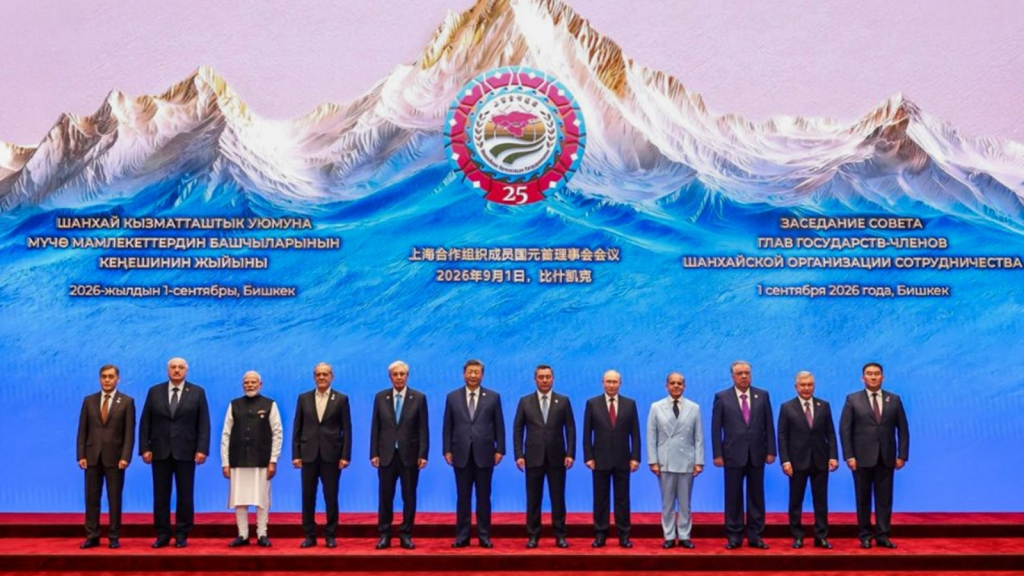
India will host the inaugural SCO Civilisational Dialogue Forum at Purana Qila, New Delhi, from 20 to 22 November 2026. PM Narendra Modi will inaugurate it. Culture Minister Gajendra Singh Shekhawat said 15 of 25 invited countries, including China, Iran, Saudi Arabia and Türkiye, have confirmed participation.
Background:
The forum is organised by the Ministries of Culture and External Affairs. India has invited Pakistan's Culture Minister, the first such invitation to a senior Pakistani minister since the hostilities after Operation Sindoor in May 2025. Pakistan has not yet confirmed. Delegates will be shown the excavated site at Purana Qila, which reveals layers of Delhi's history.
Prelims pointers
All SCO member, partner and observer countries have been invited.
Countries that have confirmed include China, Kazakhstan, Iran, Tajikistan, Uzbekistan, Belarus, Azerbaijan, Armenia, Bahrain, Nepal, Saudi Arabia, Türkiye and Sri Lanka.
Shekhawat said India wants the SCO to be a forum for shared civilisational heritage, not only a geopolitical and economic platform.
The SCO was founded in 2001. India and Pakistan became full members in 2017, Iran in 2023 and Belarus in 2024.
Purana Qila in Delhi is linked with Humayun and Sher Shah Suri. Excavations have found remains from many historical periods.
India has placed the Indus Waters Treaty with Pakistan in abeyance since April 2025.
Mains angle
Cultural diplomacy can build trust among SCO countries with very different political systems. By highlighting its civilisational continuity, India is using soft power within a forum often seen as dominated by China and Russia. The invitation to Pakistan shows India keeping a cultural channel open despite tense political relations.
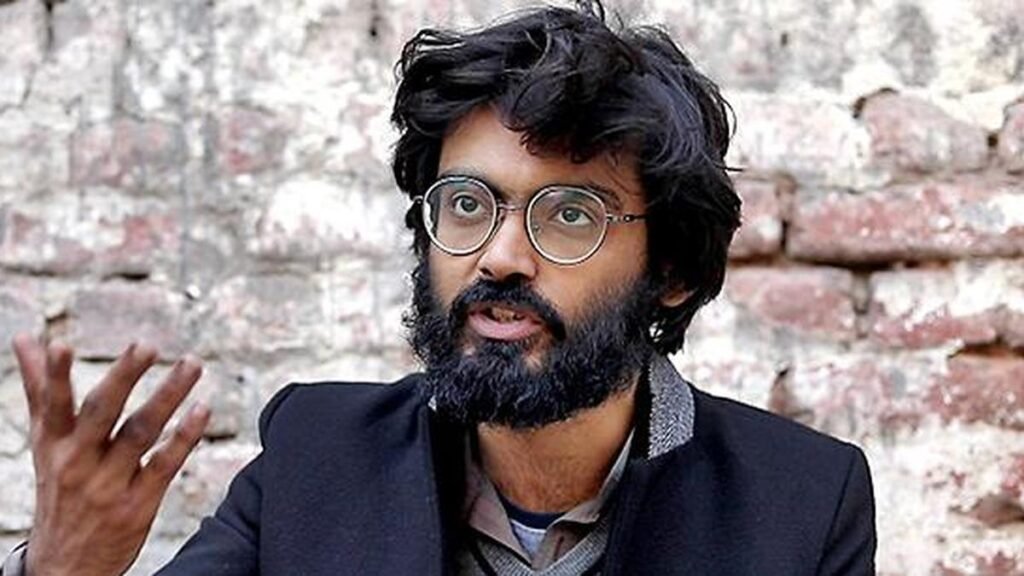
Indian Ambassador to the US Vinay Mohan Kwatra said on 13 November that the US Commission on International Religious Freedom (USCIRF) has "no locus standi" to judge the constitutional rights of Indian citizens, and asked it to "introspect on its own prejudices". This followed USCIRF's post describing Sharjeel Imam as detained for his religious freedom advocacy.
Background:
Sharjeel Imam has been booked under the Unlawful Activities (Prevention) Act on allegations of being among the conspirators of the February 2020 Delhi riots, in which 53 people died. India has long described USCIRF as biased and lacking credibility.
Prelims pointers
USCIRF is a bipartisan US federal advisory body set up under the International Religious Freedom Act, 1998.
It recommends countries for designation as "Countries of Particular Concern" to the US State Department, but its recommendations are not binding.
Articles 25 to 28 of the Indian Constitution guarantee freedom of religion.
The Unlawful Activities (Prevention) Act, 1967 is India's main anti-terror law. Its bail provisions are stricter than ordinary criminal law.
Kwatra said USCIRF's "partisan, ill-informed" assessments cannot diminish India's constitutional commitment to religious freedom.
Mains angle
India treats external commentary on its internal and judicial matters as interference in sovereignty, especially from bodies it considers biased. At the same time, democratic credibility rests on robust domestic safeguards such as judicial review, speedy trials and fair bail processes. Strong institutions are the best answer to outside criticism.
Prime Minister Narendra Modi inaugurated the COSMOS-Mysuru Planetarium, India's first LED dome planetarium, in Mysuru, Karnataka, on 13 November 2026. He credited the Indian Institute of Astrophysics, Mysuru University and government departments for building it.
Background:
The PM said India's spiritual and scientific traditions have always advanced together, citing ancient astronomers such as Aryabhata, Varahamihira, Bhaskaracharya and Nilakantha Somayaji. He urged the planetarium to invite school and college students regularly.
Prelims pointers
An LED dome uses LED panels instead of projectors, giving brighter, sharper images of the sky.
The PM cited Chandrayaan-3, Aditya-L1 and India becoming the fourth country to demonstrate space docking.
He mentioned more than 10,000 Atal Tinkering Labs, the One Nation One Subscription scheme, the Anusandhan National Research Foundation and a ₹1 lakh crore research, development and innovation scheme.
Indian students won four gold medals and one silver at the International Olympiad on Astronomy and Astrophysics in Vietnam.
Aryabhata (5th century CE) wrote the Aryabhatiya and proposed that the Earth rotates on its axis.
Nilakantha Somayaji belonged to the Kerala school of astronomy and mathematics.
Mains angle
Science communication spaces such as planetariums spark curiosity and help build scientific temper, a fundamental duty under Article 51A(h). Linking them with schools and research institutions can encourage students towards careers in space and science, where India is expanding rapidly.
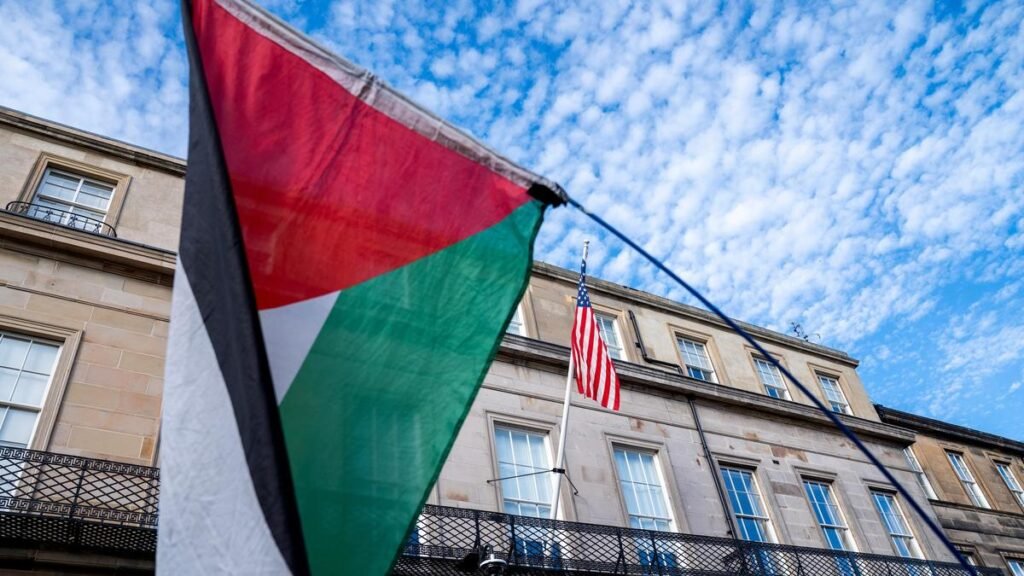
India voted in favour of a UN General Assembly resolution reaffirming the rights of the Palestinian people, and of the population of the occupied Syrian Golan, over their natural resources. The resolution, proposed by Uruguay, was adopted on 11 November 2026 with 151 votes in favour, 7 against and 11 abstentions.
Background:
The resolution, titled "Permanent sovereignty of the Palestinian people in the Occupied Palestinian Territory, including East Jerusalem, and of the Arab population in the occupied Syrian Golan over their natural resources", demands that Israel stop exploiting and damaging these resources. Israel and the US were among the seven countries that voted against it.
Prelims pointers
The resolution covers land, water and energy resources.
It says the wall and settlements built by Israel in the Occupied Palestinian Territory are contrary to international law.
It calls for compliance with the July 2004 advisory opinion of the International Court of Justice on the wall.
The principle of permanent sovereignty over natural resources was set out in UN General Assembly Resolution 1803 (1962).
Israel has occupied the West Bank, East Jerusalem, Gaza and the Golan Heights since the 1967 war.
India supports a negotiated two-state solution, with a sovereign, independent and viable State of Palestine living side by side with Israel.
UNGA resolutions are generally recommendatory and not legally binding, unlike some UN Security Council resolutions.
Mains angle
India's vote reflects its long-standing support for Palestinian rights, while it also maintains a strong strategic partnership with Israel. This balanced approach, often called de-hyphenation, lets India engage both sides and the Arab world. Its position is guided by international law, its energy and diaspora interests in West Asia, and its role as a voice of the Global South.
Commerce and Industry Minister Piyush Goyal inaugurated the 45th India International Trade Fair (IITF) at Bharat Mandapam, New Delhi, on 13 November 2026. He said India's exports reached a record of about $90 billion in October, including about $50 billion of goods and $40 billion of services.
Background:
More than 3,500 exhibitors, 11 countries and over 30 States and UTs are taking part. Goyal said exports for the first seven months of 2026-27 totalled $570 billion and India is on track for its $1 trillion annual target.
Prelims pointers
Goyal expects India's trade to grow 15-16%, against estimated global trade growth of about 3.5%.
A "One District, One Product" pavilion and a "Hall of Inspiration" with 600 startups are among the highlights.
He urged industry to adopt a "zero defect, zero effect" approach and circular economy practices.
He said October GST collections reached a record.
IITF is organised by the India Trade Promotion Organisation (ITPO), under the Commerce Ministry, and has been held since 1980.
The One District One Product (ODOP) initiative promotes a distinctive product from each district for branding and exports.
Mains angle
Strong exports of both goods and services show growing competitiveness, especially in services. However, sustaining this will depend on FTAs, quality standards, logistics costs and diversification of markets. Trade fairs help small producers and startups reach buyers, which is important for spreading the gains of trade.
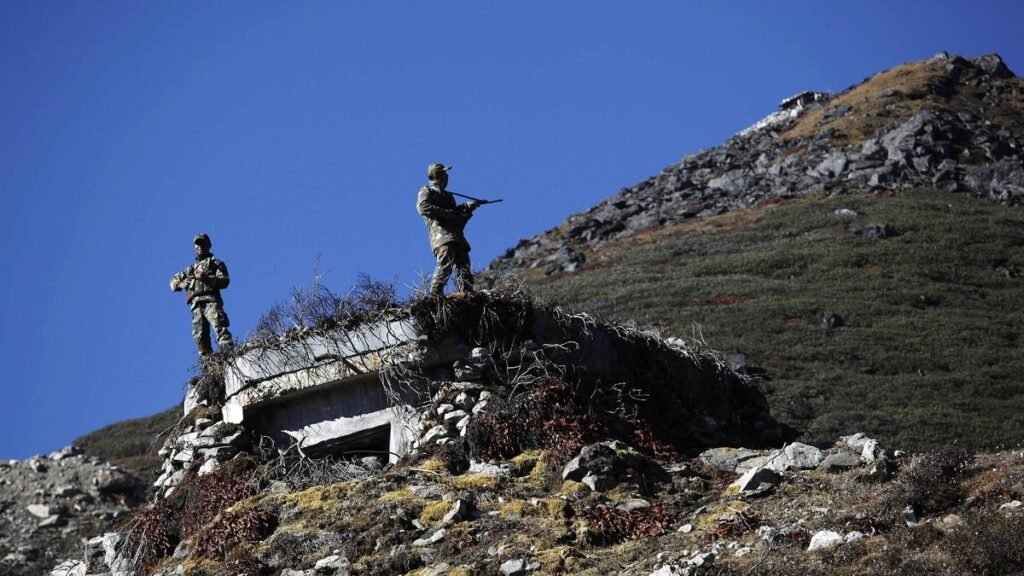
With face-offs with the Chinese Army continuing along the Line of Actual Control (LAC) in Arunachal Pradesh since late July, the Indo-Tibetan Border Police (ITBP) has sanctioned construction of new border infrastructure in the State, The Hindu reports.
Background:
In February 2026, the Cabinet Committee on Security, led by PM Narendra Modi, cleared the third phase of the Indo-China Border Roads project (ICBR-III). Under it, 26 roads are to be built along the LAC in Arunachal Pradesh, according to government officials.
Prelims pointers
The ICBR project is a Ministry of Home Affairs scheme to build strategic roads for the ITBP along the India-China border.
The ITBP is a Central Armed Police Force under the MHA that guards the India-China border.
The India-China border is about 3,488 km long and is divided into western, middle and eastern sectors. Arunachal Pradesh lies in the eastern sector.
In the eastern sector, India regards the McMahon Line, drawn in 1914, as the boundary. China does not accept it.
The Vibrant Villages Programme develops border villages to improve infrastructure and check out-migration.
The Border Roads Organisation (BRO) builds roads in border areas, mainly for the Army.
Mains angle
Border infrastructure is essential for quick troop movement, logistics and surveillance, and for keeping border villages populated. China has built extensive roads, rail and dual-use villages on its side, so India has been catching up. Building in fragile Himalayan terrain needs careful engineering and environmental safeguards.
Prime Minister Narendra Modi will visit Manila, Philippines, on 16 and 17 November 2026 at the invitation of President Ferdinand R. Marcos Jr. He will attend the 23rd ASEAN-India Summit and the 21st East Asia Summit on 17 November.
Background:
The PMO release calls India-ASEAN ties a central pillar of India's Act East Policy and Indo-Pacific vision. 2026 is the ASEAN-India Year of Maritime Cooperation, and leaders will review the ASEAN-India Plan of Action 2026-2030. Earlier, MEA Secretary (East) Rudrendra Tandon said India-ASEAN trade is about $122 billion.
Prelims pointers
ASEAN was founded in 1967. Timor-Leste became its 11th member in 2025.
The Philippines holds the ASEAN chairmanship in 2026.
2027 will mark 35 years of ASEAN-India Dialogue Relations and five years of the Comprehensive Strategic Partnership.
India's Look East Policy (1991) was upgraded to the Act East Policy in 2014.
India and ASEAN upgraded ties to a Comprehensive Strategic Partnership in 2022.
The ASEAN-India Trade in Goods Agreement (AITIGA) is under review to address India's trade deficit with ASEAN.
The East Asia Summit began in 2005, with India as a founding participant. It includes ASEAN members plus Australia, China, India, Japan, New Zealand, South Korea, Russia and the US.
Mains angle
ASEAN is central to India's Indo-Pacific vision and its connectivity with Southeast Asia. Key issues include reviewing AITIGA, maritime security in the South China Sea, connectivity projects such as the India-Myanmar-Thailand Trilateral Highway, and digital and supply chain cooperation. The summit also allows bilateral meetings with major Indo-Pacific leaders.
The Ministry of Road Transport and Highways has proposed reforms to the rules for renting out cabs. They would lower entry barriers for operators, simplify licensing and strengthen passenger safety and driver welfare.
Background:
The ministry said the reforms would create business opportunities, especially for small operators, and improve services for renters. They would be supported by electronic licensing and VAHAN vehicle records, with monitoring by States and UTs.
Prelims pointers
Operators may offer cabs with or without a driver.
Minimum fleet size would fall from 50 to 5, with at least two cabs at each operating location. The requirement to have branches in five tourist cities would be removed.
A single electronic licence, valid across a State or UT at a uniform fee, would replace separate main and branch licences. Operating locations could include airports, railway stations and bus terminals.
Licences would be issued or renewed within 60 days, with 30-day deemed approval for adding or removing cabs and locations.
Live location tracking and a first-aid kit would be mandatory. Operators must offer 24-hour grievance support, emergency repairs and towing.
Police verification would be mandatory for operator-appointed drivers, who would get welfare benefits under the Code on Social Security, 2020.
Transport is in the Concurrent List. The Motor Vehicles Act, 1988 is the central law, while States implement permits and licensing.
Mains angle
Easier entry and digital licensing can expand self-drive and rental services, support tourism and create jobs for small entrepreneurs. Linking driver welfare to the Social Security Code recognises gig and platform-style work. Effective enforcement of safety rules and coordination between the Centre and States will decide outcomes.