Commerce and Industry Minister Piyush Goyal inaugurated the 45th India International Trade Fair (IITF) at Bharat Mandapam, New Delhi, on 13 November 2026. He said India's exports reached a record of about $90 billion in October, including about $50 billion of goods and $40 billion of services.
Background:
More than 3,500 exhibitors, 11 countries and over 30 States and UTs are taking part. Goyal said exports for the first seven months of 2026-27 totalled $570 billion and India is on track for its $1 trillion annual target.
Prelims pointers
Goyal expects India's trade to grow 15-16%, against estimated global trade growth of about 3.5%.
A "One District, One Product" pavilion and a "Hall of Inspiration" with 600 startups are among the highlights.
He urged industry to adopt a "zero defect, zero effect" approach and circular economy practices.
He said October GST collections reached a record.
IITF is organised by the India Trade Promotion Organisation (ITPO), under the Commerce Ministry, and has been held since 1980.
The One District One Product (ODOP) initiative promotes a distinctive product from each district for branding and exports.
Mains angle
Strong exports of both goods and services show growing competitiveness, especially in services. However, sustaining this will depend on FTAs, quality standards, logistics costs and diversification of markets. Trade fairs help small producers and startups reach buyers, which is important for spreading the gains of trade.
The 31st CII Partnership Summit opened in Visakhapatnam, Andhra Pradesh, on 12 November 2026. It is being held over two days on the theme "New Directions for a New World Order". Union Ministers Amit Shah, Piyush Goyal and K. Ram Mohan Naidu attended the opening, along with Chief Minister N. Chandrababu Naidu.
Background:
The summit is organised by the Confederation of Indian Industry (CII) with DPIIT and the Andhra Pradesh government. Japan featured prominently, with its ambassador noting Japan's commitment of 10 trillion yen of investment in India over the next decade.
Prelims pointers
Three greenfield industrial smart city nodes in Andhra Pradesh, Krishnapatnam, Orvakal and Kopparthy, span 7,717 acres.
They have a potential investment of ₹31,360 crore and potential employment of about 2 lakh jobs.
Progress: Krishnapatnam over 50% complete, Orvakal about 30%, Kopparthy about 12%.
31 Japanese companies in three Andhra Pradesh cities have created over 8,000 local jobs.
The nodes are developed by the National Industrial Corridor Development Corporation (NICDC).
The National Industrial Corridor Development Programme aims to build planned, plug-and-play industrial cities with ready infrastructure.
Mains angle
Planned industrial cities with ready land, power and logistics can attract manufacturing investment and support the China-plus-one shift. Andhra Pradesh's ports and corridors give it an edge. Timely land acquisition, skilled labour and links to ports and rail will decide whether these nodes deliver jobs.
The Reserve Bank of India issued consolidated directions on domestic money transfers on 12 November 2026. The existing transaction limits are kept, but safeguards for cash-based remittances, such as those made by people without bank accounts, have been tightened.
Background:
Domestic money transfers let people, often migrant workers, send money to family elsewhere in India through bank branches, business correspondents and other channels, even if they do not have a bank account. Such cash-based channels can be misused for fraud and money mule activity, which the new directions target.
Prelims pointers
Remitters without bank accounts can send up to ₹50,000 to a beneficiary's bank account through bank branches using NEFT.
Through business correspondents, ATMs and other permitted channels: ₹5,000 per transaction and ₹25,000 per remitter per month.
Cash payout to beneficiaries without bank accounts: ₹10,000 per transaction and ₹25,000 per beneficiary per month.
Remitters must register with a verified mobile number and a self-certified valid KYC document.
Banks must include remitter details and cash-transfer identifiers in IMPS and NEFT messages, monitor unusual credit patterns and report suspicious transactions.
The directions cover banks and authorised payment system operators and participants, but exclude card-to-card transfers.
The RBI regulates payment systems under the Payment and Settlement Systems Act, 2007.
Mains angle
Cash-based transfers remain a lifeline for migrant workers and the unbanked, so access must not be cut off. At the same time, such channels are vulnerable to fraud, mule accounts and money laundering. The new directions try to balance financial inclusion with traceability, by keeping limits while adding identity checks, transaction tagging and monitoring.
The Union Cabinet on 11 November approved the continuation of the Credit Guarantee Fund for Micro Units (CGFMU) for five years up to March 2031, with a corpus of ₹5,000 crore. This is expected to facilitate loans of ₹12.6 lakh crore under the Pradhan Mantri Mudra Yojana (PMMY).
Background:
As of September 2026, more than 60.36 crore loans worth ₹43.34 lakh crore have been sanctioned since PMMY was launched. The CGFMU, launched in January 2016, provides credit guarantees to lending institutions through the National Credit Guarantee Trustee Company (NCGTC), reducing their risk of default.
Prelims pointers
The extension covers all PMMY loans during the Sixteenth Finance Commission cycle (2026-27 to 2030-31).
The fund covers PMMY loans up to ₹20 lakh, overdrafts on Jan Dhan accounts up to ₹10,000, and certain Self Help Group portfolio loans.
PMMY provides collateral-free loans to non-farm micro enterprises through banks, NBFCs and MFIs.
PMMY loan categories are Shishu, Kishore, Tarun and Tarun Plus, by loan size.
A credit guarantee means that if a borrower defaults, the guarantee fund pays part of the loss to the lender, encouraging lending to small borrowers without collateral.
Mains angle
Micro enterprises are a major source of jobs but have limited access to formal credit because they lack collateral and credit history. Credit guarantees have helped Mudra lending grow sharply. The challenge is to keep defaults low, ensure loans reach new entrepreneurs, and help micro units grow into small and medium firms.
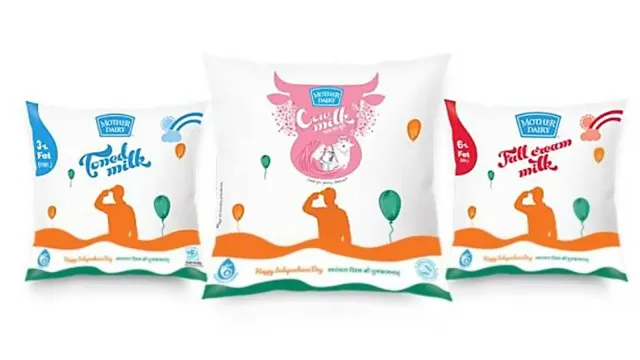
Mother Dairy has raised milk prices in Delhi-NCR by ₹2 to ₹4 per litre, effective 12 November 2026. Full cream milk goes from ₹72 to ₹76 a litre and toned milk (pouched) from ₹60 to ₹62. Sources said higher procurement prices paid to farmers are being partly passed on to consumers.
Background:
The previous hike was on 14 May 2026. National Statistics Office data show food inflation rose to 7.74% in September from 5.97% in August, while retail (CPI) inflation was 5.54%, driven by high onion and other food prices.
Prelims pointers
India is the world's largest producer of milk.
Mother Dairy is a wholly owned subsidiary of the National Dairy Development Board (NDDB), set up in 1974.
Operation Flood, launched in 1970 by NDDB under Verghese Kurien, transformed India into a milk-surplus nation.
The RBI's inflation target is 4% CPI inflation, with a tolerance band of 2% to 6%, under flexible inflation targeting.
Milk has a significant weight in the CPI food basket, so price changes affect household budgets and headline inflation.
Mains angle
Milk price rises help dairy farmers, most of whom are small and landless, but they also raise living costs for consumers. Higher fodder and feed costs, heat stress on animals and low productivity drive up procurement prices. Raising yields, improving fodder supply and strengthening cooperatives can balance farmer incomes and consumer prices.
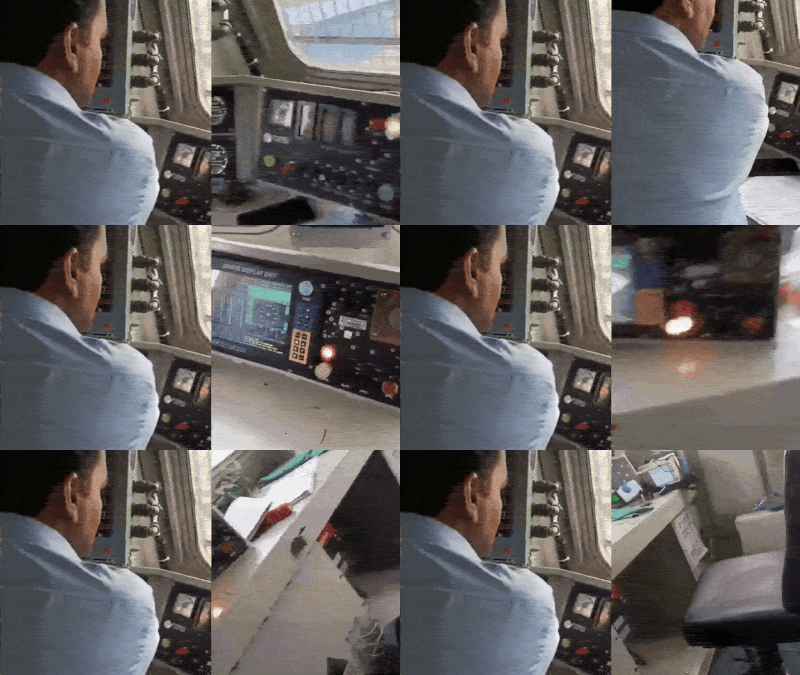
At least six coaches of the Kolkata-Sairang Express derailed at Digaru railway station on the outskirts of Guwahati, Assam, at about 6:54 AM on 11 November 2026. Several passengers were injured, and no deaths had been reported at the time of the first reports. The cause is yet to be determined.
Background:
The train was travelling from Sairang in Mizoram to Kolkata and was being received at Digaru to give way to another train when the derailment occurred. The section falls under the Northeast Frontier Railway (NFR).
Prelims pointers
Sairang, near Aizawl, was connected to the national rail network by the Bairabi-Sairang line, inaugurated in September 2025. This brought Mizoram's capital region onto the railway map.
The Commission of Railway Safety (CRS), under the Ministry of Civil Aviation, investigates serious train accidents. It is kept separate from the Railway Ministry to ensure independence.
Kavach is India's indigenous automatic train protection system, developed by RDSO, to prevent collisions and signal violations.
Common causes of derailments include track defects, wheel or axle failures, signalling errors and over-speeding.
Mains angle
New rail links in the Northeast are vital for connectivity and economic integration, but difficult terrain and heavy rainfall raise maintenance and safety challenges. Each accident highlights the need for faster track renewal, modern signalling, wider Kavach coverage and independent safety oversight.
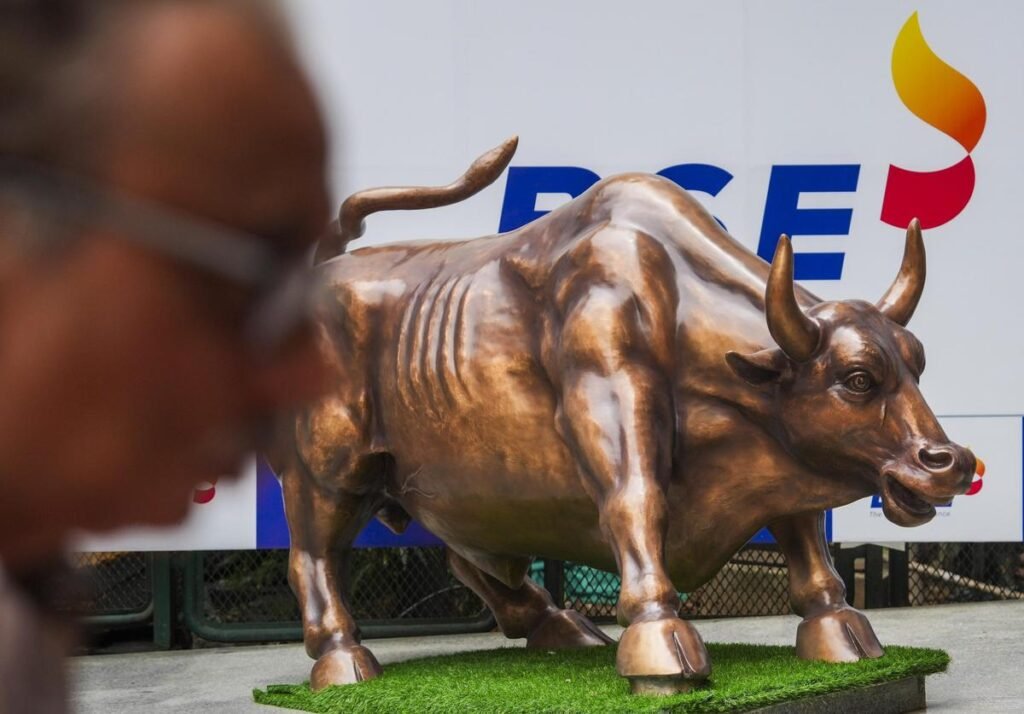
The BSE Sensex rose about 1,187 points (1.46%) to around 82,294 in morning trade on 11 November 2026, and the Nifty 50 rose about 1.2% to around 25,344. Reports attributed the rally to a sharp fall in crude oil prices and strong foreign fund inflows. Markets had been closed on 10 November for Diwali.
Background:
The rally followed US President Trump's remark that the military conflict with Iran is "effectively over". Both indices have gained nearly 9% so far this month. Lower crude prices help India because it imports most of its oil.
Prelims pointers
India imports more than 85% of its crude oil requirement, so oil prices strongly affect its current account deficit, inflation and the rupee.
Foreign Portfolio Investors (FPIs) invest in Indian shares and bonds. Their inflows and outflows influence market levels and the rupee.
The Sensex (BSE, 30 stocks) and Nifty 50 (NSE, 50 stocks) are the main stock market indices.
SEBI regulates India's securities markets under the SEBI Act, 1992.
The rupee was around 93.70 per US dollar in early trade.
Mains angle
India's markets and macroeconomy are sensitive to oil shocks because of high import dependence. A fall in crude prices eases inflation, the current account deficit and the fiscal burden of fuel subsidies. Long-term resilience needs lower oil dependence through renewables, EVs and strategic petroleum reserves.
According to Department of Telecommunications (DoT) data obtained by The Hindu under the RTI Act, the number of villages without 4G access fell from 45,180 in 2022 to 11,372, about a fourth of the earlier figure. The decline is partly due to BSNL's 4G saturation project.
Background:
The fall goes beyond the saturation scheme's original target of 24,680 villages, indicating complementary efforts by private operators. The Hindu notes that the DoT has yet to finish procedures to approve any satellite internet provider, which in theory could cover the remaining villages. Rural rollout is costly because villages are sparse and operators must spend heavily to reach relatively few users.
Prelims pointers
The 4G saturation project, approved by the Union Cabinet in 2022, aims to provide 4G mobile services in uncovered villages through BSNL.
Mobile broadband is the main way most Indians access the internet. Additions to wired broadband subscriptions have stagnated for months.
The Digital Bharat Nidhi, which replaced the Universal Service Obligation Fund under the Telecommunications Act, 2023, funds connectivity in rural and remote areas.
BharatNet aims to connect all gram panchayats with optical fibre broadband.
Satellite communication (satcom) can reach remote areas where laying fibre and building towers is not viable.
Mains angle
Closing the last-mile gap is essential for digital public infrastructure such as UPI, DBT, telemedicine and online education to reach everyone. The remaining villages are the hardest and most expensive to serve, so public funding, shared infrastructure and satellite options will be needed. Affordability of smartphones and digital literacy also matter as much as network coverage.
The Ministry of Fisheries, Animal Husbandry and Dairying has said Lakshadweep and the Andaman and Nicobar Islands will anchor growth in tuna, seaweed and ornamental fisheries as part of India's blue economy campaign.
Background:
The two island groups together account for about 40% of India's Exclusive Economic Zone (EEZ). Tuna stocks such as yellowfin, skipjack and bigeye in the surrounding waters are considerably underused. Lakshadweep's five-year plan aims to double tuna production to 50,000 tonnes.
Prelims pointers
India has a coastline of about 11,099 km and an EEZ of about 24 lakh sq km, according to the ministry.
Estimated marine fisheries potential is 58.6 lakh tonnes, supporting about 50 lakh fishers.
Seafood exports were worth about ₹73,890 crore in 2025-26.
Since 2015, the Government has committed ₹39,272 crore to the fisheries sector.
PMMSY allocations: ₹218 crore for the Andaman and Nicobar Islands and ₹175 crore for Lakshadweep.
Lakshadweep has been notified as a dedicated seaweed cluster. It also hosts more than 300 reef-associated ornamental fish species.
The Pradhan Mantri Matsya Sampada Yojana (PMMSY) was launched in 2020 to develop the fisheries sector.
Mains angle
Island territories offer large, underused marine resources and strategic depth in the Indian Ocean. Developing tuna, seaweed and ornamental fisheries can raise local incomes and exports. The challenge is to do so sustainably, given fragile coral ecosystems, limited infrastructure and the risk of overfishing.
In an affidavit before the Supreme Court, the National Payments Corporation of India (NPCI) defended a Merchant Discount Rate (MDR) of up to 0.4% on person-to-merchant UPI payments above ₹2,000. It said merchants and UPI apps cannot pass this charge on to customers.
Background:
A PIL challenges the charge and the amendment to Section 10A of the Payment and Settlement Systems Act, 2007, made through the Taxation and Other Laws (Amendment) Act, 2026. NPCI says the charge is needed because industry operating costs of about ₹20,700 crore are far higher than the ₹2,000 crore government support. The original 15 October start date has been postponed.
Prelims pointers
MDR is the fee a merchant pays to banks and payment providers for accepting digital payments.
Person-to-person transfers, payments up to ₹2,000, small merchants with up to ₹1 lakh monthly UPI credits, and RuPay debit card payments remain free.
NPCI says about 96% of person-to-merchant payments are ₹2,000 or less, so only about 4% would attract MDR.
5% of each entity's MDR share will fund a UPI adoption programme for small merchants with turnover up to ₹20 lakh.
NPCI argues it is not "State" under Article 12, so fundamental rights cannot be enforced against it.
NPCI was set up in 2008 by the RBI and the Indian Banks' Association as a not-for-profit company. UPI was launched in 2016.
Zero MDR on UPI and RuPay was introduced from January 2020 through Section 10A of the PSS Act.
Mains angle
Zero MDR helped UPI become the world's largest real-time payment system, but it left banks and apps without a revenue model to fund security, infrastructure and expansion. A small, targeted charge on large merchant payments can make UPI financially sustainable. The risk is that costs reach consumers indirectly or slow adoption, so strict enforcement and continued support for small merchants are essential.