According to the WHO Global TB Report 2026, India's TB mortality rate has fallen by 38% since 2015, compared with a 35% decline globally. The treatment success rate for drug-sensitive TB has reached 94%.
Background:
The TB mortality rate dropped from 28 per lakh population in 2015 to 18 per lakh in 2025. The ministry credited the TB Mukt Bharat Abhiyaan, intensive screening drives, AI-enabled diagnostics and community support. About 96% of the TB programme's financing needs are met from domestic resources.
Prelims pointers
The first 100-day TB Mukt Bharat Abhiyaan began on 7 December 2024 in 347 high-priority districts and was later expanded nationwide. A second 100-day drive began on 24 March 2026, targeting 1.58 lakh high-risk villages and wards.
Over 25 crore people were screened, with more than 11 crore chest X-rays and over 3 crore NAAT (molecular) tests.
48.64 lakh TB cases were identified, including 14.97 lakh people without symptoms.
67,933 gram panchayats were declared TB-free in 2025.
Ni-kshay Poshan Yojana gives nutritional support to patients, and Ni-kshay Mitras provide community support.
AI tools include portable digital X-rays, hotspot mapping and the "Khushi" chatbot.
ICMR-NIRT conducted a national TB prevalence survey in 2025, whose findings are under WHO technical review.
The Sustainable Development Goal target is to end the TB epidemic by 2030.
Mains angle
India's progress shows the value of active case finding, molecular testing, nutrition support and community participation. Finding asymptomatic cases is especially important, because they can spread infection unnoticed. The remaining challenges are drug-resistant TB, undernutrition, private-sector notification and stigma.
The National Medical Commission (NMC) has cautioned students, parents and the public against taking admission in medical colleges without first verifying their statutory recognition and approval. In an advisory dated 5 November 2026, it said it had found institutions offering medical and allied health courses without permission from competent authorities.
Background:
The advisory warns that misleading advertisements, websites, social media promotions and agents could expose students to fraud. Students are asked to verify the institution, the course, the approved intake and the permission for the relevant academic year, and to avoid making payments to agents or personal bank accounts.
Prelims pointers
The NMC was set up under the National Medical Commission Act, 2019, replacing the Medical Council of India (MCI) established under the Indian Medical Council Act, 1956.
The NMC has four autonomous boards, including the Undergraduate and Postgraduate Medical Education Boards and the Medical Assessment and Rating Board, which grants permission to establish medical colleges.
Admission to MBBS courses is through NEET-UG, conducted by the National Testing Agency.
Allied and healthcare professions are regulated under the National Commission for Allied and Healthcare Professions Act, 2021.
Mains angle
High demand and limited seats push students towards unverified institutions and agents, including abroad. Fraudulent colleges waste years of students' lives and family savings, and produce unqualified practitioners who endanger patients. Stronger enforcement, public lists of approved seats and action against agents are needed alongside expanding legitimate seats.
National Commission for Women (NCW) Chairperson Vijaya Rahatkar has said the Commission receives about 1.5 lakh complaints a year, and domestic violence accounts for the largest share of complaints within its mandate.
Background:
Women can approach the NCW through its online portal, email, in person and its 24x7 helpline. Under its outreach initiative "Rashtriya Mahila Aayog Aapke Dwar", the Commission has held more than 200 public hearings in villages and other locations across the country in the last one and a half years.
Prelims pointers
The NCW is a statutory body set up in January 1992 under the National Commission for Women Act, 1990.
It investigates matters relating to safeguards for women, reviews laws, recommends remedial measures and inquires into complaints.
It has the powers of a civil court while investigating complaints.
The Protection of Women from Domestic Violence Act, 2005 provides civil remedies such as protection orders, residence orders and monetary relief.
The NCW is a statutory body, not a constitutional one. Constitutional bodies such as the National Commission for Scheduled Castes are created by the Constitution itself.
Mains angle
The high volume of domestic violence complaints shows how widespread violence within homes remains, and how much of it is never reported. Outreach hearings help reach women in rural areas, but effective protection depends on protection officers, one-stop centres, police sensitivity and economic independence for survivors. Strengthening the NCW's follow-up and coordination with State commissions is also important.
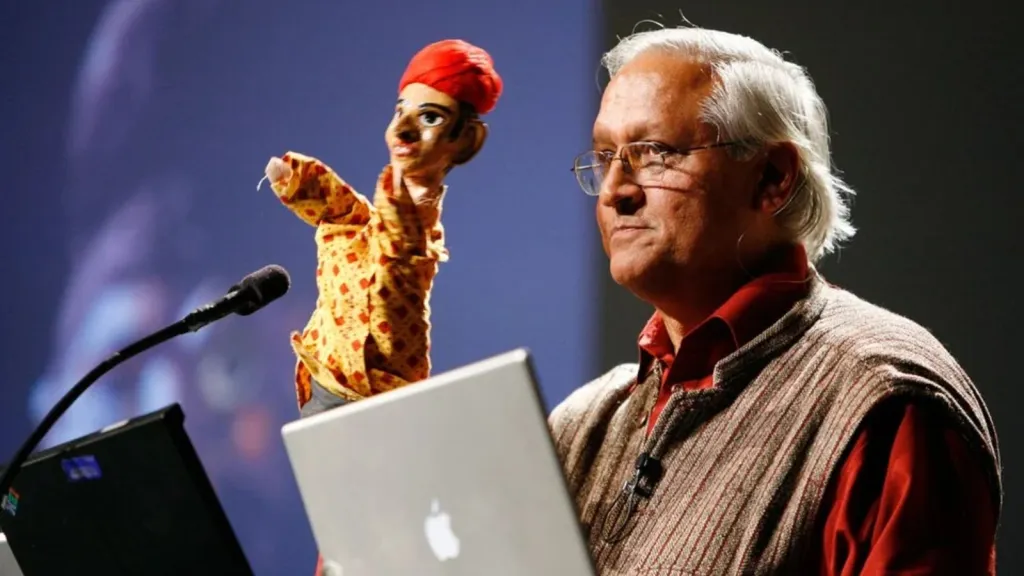
Social activist Sanjit "Bunker" Roy, founder of the Barefoot College, died at his home in Tilonia, Ajmer district, Rajasthan, on 10 November 2026. He was 81. He spent more than five decades working on rural development and women's empowerment.
Background:
Roy founded the Social Work and Research Centre, popularly known as Barefoot College, in Tilonia in 1972. It began in a Rajasthan village and became an internationally recognised institution for rural development. His wife is the social activist Aruna Roy.
Prelims pointers
Barefoot College trains rural people, many without formal education, in skills such as solar engineering, water management and health care.
It is known for training rural women from India and other developing countries as "solar engineers" to electrify their villages.
The model is based on the idea that traditional knowledge and practical skills can drive community-led development.
Aruna Roy is a founder of the Mazdoor Kisan Shakti Sangathan (MKSS), which played a key role in the movement for the Right to Information Act, 2005.
Mains angle
The Barefoot model shows that development can be community-led, with rural people as creators of solutions rather than passive beneficiaries. It offers lessons for skilling, decentralised renewable energy and women's empowerment, and for South-South cooperation.
On 5 November, Solicitor General Tushar Mehta told a Supreme Court bench of Chief Justice Surya Kant and Justice Joymalya Bagchi that the Government is contemplating a committee to re-examine the University Grants Commission's 2026 equity regulations. The Court adjourned the matter for four weeks.
Background:
The UGC notified the equity regulations in January 2026, replacing its 2012 framework. The Supreme Court stayed them the same month, finding them prima facie vague and open to misuse, so the 2012 regulations continue. The lead case was filed in 2019 by the mothers of Rohith Vemula and Payal Tadvi, who died by suicide after alleged caste discrimination on campus.
Prelims pointers
The lead matter is Abeda Salim Tadvi v. Union of India, seeking stronger safeguards against caste discrimination in higher education.
Regulation 3(1)(c) of the 2026 regulations defines caste-based discrimination as unfair treatment directed at members of SCs, STs and OBCs.
Some petitioners argue the framework excludes general category students and could be misused. Others defend targeted protection for marginalised groups.
The UGC is a statutory body set up under the UGC Act, 1956, under the Ministry of Education.
Article 15 prohibits discrimination on grounds of caste, and Article 17 abolishes untouchability.
Mains angle
Caste discrimination on campuses is a real problem, reflected in dropout rates and student suicides. Effective regulations need clear definitions, fair procedures and independent grievance bodies, so that they protect vulnerable students without becoming tools for misuse. A balanced redraft can address both concerns.
In the QS Asia University Rankings 2027, IIT Delhi is India's highest-ranked institution at 66th. India has 325 ranked universities, including 34 new entrants, and six institutions in Asia's top 100.
Background:
All six of India's top-ranked institutions slipped compared with last year. About 71% of Indian universities in the rankings declined, 18% improved and 11% held steady. India does well on research output and faculty qualifications but lags on citations.
University of Delhi fell to 106th and dropped out of the top 100.
The University of Hong Kong is ranked first in Asia for the second year, followed by Peking University and Tsinghua University.
21 Indian universities are in Asia's top 200, up from 20.
IISc ranks first in Asia on Papers per Faculty. Only three Indian universities are in Asia's top 50 for Citations per Paper.
QS (Quacquarelli Symonds) is based in London. India's own ranking framework, NIRF, was launched by the Ministry of Education in 2015.
Mains angle
The results show a familiar pattern: India produces a lot of research but much of it has limited impact, and its best institutions are slipping as other Asian countries invest heavily. Rankings are only one measure, but they affect global perception, student mobility and collaboration. NEP 2020 goals such as research funding through the Anusandhan National Research Foundation and internationalisation need faster implementation.
At the "PMAY-G Reform Samvad" organised by the Ministry of Rural Development and the National Housing Bank (NHB) in Lonavala, lenders proposed dedicated rural housing loans of ₹2-5 lakh for Pradhan Mantri Awaas Yojana-Gramin beneficiaries, with repayment aligned to seasonal incomes. The ministry released the outcome on 2 November.
Background:
PMAY-G aims to build 4.95 crore pucca houses by March 2029. The dialogue explored how bank credit could help rural families build bigger or better homes beyond the government grant, with housing finance companies, regional rural banks, small finance banks, microfinance institutions, the World Bank and the IFC taking part.
Prelims pointers
Lenders proposed a government-backed partial credit guarantee, interest subvention, concessional funding and NHB refinance to keep loans affordable.
They sought land and property reforms from States, including allowing mortgage of allotted property and stamp duty concessions.
They also asked for regulatory norms suited to rural borrowers, such as differentiated NPA and provisioning rules.
Last-mile delivery was proposed through Gram Panchayats, DAY-NRLM self-help groups and the LokOS digital platform.
PMAY-G was launched in 2016 by restructuring the Indira Awaas Yojana. Unit assistance is ₹1.20 lakh in plain areas and ₹1.30 lakh in hilly States, difficult areas and the North-East.
Beneficiaries are identified using Socio-Economic Caste Census (SECC) 2011 data and the Awaas+ survey, verified by Gram Sabhas.
The NHB was set up in 1988 under the National Housing Bank Act, 1987. It has been wholly owned by the Government of India since 2019, when the RBI's stake was transferred.
Mains angle
Grants alone rarely cover the cost of a decent house, and many rural families fall back on costly informal loans. Linking PMAY-G with formal credit could improve housing quality and financial inclusion together. The risks are over-indebtedness of poor households and weak repayment capacity during crop failures, so guarantees and flexible repayment are essential.
The National Pharmaceutical Pricing Authority (NPPA) on 28 October released revised maximum retail prices for 543 brands of anti-cancer drugs, which will take effect from 9 November 2026. The sample list shows price cuts of roughly 57% to 90%, such as denosumab falling from about ₹22,031 to ₹5,941 and bevacizumab from about ₹21,768 to ₹5,930 per vial.
On 17 October, the NPPA rationalised trade margins on 137 non-scheduled anti-cancer drugs in public interest and asked manufacturers to submit revised prices. The list released now covers submissions received up to 27 October and will keep growing as more companies file.
Prelims pointers
The NPPA, set up in 1997, functions under the Department of Pharmaceuticals, Ministry of Chemicals and Fertilizers.
Trade margin is the gap between the price at which a manufacturer sells to the distributor and the MRP paid by the patient. High margins mostly benefit the supply chain, not the patient.
Trade margin rationalisation for cancer drugs was first tried as a pilot on 42 non-scheduled anti-cancer drugs in 2019.
The 137 drugs covered include immunotherapy drugs used for more than 20 types of cancer, along with denosumab, pegfilgrastim and bevacizumab.
Bevacizumab is a monoclonal antibody that blocks VEGF, a protein tumours use to grow new blood vessels.
Denosumab is a monoclonal antibody against RANKL, used to protect bones in cancers that spread to bone. Pegfilgrastim is a long-acting drug that raises white blood cell counts after chemotherapy.
Anastrozole is an aromatase inhibitor used in hormone-receptor-positive breast cancer. Its sample MRP fell from about ₹696 to ₹73 for 10 tablets.
Mains angle
Cancer care is one of the biggest drivers of catastrophic health spending in India, and medicines form a large part of that bill. Cutting margins brings prices down without touching manufacturers' selling price. The challenge now is enforcement at retail level, keeping supply steady, and making sure patients actually see the new MRP on the shelf.
NPPA has capped trade margins on 137 non-scheduled anti-cancer drugs at 30% of MRP, effective November 9. It used its powers under Para 19 of DPCO 2013. Immunotherapies like pembrolizumab and nivolumab are covered, and so are patented drugs unless exempted. Mark-ups averaged about 170%, crossing 700% in some cases. The move extends a 2019 pilot on 42 drugs and will show whether margin caps can cut out-of-pocket cancer costs.
Students have blocked entrances to hundreds of high schools across the country, with squads of riot police deployed to control the situation — occasionally resulting in violent clashes