
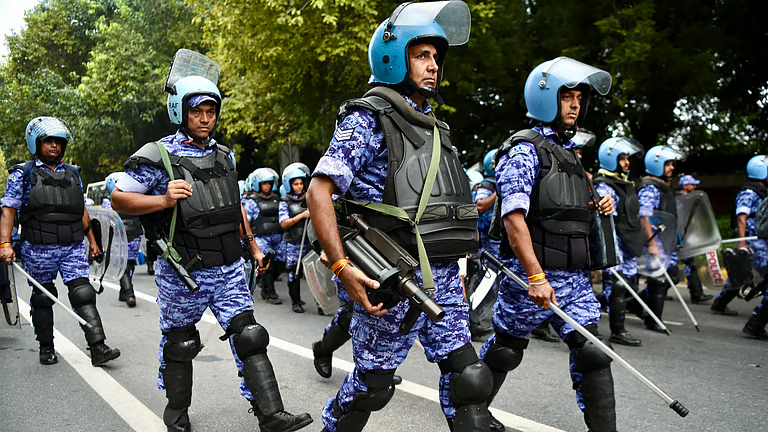
RAF rushed to Arunachal Pradesh amid protests against the Siang Upper Multipurpose Project
The Ministry of Home Affairs said on 24 October that two Rapid Action Force (RAF) companies of the CRPF, about 250 personnel, would be airlifted from Navi Mumbai to Pasighat on an IAF aircraft. Violence broke out in Pasighat after a 12-hour bandh in Siang, Upper Siang and East Siang districts against the proposed 11,200-MW Siang Upper Multipurpose Project (SUMP). The bandh itself had been peaceful.
Why in news
About the project: Proposed on the Siang river by NHPC, it would be among India's largest hydropower projects. The Arunachal government says it would have about 9.2 billion cubic metres of live storage. The State calls it a national project with strategic and security value, not just a power project. A pre-feasibility report is to be prepared first. Social and environmental impact assessments and a DPR would follow if it is found feasible. The China factor: China is building a mega dam (about 60,000 MW) on the Yarlung Tsangpo upstream. India argues a large reservoir on the Siang could absorb sudden water releases and reduce flood risk in Arunachal and Assam. Why locals oppose it: Fear of displacement and loss of farmland, forests and villages of the Adi community. Ecological damage in a seismically active zone. Complaints that consent is being forced through security deployment.
Prelims pointers
- The Brahmaputra rises near Mansarovar in Tibet as the Yarlung Tsangpo. It enters Arunachal Pradesh as the Siang (Dihang).
- Near Sadiya in Assam, the Siang is joined by the Dibang and the Lohit, and the river is called the Brahmaputra.
- In Bangladesh it is called the Jamuna.
- The RAF is a specialised riot-control wing of the CRPF, raised in 1992.
- The Forest Rights Act, 2006 gives Gram Sabhas a role in decisions on diverting forest land.
- India and China share hydrological data on trans-border rivers through an Expert Level Mechanism set up in 2006.
Mains angle
The SUMP sits at the meeting point of energy security, water security and border strategy. But large dams in tribal areas succeed only with real consent. A balanced approach needs: Free, prior and informed consultation with Adi communities. Independent social and environmental impact studies. Fair compensation and livelihood plans. Dialogue first, with security deployment as a last resort.