Centre amends motor vehicle rules to allow E100 in flex-fuel vehicles
The Ministry of Road Transport and Highways has amended the Central Motor Vehicles Rules, 1989 to recognise E100 (100% ethanol) as a fuel for flex-fuel vehicles. The notification, G.S.R. 911(E), was issued on 23 October and published in the Gazette on 26 October, coming into force on publication. It follows draft rules issued on 27 April 2026.
Why in news
What changed: In Rule 115 (vehicle emission standards), references to "E85" now read "E85 or E100". E85 or E100 may be used only in vehicles designed by the manufacturer (OEM) as flex-fuel vehicles. Ordinary petrol vehicles are not permitted to run on E100. The gross vehicle weight threshold in one emission table was raised to 3,500 kg from 3,000 kg. The notification gives no timeline for nationwide commercial availability of E100. Why it matters: It creates a legal framework for testing and certifying vehicles that run on near-pure ethanol. Higher ethanol use can cut crude oil imports and support farm incomes.
Prelims pointers
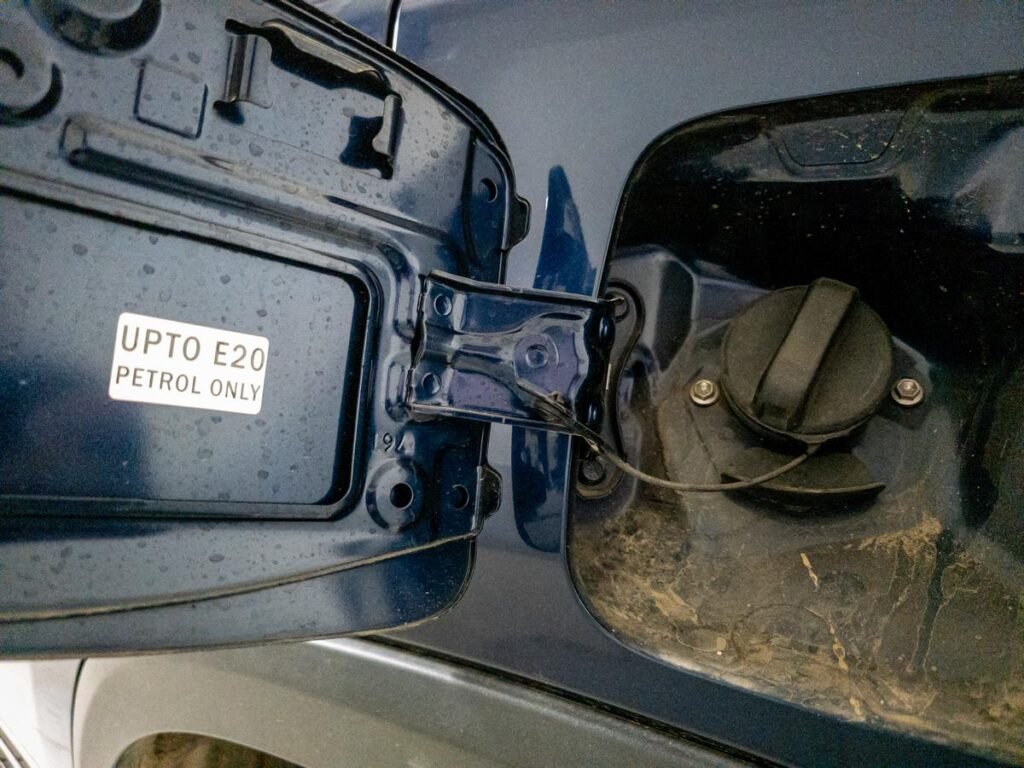
- E100 = 100% ethanol. E85 = 85% ethanol and 15% petrol. E20 = 20% ethanol in petrol.
- A flex-fuel vehicle can run on petrol or on any blend of petrol and ethanol up to its rated limit.
- The Central Motor Vehicles Rules, 1989 are framed under the Motor Vehicles Act, 1988 by MoRTH.
- The Ministry of Petroleum and Natural Gas is the nodal ministry for the Ethanol Blended Petrol programme. The National Policy on Biofuels, 2018 was amended in 2022 to advance the E20 target.
- Ethanol in India is produced from sugarcane molasses, cane juice and grains such as maize and surplus rice.
- Brazil is the global pioneer of flex-fuel vehicles and high ethanol use.
Mains angle
E100 can strengthen energy security and give farmers a new market, but it carries trade-offs: Food versus fuel: diverting grain and sugar to ethanol can raise food prices. Water stress: sugarcane is highly water-intensive. Lower mileage, since ethanol has less energy per litre than petrol. Need for flex-fuel vehicles, pumps and storage across the country.