Lula beats the far right, wins a fourth term as Brazil’s President
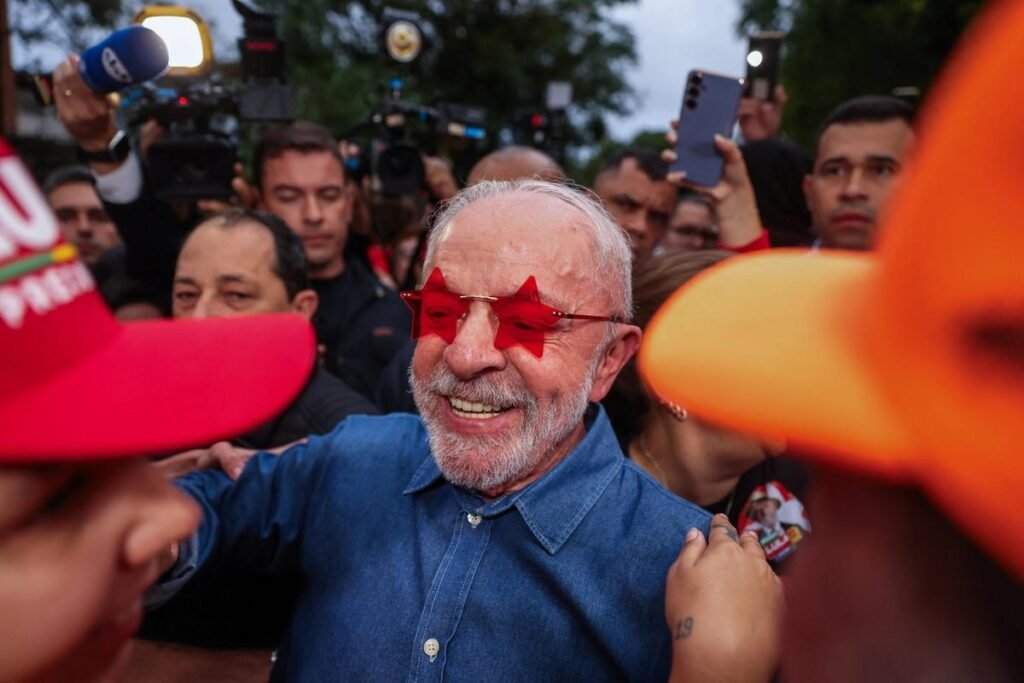
Luiz Inácio Lula da Silva won Brazil's presidential runoff on 25 October with 51.79% of valid votes against 48.21% for right-wing Senator Flávio Bolsonaro, a margin of about 4.43 million votes, according to Brazil's Superior Electoral Court. Lula, 80, had trailed in the first round on 4 October (45.16% to 47.03%). He is the first candidate in Brazil's history to finish second in the first round and still win the runoff.
Why in news
The contest: Flávio Bolsonaro is the son of former President Jair Bolsonaro, who is serving a sentence for attempting a coup to stop Lula taking office in 2023. Right-wing parties made strong gains in Congress in the first round, which may make it harder for Lula to pass his agenda. The campaign was shaped by U.S. President Donald Trump's tariffs on Brazil and his open support for Bolsonaro. Why it matters for India: Brazil is a partner in BRICS, IBSA, the G4 and the G20, and India currently chairs BRICS (2026). Lula's government has backed multipolarity, Global South cooperation and UN Security Council reform, positions close to India's. The result is a setback for Trump-aligned candidates who had been winning across Latin America.
Prelims pointers
- In Brazil, a presidential candidate needs more than 50% of valid votes to win in the first round. Otherwise the top two face a runoff on the last Sunday of October.
- Lula's earlier terms: 2003–2010 and 2023–2026.
- BRICS: Brazil, Russia, India and China held the first BRIC summit in 2009, and South Africa joined in 2010.
- IBSA (India, Brazil, South Africa) was set up by the Brasilia Declaration of 2003.
- G4 (Brazil, Germany, India, Japan) jointly seeks permanent seats on the UN Security Council.
- India and Brazil have been strategic partners since 2006. The India–Mercosur Preferential Trade Agreement came into force in 2009.
Mains angle
Lula's win keeps a like-minded Global South partner in power as India steers BRICS. The relationship has room to grow in: Trade beyond commodities, through an expanded India–Mercosur PTA. Ethanol, biofuels and agriculture technology. Defence, space and pharmaceuticals. Joint positions on UN reform and climate finance.