PM inaugurates Bharat Renewable Energy Summit & Expo 2026 as India’s non-fossil capacity crosses 310 GW
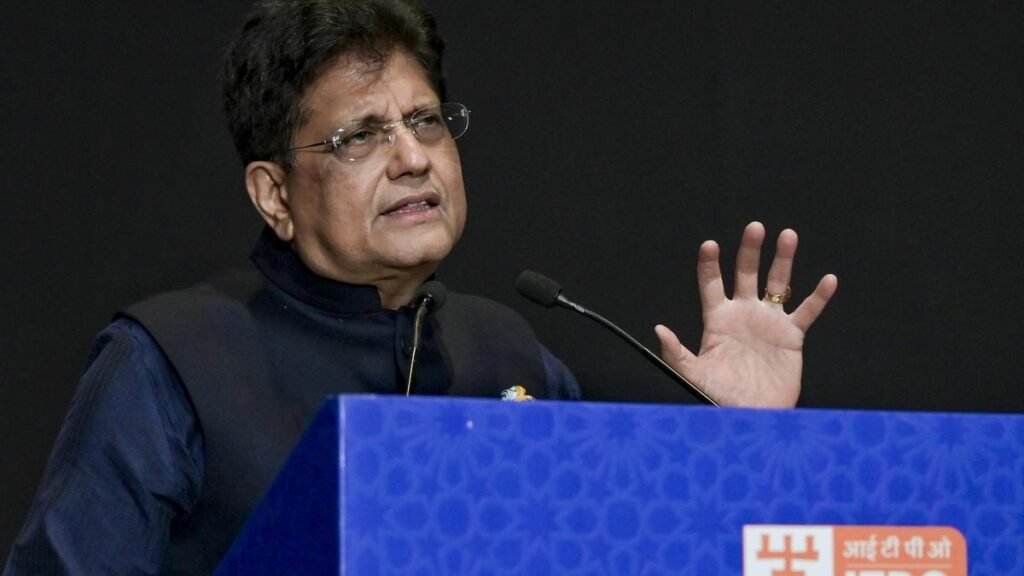
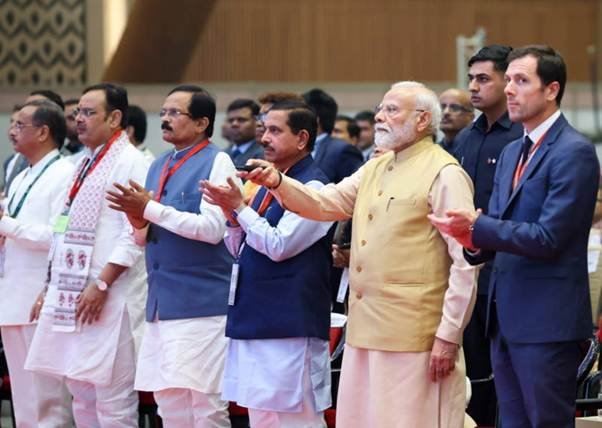
Prime Minister Narendra Modi inaugurated the Bharat Renewable Energy Summit & Expo 2026 at Bharat Mandapam, New Delhi, on 2 November, saying energy security and economic security are now directly linked. The Ministry of New and Renewable Energy said India's non-fossil installed capacity has grown from 80.3 GW twelve years ago to over 310 GW.
Why in news
Background: The summit, organised by MNRE, is being held alongside the Ninth Assembly of the International Solar Alliance and the Fourth Conference on Green Hydrogen. The PM urged startups and IITs to develop round-the-clock household solar solutions, such as rooftop solar cooking and home EV charging.
Prelims pointers
- Solar capacity has risen from 2.8 GW to 171 GW and wind capacity from 21 GW to 60 GW over twelve years. Non-fossil capacity crossed 200 GW in September 2024.
- Solar module manufacturing capacity has grown from 2 GW to 225 GW, and solar cell capacity from zero to 45 GW.
- Solar tariffs have fallen from ₹10-11 per unit (2011-12) to ₹2.15 per unit (2024-25).
- PM Surya Ghar: Muft Bijli Yojana, launched in 2024 for rooftop solar in one crore households, has crossed 65 lakh installations.
- The ministry cited green hydrogen at ₹279 per kg and green ammonia at ₹49.75 per kg, the lowest prices discovered globally. The National Green Hydrogen Mission (2023) targets 5 million tonnes of production a year by 2030.
- India's target is 500 GW of non-fossil capacity by 2030. Its updated NDC also commits to 50% of installed power capacity from non-fossil sources by 2030.
- The International Solar Alliance was launched by India and France at COP21 in Paris (2015) and is headquartered in Gurugram.
- The ministry mentioned the Pradhan Mantri Surya Sarovar Yojana (₹5,000 crore for 5,000 MW of floating solar) and Green Energy Corridor Phase-III (₹1.86 lakh crore for transmission).
Mains angle
Clean energy has become a matter of strategic autonomy: it cuts import bills and exposure to fossil fuel shocks, while building a domestic manufacturing base. The next challenges are storage, grid integration of intermittent power, and reducing dependence on imported polysilicon, wafers and critical minerals.