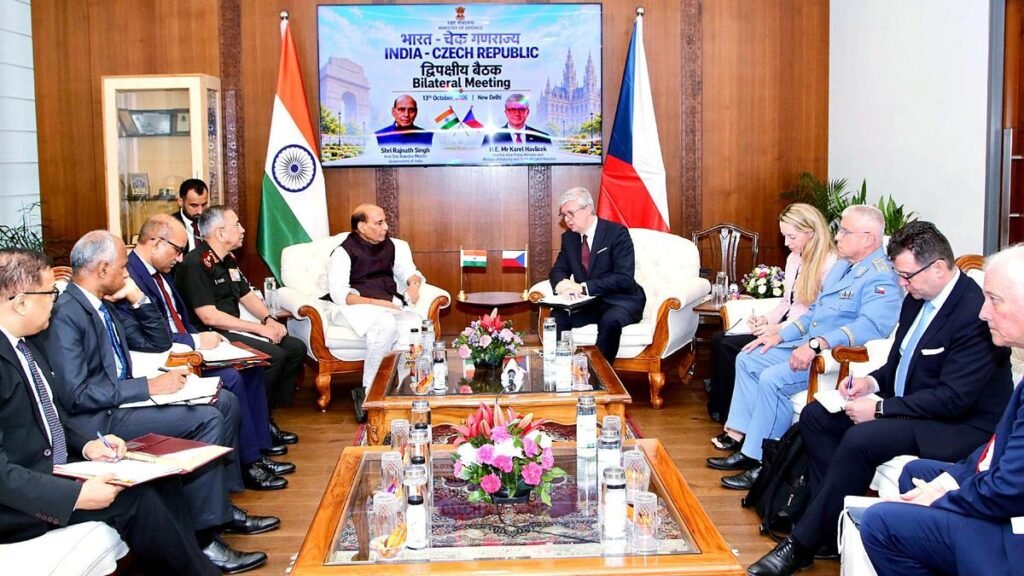
India, Czech Republic to expand defence industrial cooperation
Rajnath Singh and Czech Minister Karel Havlíček agree to further strengthen bilateral cooperation to promote the ‘Make in India’ initiative, according to Defence Ministry
7
 UnderStand UPSCUPSC Live · 60 words
🔥0
Rajnath Singh and Czech Minister Karel Havlíček agree to further strengthen bilateral cooperation to promote the ‘Make in India’ initiative, according to Defence Ministry
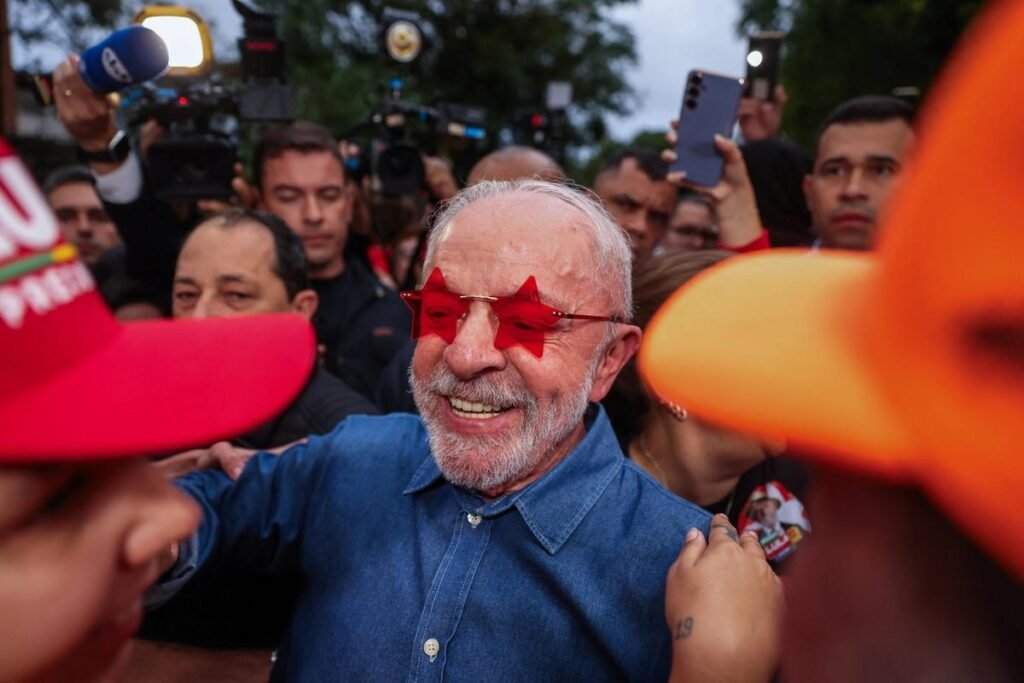
Luiz Inácio Lula da Silva won Brazil's presidential runoff on 25 October with 51.79% of valid votes against 48.21% for right-wing Senator Flávio Bolsonaro, a margin of about 4.43 million votes, according to Brazil's Superior Electoral Court. Lula, 80, had trailed in the first round on 4 October (45.16% to 47.03%). He is the first candidate in Brazil's history to finish second in the first round and still win the runoff.
The contest: Flávio Bolsonaro is the son of former President Jair Bolsonaro, who is serving a sentence for attempting a coup to stop Lula taking office in 2023. Right-wing parties made strong gains in Congress in the first round, which may make it harder for Lula to pass his agenda. The campaign was shaped by U.S. President Donald Trump's tariffs on Brazil and his open support for Bolsonaro. Why it matters for India: Brazil is a partner in BRICS, IBSA, the G4 and the G20, and India currently chairs BRICS (2026). Lula's government has backed multipolarity, Global South cooperation and UN Security Council reform, positions close to India's. The result is a setback for Trump-aligned candidates who had been winning across Latin America.
Lula's win keeps a like-minded Global South partner in power as India steers BRICS. The relationship has room to grow in: Trade beyond commodities, through an expanded India–Mercosur PTA. Ethanol, biofuels and agriculture technology. Defence, space and pharmaceuticals. Joint positions on UN reform and climate finance.
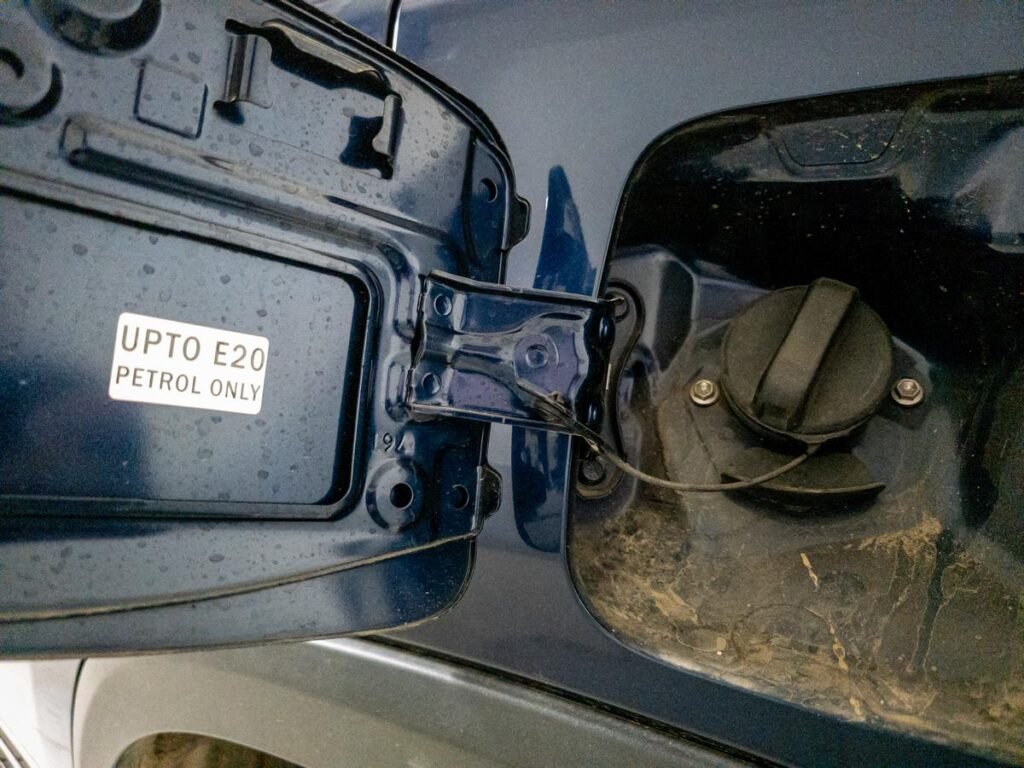
The Ministry of Road Transport and Highways has amended the Central Motor Vehicles Rules, 1989 to recognise E100 (100% ethanol) as a fuel for flex-fuel vehicles. The notification, G.S.R. 911(E), was issued on 23 October and published in the Gazette on 26 October, coming into force on publication. It follows draft rules issued on 27 April 2026.
What changed: In Rule 115 (vehicle emission standards), references to "E85" now read "E85 or E100". E85 or E100 may be used only in vehicles designed by the manufacturer (OEM) as flex-fuel vehicles. Ordinary petrol vehicles are not permitted to run on E100. The gross vehicle weight threshold in one emission table was raised to 3,500 kg from 3,000 kg. The notification gives no timeline for nationwide commercial availability of E100. Why it matters: It creates a legal framework for testing and certifying vehicles that run on near-pure ethanol. Higher ethanol use can cut crude oil imports and support farm incomes.
E100 can strengthen energy security and give farmers a new market, but it carries trade-offs: Food versus fuel: diverting grain and sugar to ethanol can raise food prices. Water stress: sugarcane is highly water-intensive. Lower mileage, since ethanol has less energy per litre than petrol. Need for flex-fuel vehicles, pumps and storage across the country.
Cyclone Arnab has intensified over the Bay of Bengal, and Andhra Pradesh and Odisha have stepped up evacuations. The Cabinet Secretary chaired a National Crisis Management Committee (NCMC) meeting on 26 October to review preparedness. The IMD expects landfall on the Andhra Pradesh–Yanam coast between Bapatla and Visakhapatnam around 28 October.
Forecast: Maximum sustained winds of 115–125 km/h, gusting to 140 km/h. Heavy to extremely heavy rain over coastal Andhra Pradesh and south Odisha. Rain effects may extend to Telangana, Chhattisgarh, Bihar and eastern Uttar Pradesh. Preparedness: Evacuation to cyclone shelters in vulnerable areas. NDRF and SDRF teams deployed and district control rooms activated. Fishermen advised to stay off the sea. Army, Navy, Air Force and Coast Guard teams on standby. About the name: "Arnab" was contributed by Bangladesh and means "ocean" in Bengali. In September 2026, a Bay of Bengal system was widely called "Cyclone Arnab", but the IMD classified it only as a deep depression, so it was never formally named. The name was used only now, once a system reached cyclonic-storm strength.
India has cut cyclone deaths sharply through better forecasting and mass evacuation (the Odisha model). Losses to housing, crops, power and fisheries still remain high. Priorities: Last-mile warnings for fishing villages. Cyclone-resistant housing and power lines. Mangrove and coastal ecosystem protection. Faster restoration and livelihood support after landfall.
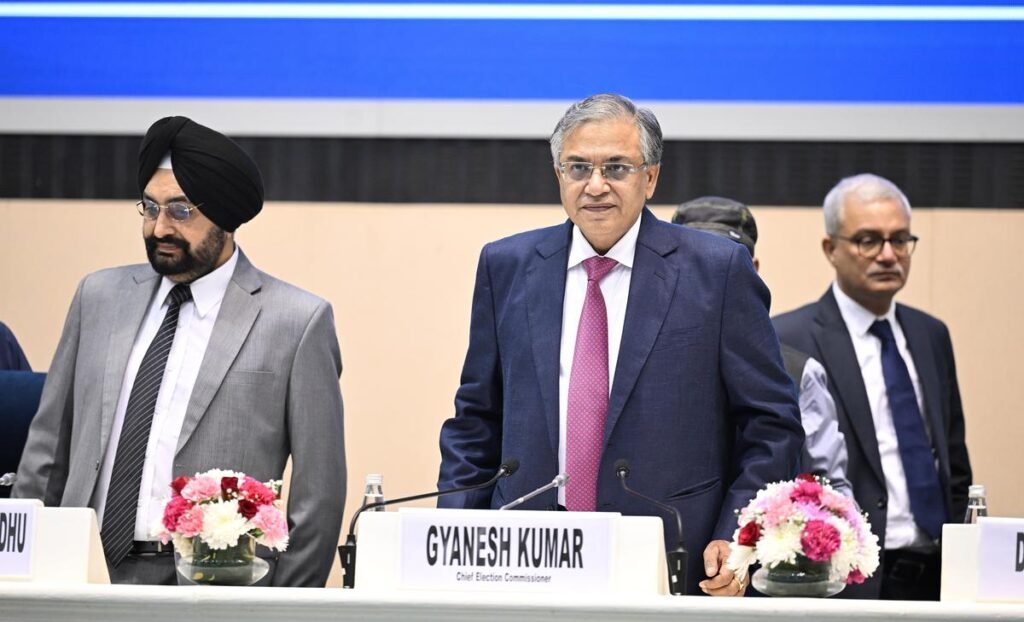
On 26 October, the Election Commission of India (ECI) filed a joint affidavit in the Supreme Court defending Chief Election Commissioner Gyanesh Kumar. It said the CEC can be removed only in the manner of a Supreme Court judge. It also said all three orders on the Special Intensive Revision (SIR) of electoral rolls were issued unanimously, rejecting claims of unilateral action.
The dispute: A petition questioned whether the CEC exercised powers that belong to the Commission as a collective body. Reports had pointed to objections by the other two Election Commissioners on some internal decisions. The ECI's response: All three SIR orders were unanimous. Form 6 was not amended by the SIR orders. The additional declaration is a separate document. The CEC enjoys constitutional protection against removal. These are the ECI's claims in court. They are not a judicial finding either way.
The CEC's removal protection is meant to shield the Commission from executive pressure. But protection against removal is different from accountability in decision-making. Trust in the ECI depends on: Transparent, recorded decisions with dissents noted. Real collective functioning of the three-member body. Clear reasons for roll revisions and deletions. Independence in appointments as well as in removal.
On 26 October, the Defence Acquisition Council (DAC), chaired by Defence Minister Rajnath Singh, granted Acceptance of Necessity (AoN) to capital acquisition proposals worth about ₹2.12 lakh crore for the Army, Navy and Air Force. Around 82% of the value is to be sourced from Indian industry.
Indian Army: Self-propelled tracked gun systems for mobile artillery. High Mobility Vehicles for logistics in difficult terrain. Very Short-Range Air Defence Systems (VSHORADS) and Counter-Unmanned Aerial Systems (C-UAS) against drones and low-flying threats. Surveillance UAVs, integrated surveillance-and-strike systems and long-range kamikaze (loitering) drones. Gun Shot Response System for real-time situational awareness. Indian Navy: Active Offboard Decoy System (AODS) to divert incoming anti-ship missiles. Indigenously designed and built naval platforms. Indian Air Force: Light multi-role and special utility helicopters. Air defence systems and weapons. Mobile X-band Doppler weather radars for forward areas.
The list reflects lessons from recent conflicts: drones, counter-drone systems, air defence and precision strike now matter as much as tanks and guns. The 82% domestic share supports Atmanirbhar Bharat, but real indigenisation depends on: Domestic value addition, not just final assembly in India. Faster trials and contract signing after AoN. Indigenous engines, sensors and semiconductors. Budget space for committed future payments.
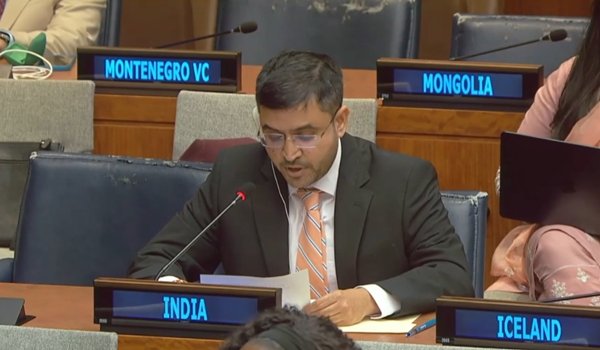
On 24 October, India hit back at Pakistan in the UN General Assembly's Third Committee during a dialogue with the Special Rapporteur on Minority Issues. Raghoo Puri, First Secretary at India's Permanent Mission to the UN, accused Islamabad of painting a "propagandist" picture of India. He said Pakistan's "Form 47 government" dare not override instructions from the military, which he called the country's real rulers.
What "Form 47" means: Form 47 is the Pakistani election document that records provisional consolidated results of a constituency. Pakistan's February 2024 general election faced allegations of rigging, and critics use "Form 47" as shorthand for a government of doubtful mandate. India's use of the term signals sharper public messaging on Pakistan's civil–military imbalance. The SAARC angle: India also placed the blame for SAARC's paralysis on Pakistan. The 2016 SAARC summit in Islamabad was called off after India pulled out over cross-border terrorism following the Uri attack. India has since focused on BIMSTEC and other groupings that do not include Pakistan. Other points India made: Pakistan was using the UN to divert attention from its economic distress, lawlessness and human rights violations at home. Pakistan's minority population has been shrinking, and it should look after its own citizens. Jammu and Kashmir is an integral part of India. The only outstanding issue is Pakistan vacating the territory it illegally occupies. India is a multi-religious, multi-ethnic and multilingual society with constitutional safeguards for minorities. Protecting minority rights is mainly the sovereign responsibility of each country.
India now uses multilateral forums to question Pakistan's democratic credentials directly, not just its record on terrorism. This strengthens the narrative of isolating Pakistan, but it also turns thematic UN human-rights dialogues into bilateral battlegrounds. India's regional strategy rests on: Terrorism as the core obstacle to normal ties. BIMSTEC and sub-regional (BBIN) cooperation as alternatives to SAARC. Neighbourhood First outreach to smaller South Asian states.
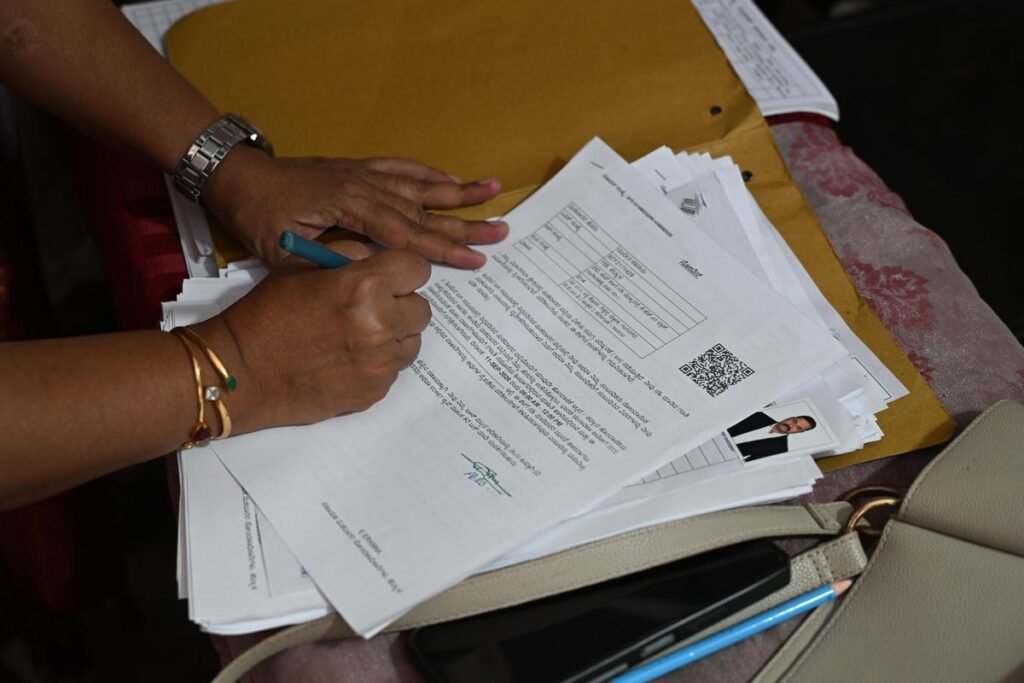
The Hindu reported on 26 October that about 61,000 Form 7 applications in Karnataka, roughly one-third of all such forms in the State, were filed by poll officials themselves. None of them records a reason for deletion. The finding comes amid the Special Intensive Revision (SIR) of electoral rolls and an ongoing row over bulk Form 7 filings.
What Form 7 is: It is the form used to object to the inclusion of a name or seek its deletion from the electoral roll. Valid grounds include death, shifting of residence, duplicate entry and not being a citizen. A form without a stated reason gives the voter nothing specific to answer at the hearing. Background of the row: Karnataka's SIR began on 16 June 2026. The State CEO's office reported 91,278 Form 7 applications by 4 October. Bulk filings in some constituencies led to several FIRs, a dharna by Chief Minister D.K. Shivakumar and counter-charges by the BJP. The CEO has said no voter has been deleted merely because a Form 7 was filed. A party's Booth Level Agent (BLA-2) may file only up to 10 Form 7s at a time and 50 during the whole SIR.
Deletion is the most sensitive part of roll revision, because a wrong deletion silently takes away the right to vote. When officials file objections without reasons, the burden shifts unfairly to voters. Safeguards needed: A recorded reason and evidence on every Form 7. Public, booth-wise lists of proposed deletions. Personal notice and hearing before any deletion. Action under Section 31 against false or bulk objections.
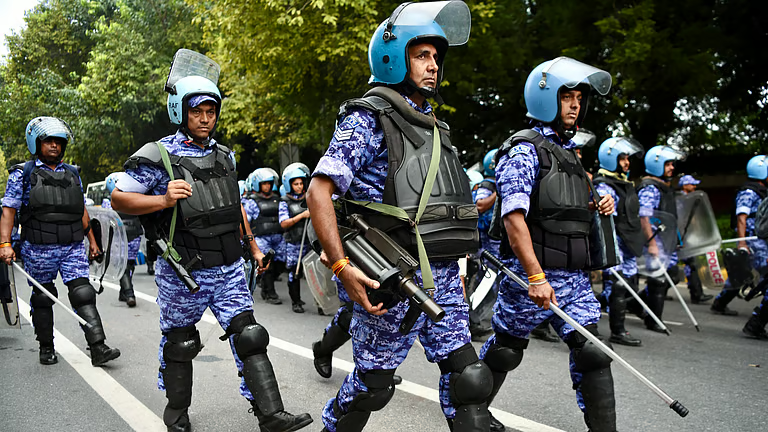
The Ministry of Home Affairs said on 24 October that two Rapid Action Force (RAF) companies of the CRPF, about 250 personnel, would be airlifted from Navi Mumbai to Pasighat on an IAF aircraft. Violence broke out in Pasighat after a 12-hour bandh in Siang, Upper Siang and East Siang districts against the proposed 11,200-MW Siang Upper Multipurpose Project (SUMP). The bandh itself had been peaceful.
About the project: Proposed on the Siang river by NHPC, it would be among India's largest hydropower projects. The Arunachal government says it would have about 9.2 billion cubic metres of live storage. The State calls it a national project with strategic and security value, not just a power project. A pre-feasibility report is to be prepared first. Social and environmental impact assessments and a DPR would follow if it is found feasible. The China factor: China is building a mega dam (about 60,000 MW) on the Yarlung Tsangpo upstream. India argues a large reservoir on the Siang could absorb sudden water releases and reduce flood risk in Arunachal and Assam. Why locals oppose it: Fear of displacement and loss of farmland, forests and villages of the Adi community. Ecological damage in a seismically active zone. Complaints that consent is being forced through security deployment.
The SUMP sits at the meeting point of energy security, water security and border strategy. But large dams in tribal areas succeed only with real consent. A balanced approach needs: Free, prior and informed consultation with Adi communities. Independent social and environmental impact studies. Fair compensation and livelihood plans. Dialogue first, with security deployment as a last resort.
On 25 October, Prime Minister Narendra Modi inaugurated the Reserve Bank of India's ₹169-crore data centre and Cybersecurity Training Institute in Bhubaneswar, Odisha. He said wars are no longer fought only with weapons and that a country can be weakened by attacks on its economy. Protecting the banking system from cybercriminals and cyberterrorists is therefore a national priority.
What the PM said: Cyber threats are changing, and outdated systems, old training methods and obsolete tools cannot meet them. India needs both modern infrastructure and a skilled cyber workforce, which the new institute is meant to build. Odisha is moving from a mineral-based economy towards micro-chip manufacturing. Why banks are a target: Digital payments (UPI, cards, net banking) mean money now moves through networks that can be attacked. A successful attack can freeze payments, leak customer data and shake trust in the financial system. Training people is as important as hardware, because many breaches start with human error such as phishing.
Financial cyber resilience is now part of national security. Gaps include a shortage of trained cyber professionals, legacy IT in smaller banks and cooperative banks, and dependence on foreign hardware and software. Priorities: A dedicated cyber workforce pipeline for the financial sector. Regular audits and stress tests of bank IT systems. Real-time information sharing between RBI, CERT-In and banks. Customer awareness against digital-arrest and phishing frauds.
Now lock it in with practice:
Your 1-day free access is over. Sign up once – you won't need to log in again on this phone.