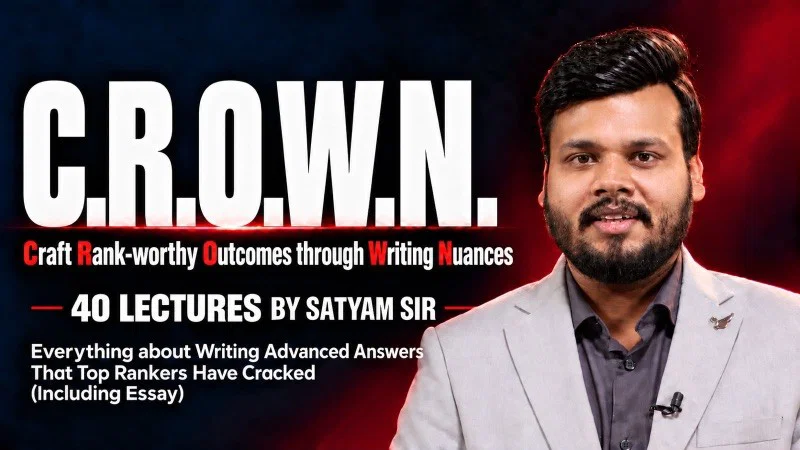
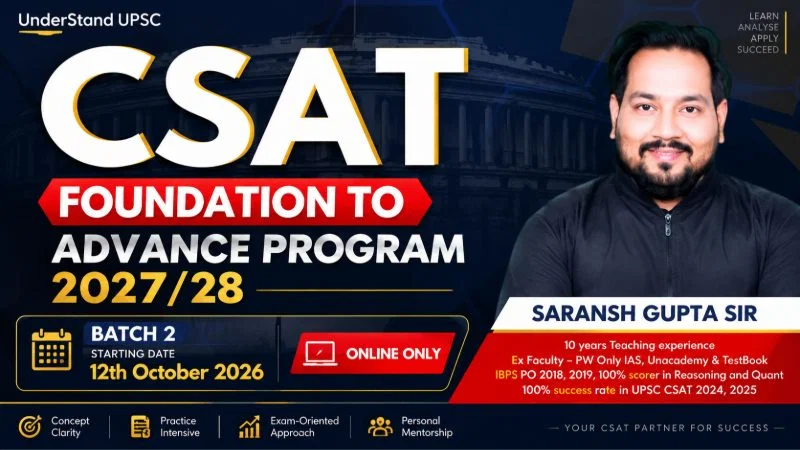
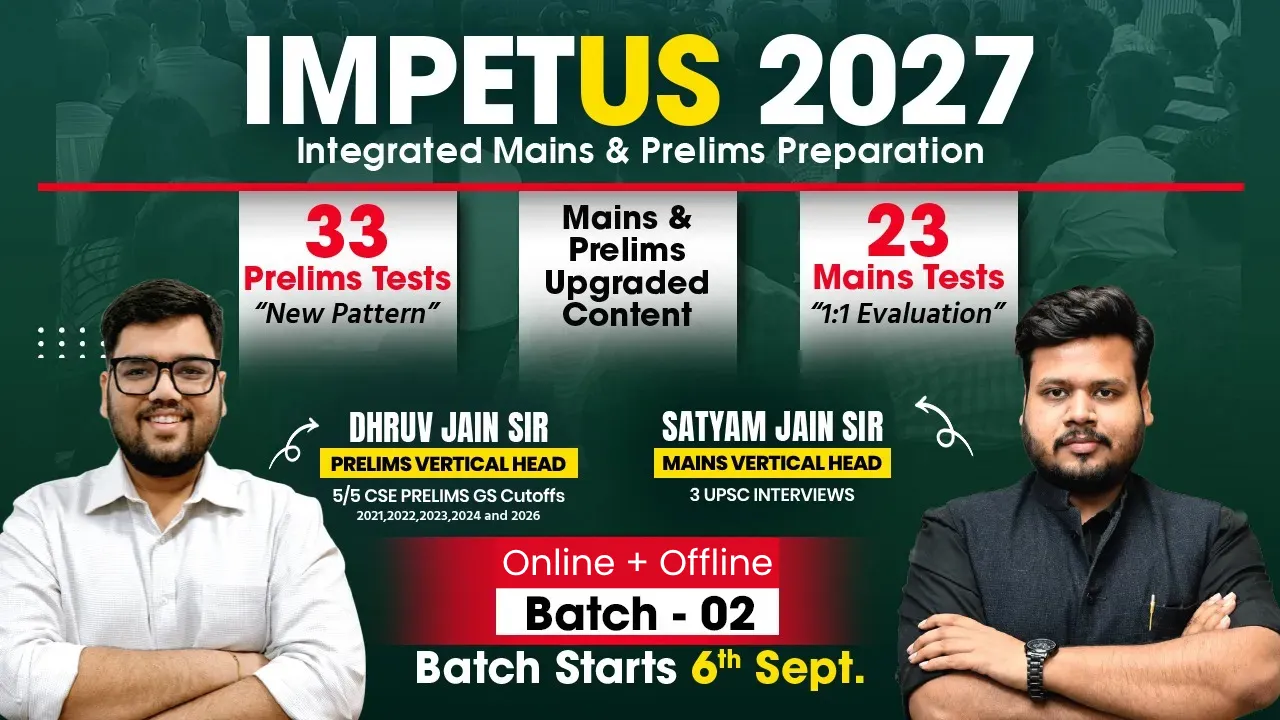
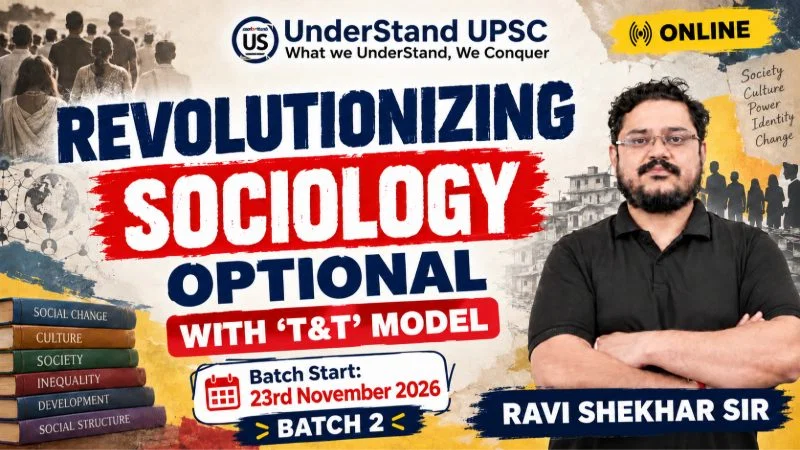
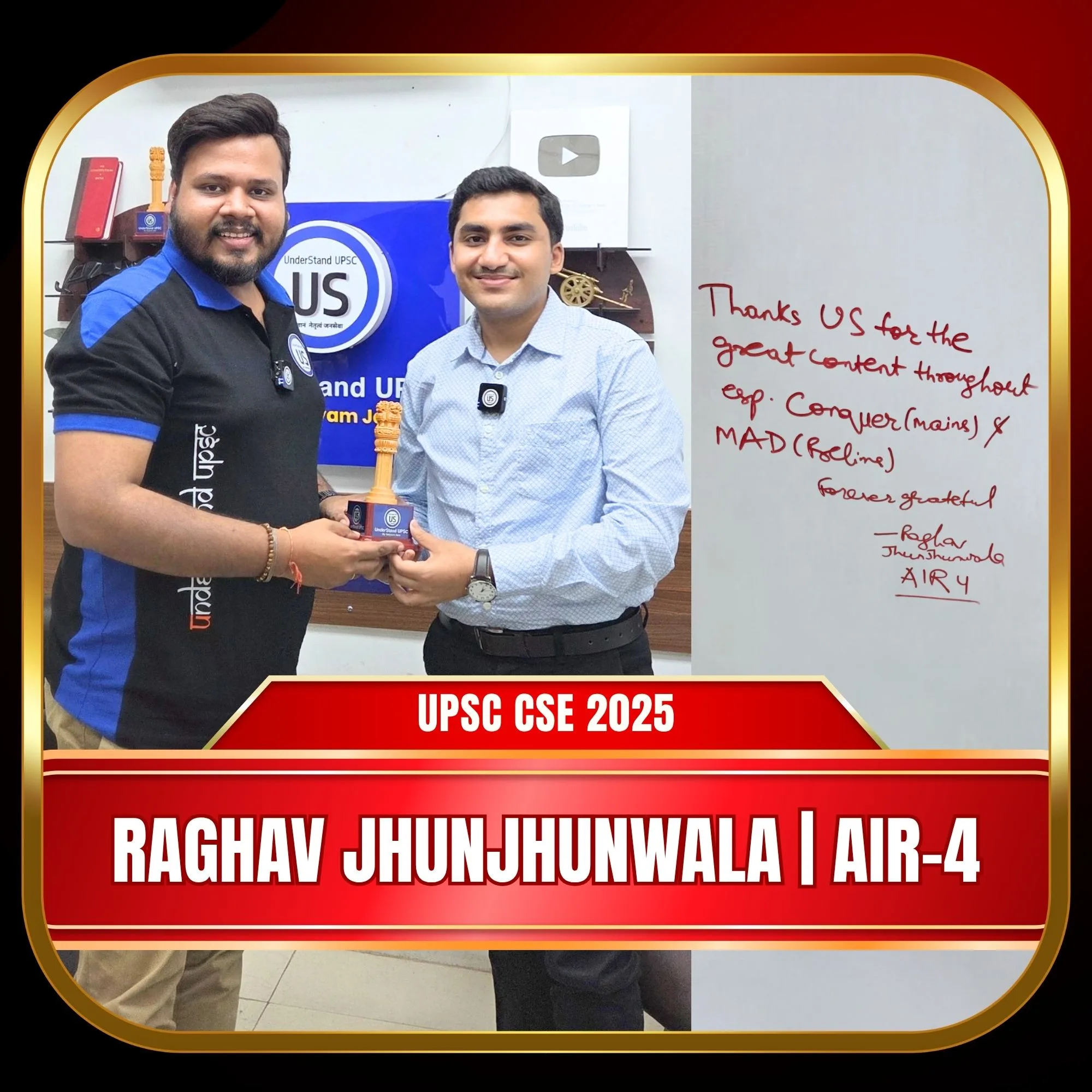
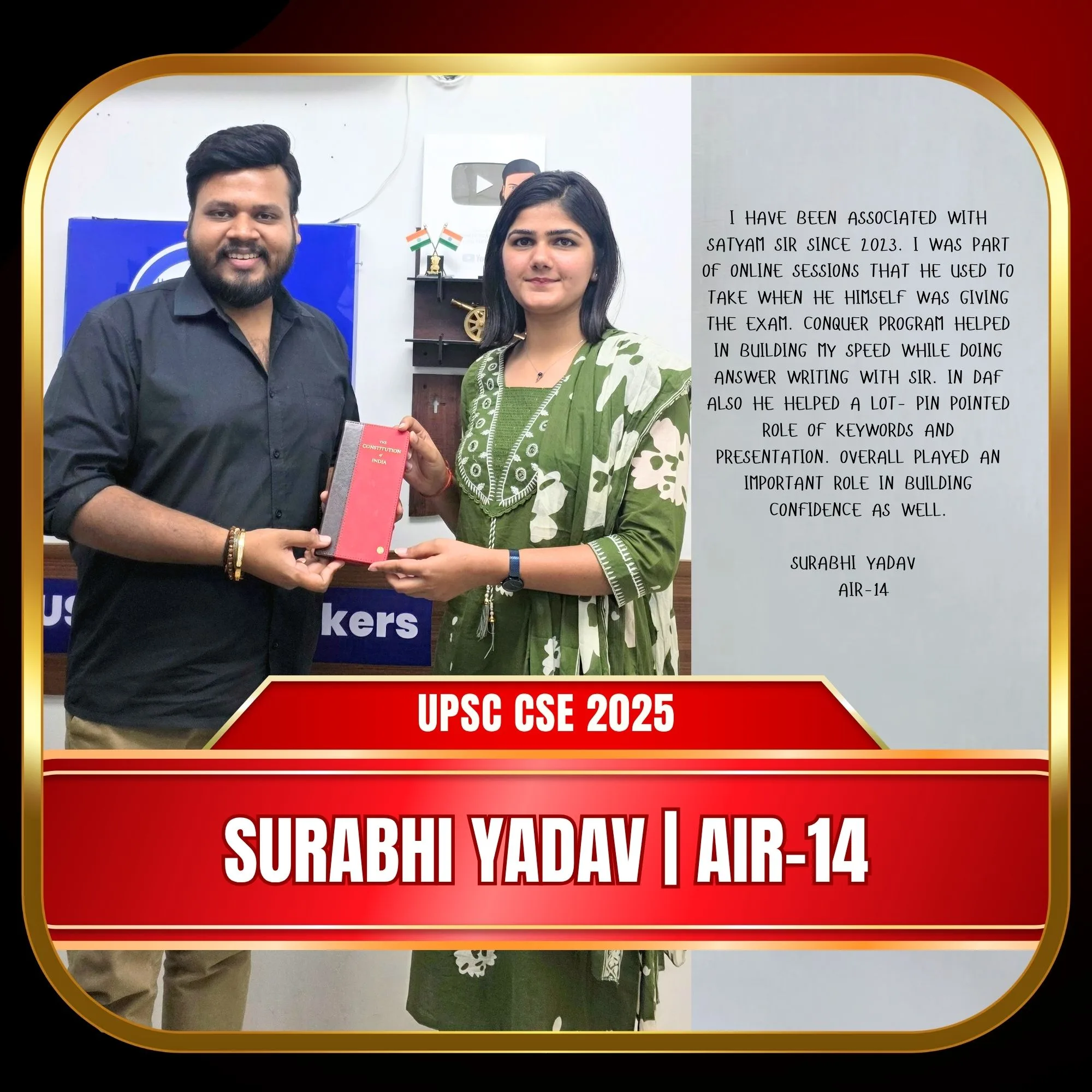
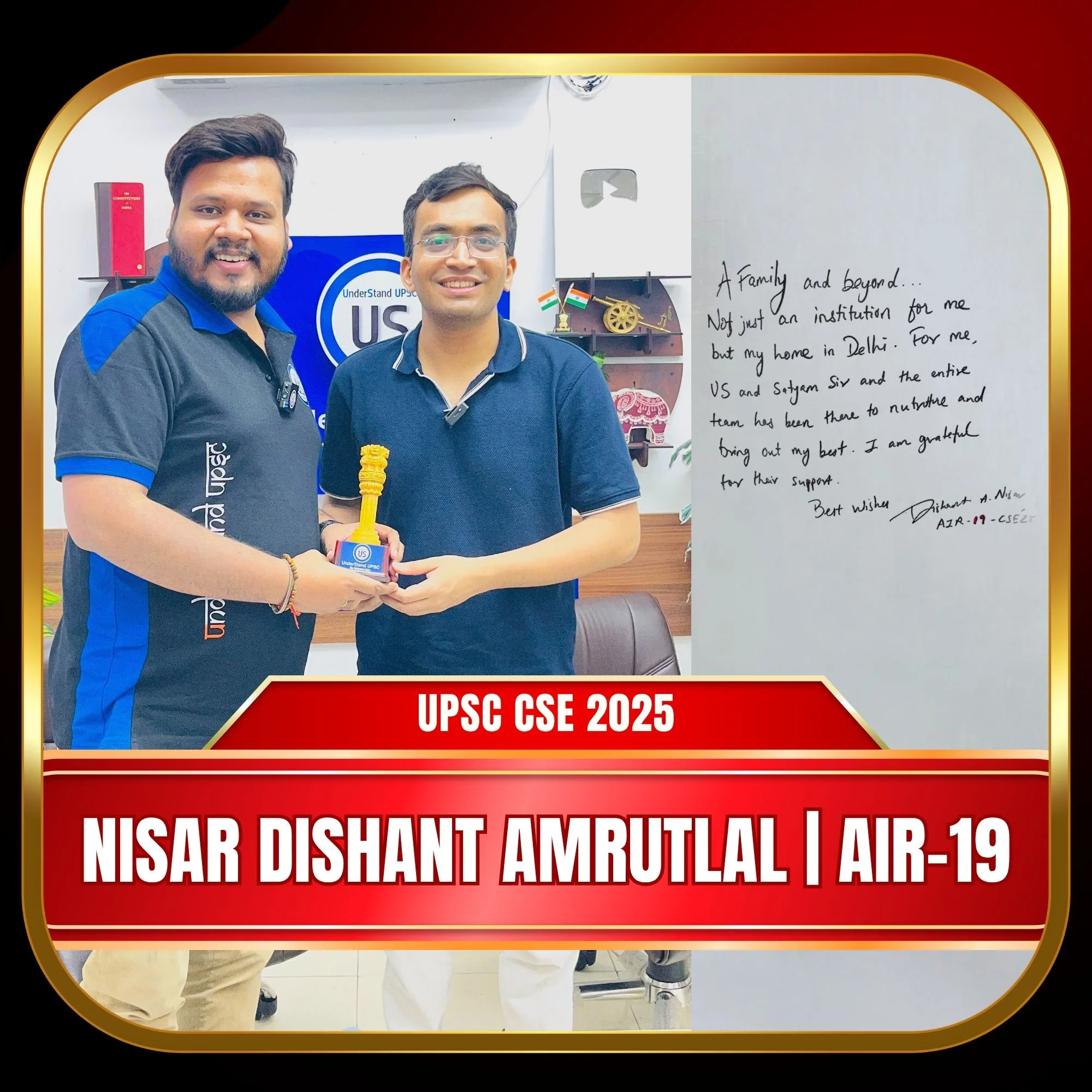
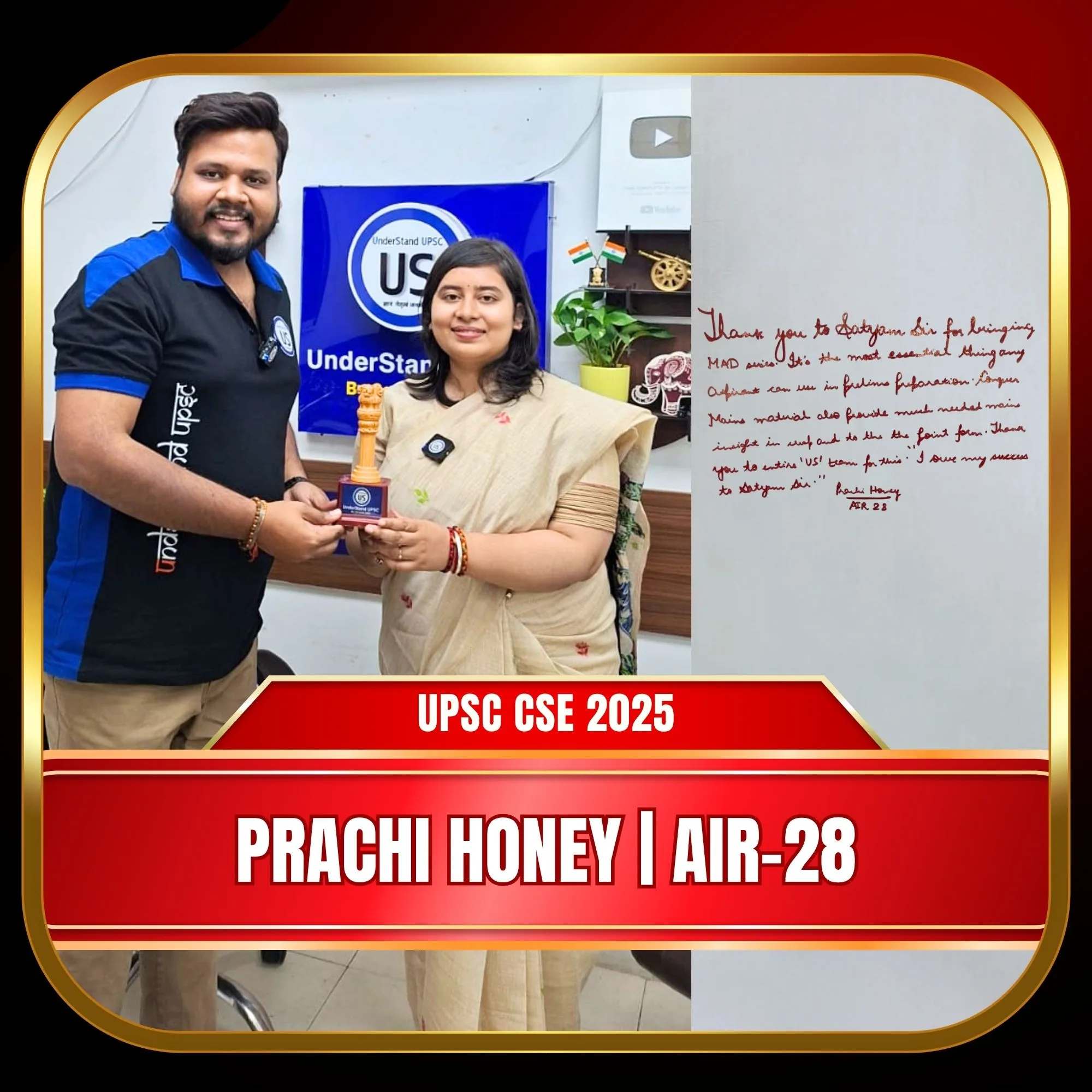
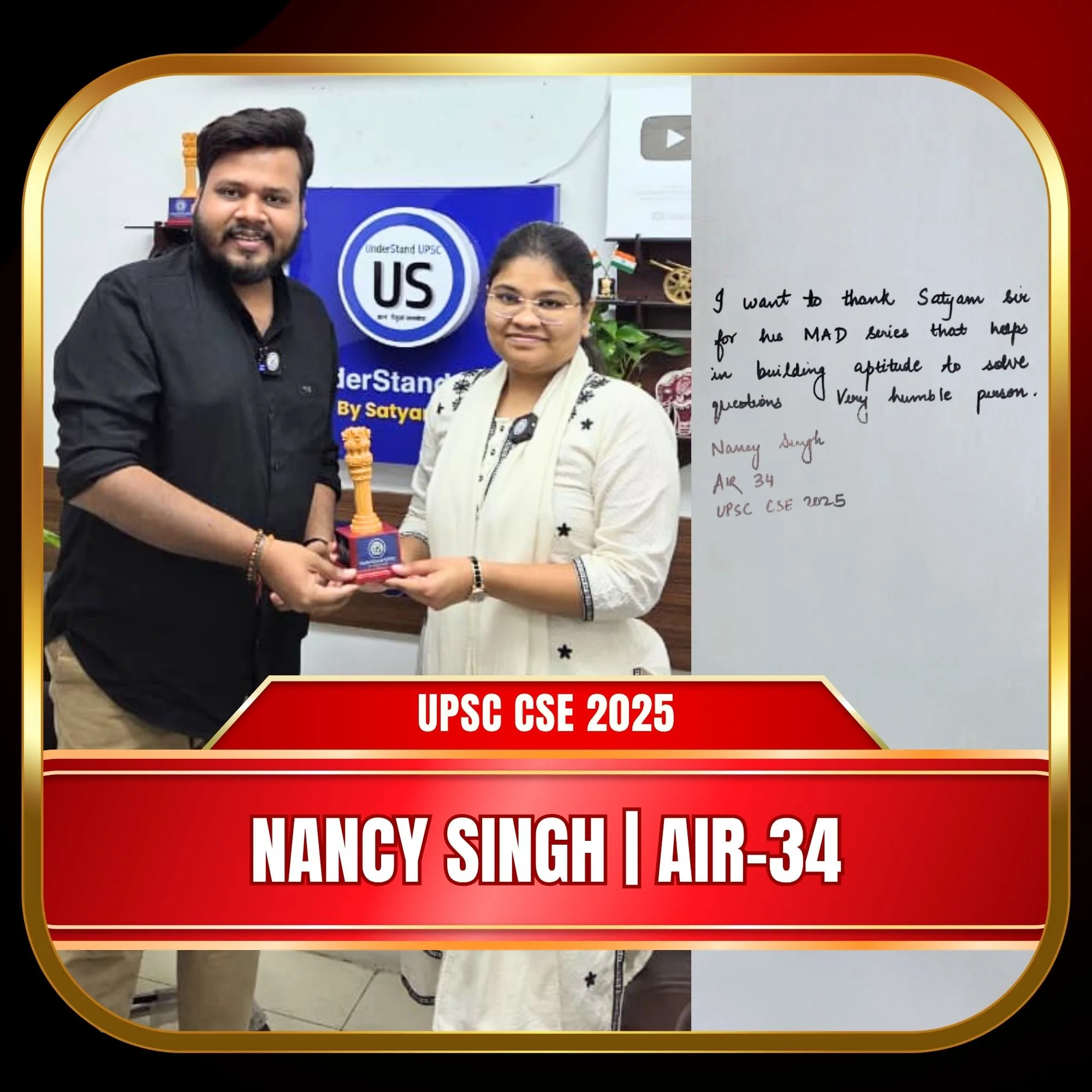
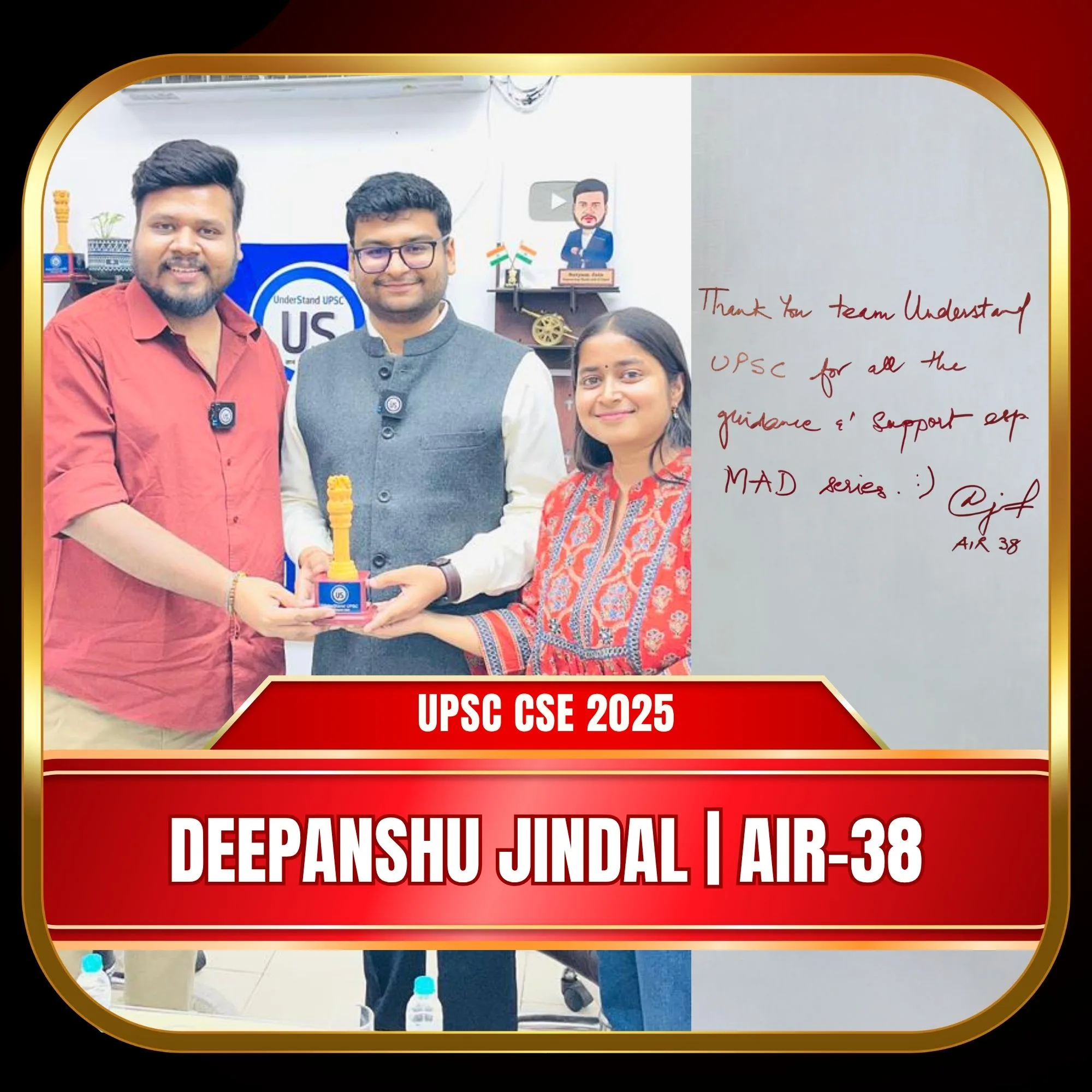
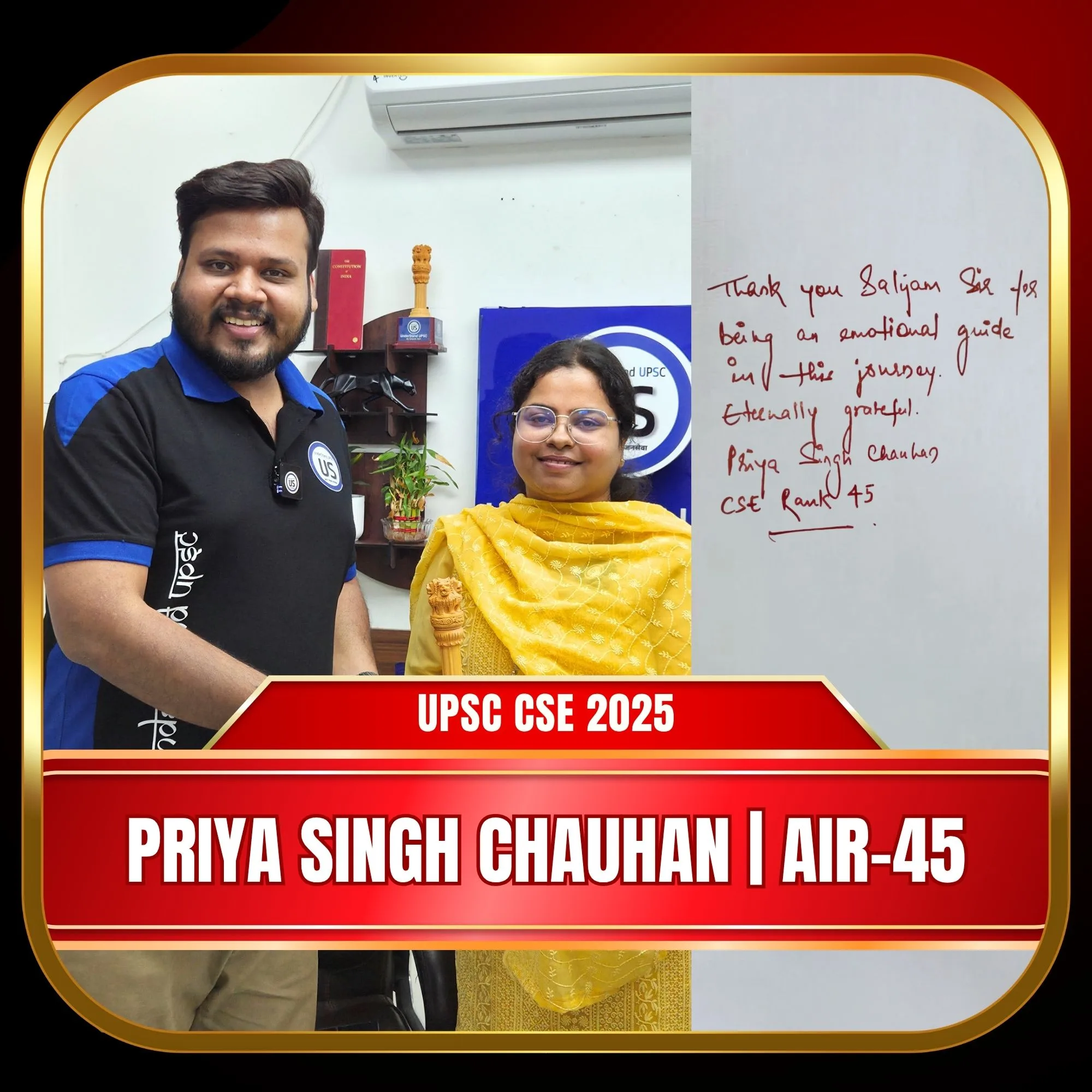
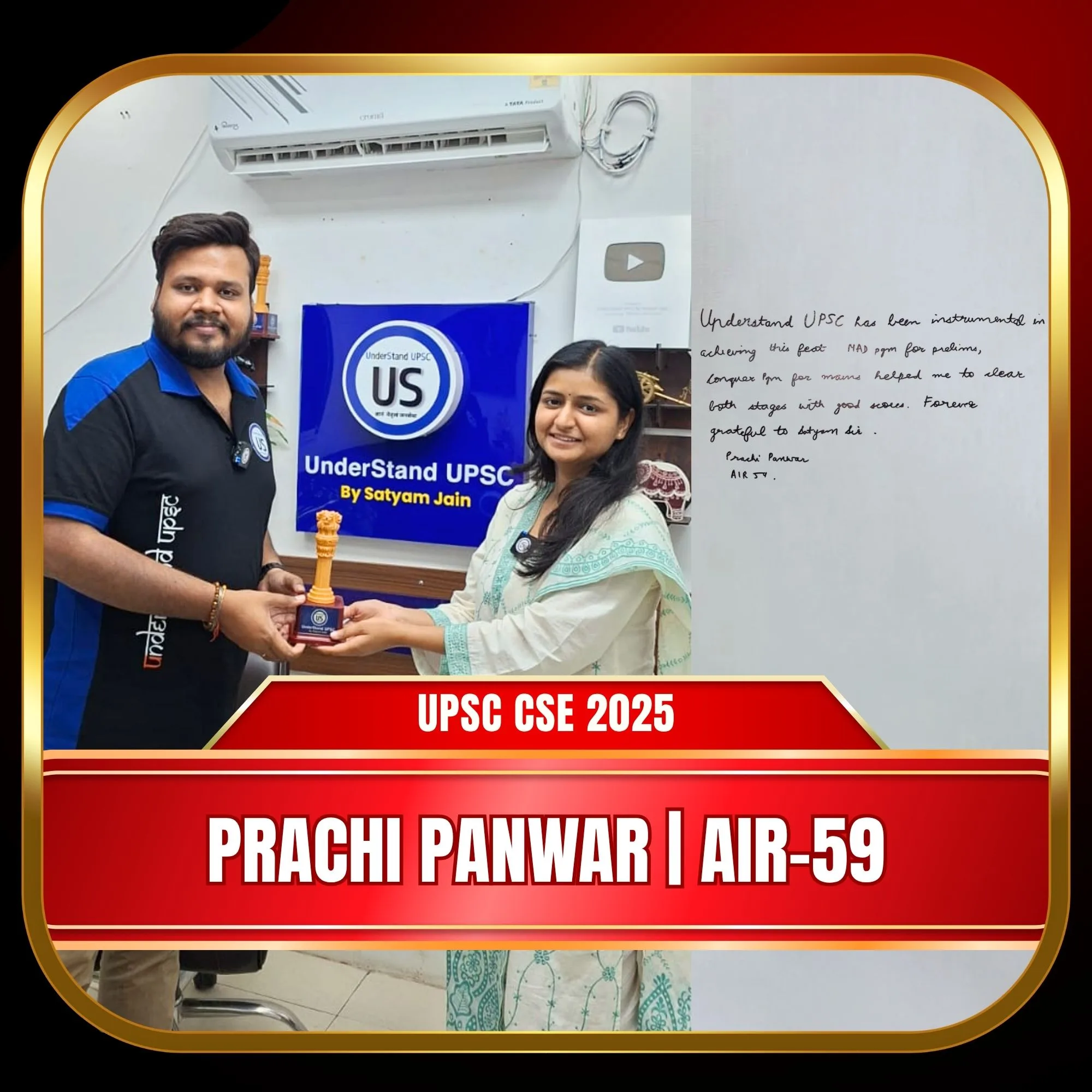
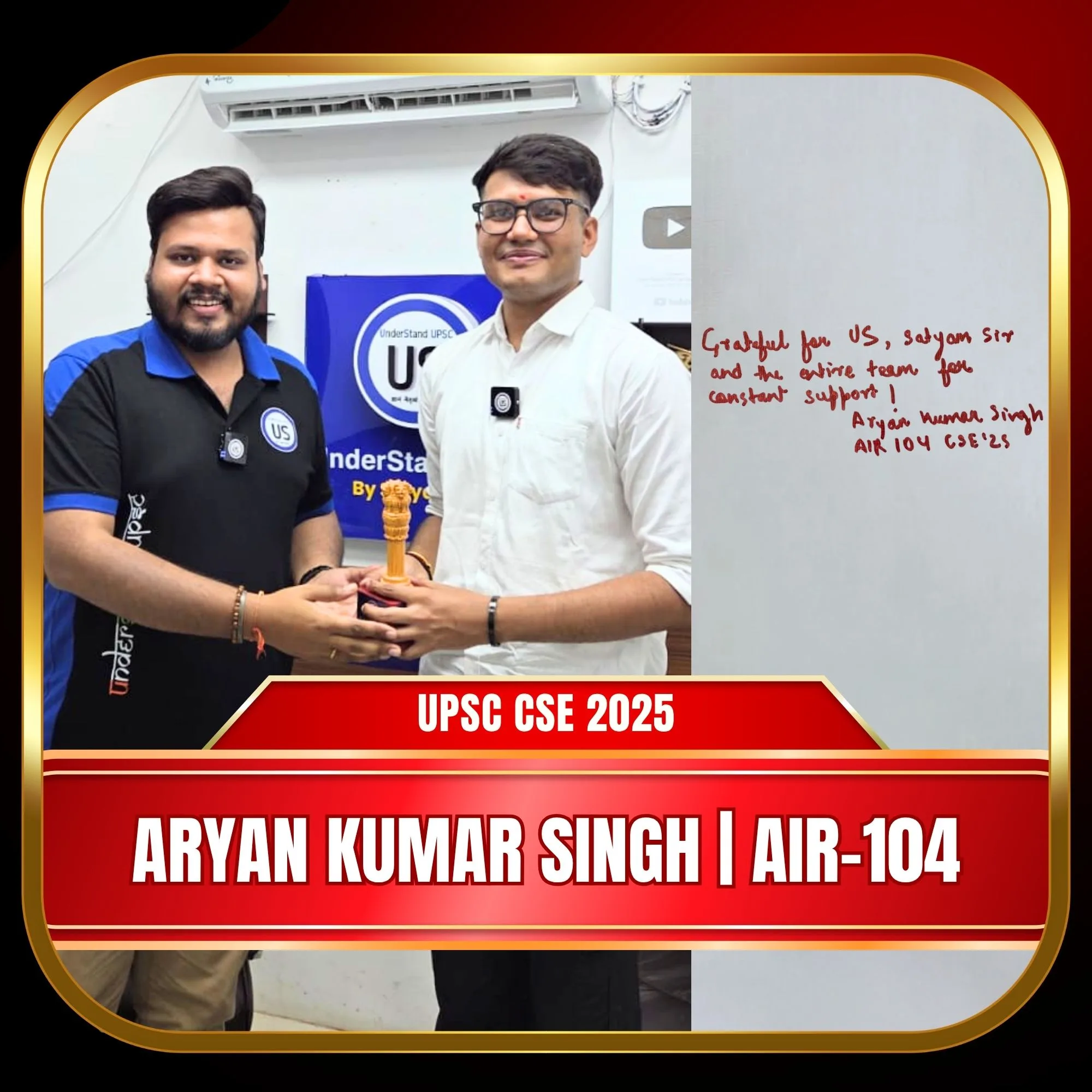
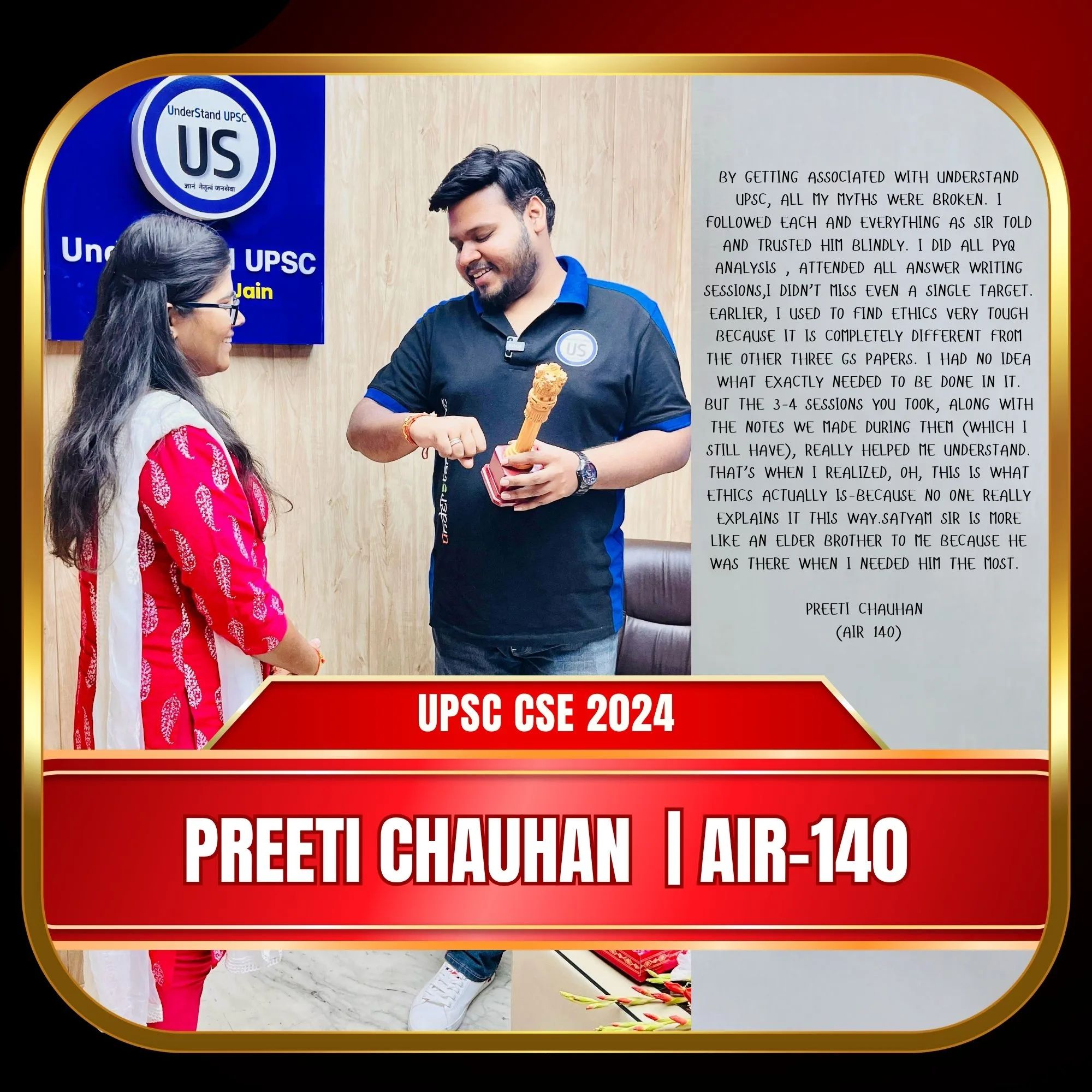
Topper's TESTIMONIALS 2025

Real success real stories with US

Trust US only after hearing what thousands of our students say about US

Welcome To UnderStand UPSC

Where knowledge leads to "Leadership" "Public Service"

(ज्ञानं नेतृत्वं जनसेवा)

Master the UPSC journey with expert guidance, structured strategy, and value-driven learning — transforming knowledge into leadership and public service.

Your One-Stop UPSC Companion

Access daily Current Affairs quizzes and News Bulletins to stay informed, improve exam readiness, and boost your UPSC preparation.

📰 Daily Current Affairs Quiz

0%

19 March 2026 (Modern History)

1 / 5

1) Consider the following statements about the Residency system in British India:

  1. The Residency system was unique and differed from both European imperial traditions and the Mughal system of vakils.
  2. The Residents were initially commercial agents who later took on political roles as the East India Company’s function shifted from trade to governance.

Select the correct answer using the code given below:

2 / 5

2) Consider the following statements about the railway construction in colonial India:

  1. The primary purpose of railway construction was to serve the economic development of India.
  2. British capital investments in railways were guaranteed a 5% return, with the risk borne by Indian revenues.
  3. The railway network was designed to integrate internal markets within India, rather than connecting ports to raw material sources.

Which of the statements given above is/are correct?

3 / 5

3) Which of the following statements about the jute economy in colonial India is/are correct?

  1. Jute cultivation in eastern India developed as peasants sought to earn more by cultivating the “golden crop.”
  2. The primary producers of jute reaped significant benefits from the jute market boom between 1906 and 1913.
  3. The jute economy crashed in the 1930s, followed by the devastating Bengal famine of 1943.

Select the correct answer using the codes given below:

4 / 5

4) Which of the following statements about the impact of commercialization of agriculture in colonial India is/are correct?

  1. The commercialization of agriculture led to the immediate rise of a powerful rural capitalist class and the widespread proletarianization of the peasantry.
  2. The rich peasants benefited from cash crop cultivation, but they remained vulnerable to market fluctuations.
  3. The commercialization of agriculture had no connection with famines in colonial India.

Select the correct answer using the code given below:

5 / 5

5) Consider the following statements about the “bazaar economy” in colonial India:

  1. The bazaar economy operated in sectors where returns were too low or risks too high for European investors.
  2. Indigenous merchants and bankers in the bazaar economy expanded their operations overseas to regions like China, Burma, and East Africa.
  3. The bazaar economy was entirely independent of British imperial policies and infrastructure.

Which of the statements given above is/are correct?

Your score is

The average score is 40%

0%

🌟 New Updates

DELHI OFFLINE MEETUP 2027/2028
22nd February (Sunday), 2:30 PM
Register Now

COMBAT – All India Offline Test
22nd February (Sunday),
Register Now

📌 Important Bulletins

17 March 2026

16 March 2026


14 March 2026

13 March 2026

12 March 2026

11 March 2026

Latest Programs

Unlock your UPSC CSE success with our thoughtfully designed, stage-wise programmes that cater to aspirants at every phase of their journey

Got a question? We're here to help!

Our dedicated Student Support team is ready to assist you and guide you every step of the way.
Reach out to us, and let’s tackle your queries together!


About the UPSC Civil Services Examination (UPSC CSE)

The UPSC Civil Services Examination (CSE) is one of the most competitive and esteemed examinations in India, conducted by the Union Public Service Commission to recruit officers for services such as the Indian Administrative Service (IAS), Indian Police Service (IPS), Indian Foreign Service (IFS), and others. The exam comprises three stages — Prelims, Mains, and the Personality Test (Interview) — designed to test a candidate’s knowledge, aptitude, decision-making, and leadership skills.


How to Prepare Effectively for UPSC CSE

Cracking the UPSC CSE requires a deep understanding of the syllabus, consistent revision, structured answer writing, and smart test-taking strategies. The Prelims test analytical and conceptual clarity, the Mains focuses on critical thinking, articulation, and subject mastery, while the Interview assesses presence of mind, ethical judgment, and personality traits relevant to public service.

At UnderStand UPSC, we empower aspirants with a personalized and focused approach to each stage of the exam.


Why Choose UnderStand UPSC?

UnderStand UPSC is a mentorship-driven platform offering a clear, clutter-free strategy to tackle the Civil Services Examination. Our programs like Transform (for beginners and intermediate learners) and Conquer (for advanced mains preparation) provide structured study plans, syllabus-wise video content, interactive live sessions, and answer writing support.

We emphasize:

  • Concept clarity through topic-wise lectures

  • Test series designed around real UPSC standards

  • Personalized mentorship in small groups

  • Regular performance tracking and peer benchmarking

  • Doubt-clearing sessions, current affairs analysis, and monthly magazines


Join the UnderStand UPSC Learning Community

Our mission is to make UPSC preparation less overwhelming and more strategic. We combine mentorship, discipline, and academic rigor to help you clear CSE with confidence. Whether you’re preparing from Delhi, Mumbai, Bangalore, or a remote village — our online-first model ensures quality guidance reaches every corner of India.

Join the thousands of aspirants who trust UnderStand UPSC to guide their journey toward becoming civil servants.

Stay connected with us through our Telegram, YouTube, and Instagram channels for daily tips, strategies, and updates.

Copyright © 2026 USARAMBHA EDUCATION (UnderStand UPSC). All Rights Reserved.

Join the Success Journey!